
West Africa’s push for a regional refined-fuel benchmark is entering its execution phase as Nigeria’s expanding refining capacity changes regional supply flows.
Policymakers say pipelines, storage, ports, logistics, data and regulatory harmonisation must catch up with rising regional production.
The ultimate test will be whether market participants transact against the new benchmarks rather than simply acknowledge their existence.
August 12, (THEWILL) — West Africa’s push to establish a regional benchmark for refined petroleum products is moving into a more difficult phase: building the infrastructure, liquidity and regulatory systems that can make the prices credible enough for traders, refiners, banks and investors to use.
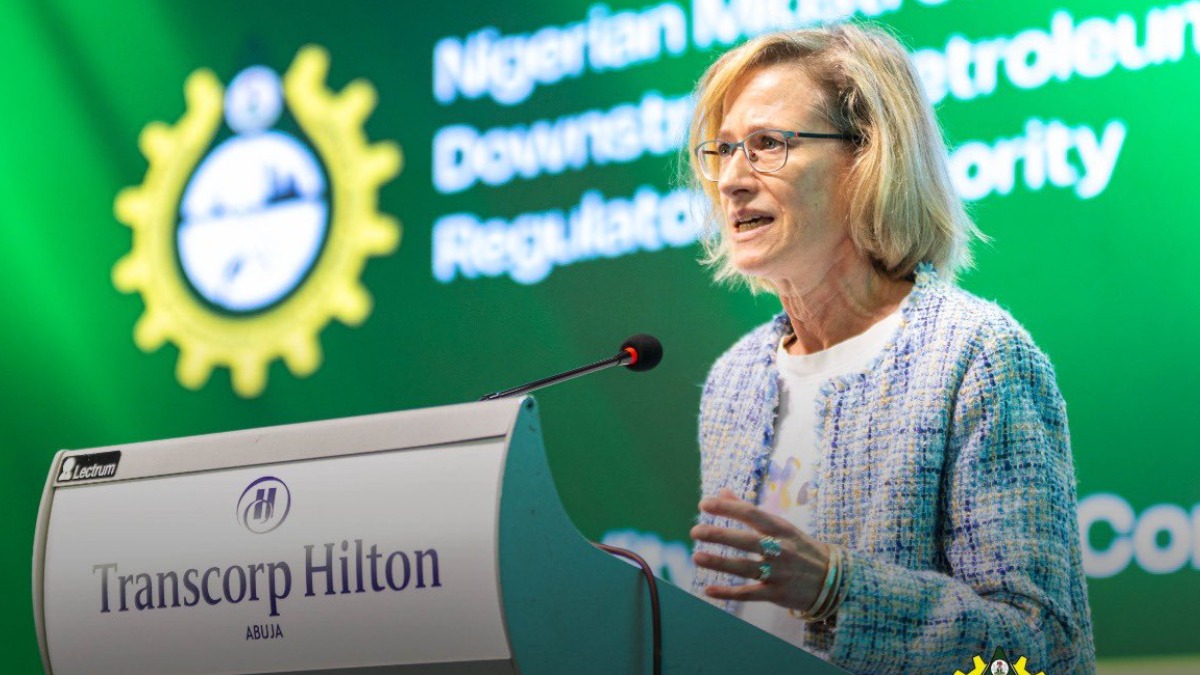
That challenge emerged as the central message at the 2026 West Africa Refined Fuel Market Conference in Abuja, on Tuesday August 11, where Nigerian policymakers, regulators, financial authorities and industry representatives argued that the region has made progress towards local price discovery but must now turn that foundation into a functioning trading market.
The Nigerian Midstream and Downstream Petroleum Regulatory Authority (NMDPRA) said the next phase would require financing strategic infrastructure, deepening physical market liquidity, harmonising product standards and regulations, and improving the availability of reliable market data. The authority’s opening remarks described the task bluntly: “In 2025, we developed the roadmap. In 2026, we must finance and execute it.”

The urgency reflects a structural change in West Africa’s petroleum market. Nigeria, traditionally one of the region’s largest importers of refined products, is becoming a more significant source of supply as its refining capacity expands.
The Organisation of the Petroleum Exporting Countries’ latest statistical data puts Nigeria’s installed refinery capacity at about 1.125 million barrels per day in 2024, including the 650,000 bpd Dangote refinery.
But installed capacity does not automatically translate into a regional trading hub. The conference speakers repeatedly stressed that products must be available in sufficient volumes, move efficiently between markets and generate enough transparent transactions for a price to represent actual market conditions.
Olu Verheijen, Special Adviser on Energy to President Bola Tinubu, said West Africa’s problem was increasingly not a shortage of resources or demand but the fragmentation of its markets and the infrastructure gap connecting supply, demand and capital.
“Refining capacity alone, as big as ours is, does not create energy security,” she said. “A refined product only delivers economic value when it can be financed, stored, transported and distributed reliably.”
That distinction is becoming increasingly important as Nigeria’s refining revival changes regional supply flows.
S&P Global said in 2025 that the Dangote refinery’s ramp-up had already begun displacing refined-product imports, particularly from Europe, while the emergence of regional supply was creating conditions for a West African reference market.
The price-reporting agency subsequently introduced assessments for gasoline and diesel based on West African delivery points, including Lagos/Lekki and offshore Lomé.
By July 2026, S&P Global had expanded that market infrastructure further, introducing intraday assessments for gasoline, low-sulphur diesel and jet fuel at the Lomé delivery point, reflecting demand for more frequent pricing information amid changing market dynamics.
The development matters because a benchmark is only useful when market participants actually transact against it.
Vera Blei, Head of Platts at S&P Global Energy, told the conference that the organisation could provide the foundations and reference prices, but market participants would ultimately have to create the liquidity required to make regional benchmarks meaningful.
“The reality is you will have to create them,” Blei said.
Nigeria’s Refining Shift Creates an Opening
The CBN has also linked increased domestic refining capacity with lower demand for foreign exchange, arguing that reduced refined-product imports could ease pressure on the country’s FX market.
The shift, however, has not been linear.
S&P Global reported in May 2026 that Nigeria’s regulator had authorised six companies to import a combined 720,000 metric tonnes of gasoline, while NMDPRA data showed the Dangote refinery was operating at about 94% of capacity in March and producing enough fuel to cover domestic gasoline consumption at that point.
The same report illustrates why a regional benchmark cannot be built simply around the existence of a large refinery. S&P Global data showed Nigeria imported about 60,000 barrels per day of gasoline in April 2026, demonstrating that domestic refining capacity and imports can coexist as market conditions change.
That volatility strengthens the case for transparent price discovery, but it also makes the quality of the benchmark more important.
Nigerian lawmaker, Ikenga Ugochinyere said West Africa had historically imported not only petroleum products but also the price signals attached to them.
“Our cargoes have been valued against benchmarks set thousands of kilometres away,” he said, arguing that a regional benchmark would allow West African market conditions to play a greater role in determining the value of products traded in the region.
S&P Global’s own assessment of the market broadly supports the structural argument. It said refined-product imports into West Africa had historically been priced against established European benchmarks, particularly those associated with Northwest Europe and the Mediterranean.
But growing regional production and trading activity are creating conditions for a reference market based on transactions within West Africa itself.
The benchmark needs more than a price publisher

Ugochinyere identified four foundations for a credible benchmark: liquidity, deliverability, data integrity and trust. Liquidity requires sufficient buyers and sellers; deliverability requires real storage, jetties, pipelines and depots; data integrity requires credible and timely market reporting; and trust requires institutions that participants believe will apply the rules consistently.
His argument is consistent with how established commodity benchmarks function. S&P Global says its West African fuel assessments draw on market information including concluded trades, firm bids and offers and verified market intelligence from market participants. The assessments cover delivery points including STS Lomé, FOB West Africa and DAP Lagos.
This means infrastructure is not merely a logistical issue sitting alongside price discovery. It is part of price discovery itself.
“Storage, marine infrastructure, pipelines, road and rail evacuation, metering and automation are not the unglamorous supporting cast of the transparency agenda. They are the agenda,” Ugochinyere said.
The NMDPRA made a similar case, listing pipelines, storage terminals, jetties, ports, rail and road corridors, marine logistics, strategic reserves and digital trading platforms among the infrastructure required to connect regional supply with demand.
The financing requirement is substantial, and the competition for capital is intense.
The African Development Bank has estimated West African economic growth at 4.7% in 2026, supported partly by continued investment in infrastructure, logistics and energy. Its wider West Africa portfolio stood at almost $13 billion at the end of 2024, with transport accounting for 29% and power and energy 16% of its active portfolio.
The bank has also demonstrated the type of financing structure being deployed to address regional infrastructure constraints. In 2024, its Sustainable Energy Fund for Africa approved a $10 million anchor investment in an infrastructure fund targeting $200 million for projects in Nigeria and wider West Africa.
For petroleum infrastructure, however, the challenge will be to create projects that can attract commercial capital on the basis of predictable cash flows rather than relying indefinitely on public or concessional finance.
The NMDPRA acknowledged as much, saying capital would go where projects were bankable, risks understood, regulation predictable and returns sustainable.
Ideas Are Abundant, Owners Are Scarce

The NMDPRA warned that different product specifications, licensing procedures, tariffs, data definitions and cross-border processes can make regional trade more expensive. It called for greater regulatory convergence without necessarily requiring identical laws across countries.
There is evidence that this process is already underway.
In July 2026, ECOWAS organised a regional study tour in Ghana focused on implementing its directive on harmonised specifications for automotive gasoline and diesel and improving fuel-quality enforcement across member states.
The initiative brought together officials from member-state ministries, petroleum regulators, national oil companies and refineries.
That work is directly relevant to the benchmark initiative because a regional price is difficult to compare if the products being traded are subject to materially different specifications or regulatory requirements.
The House Committee on Petroleum Resources (Downstream) has therefore proposed legislative backing for the regional benchmark, a fiscal environment that supports infrastructure investment, stronger security for feedstock and pipelines, and legislative harmonisation across the sub-region.
Ugochinyere also issued a more immediate challenge to policymakers and investors: the conference should produce a list of bankable projects, deadlines and named individuals responsible for delivering them.
“Ideas are abundant in our sector. Owners are scarce,” he said.
A Regional Market, not Simply a Nigerian Project
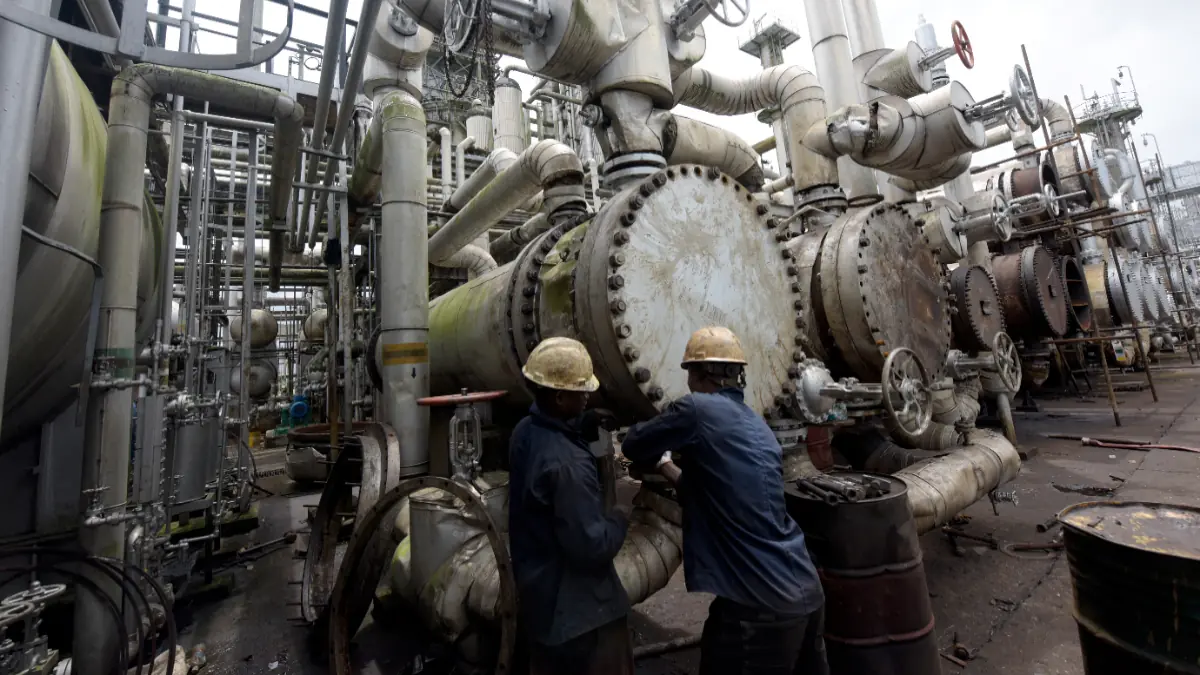
The International Energy Agency’s latest data show that oil demand in Africa increased by 190,000 barrels per day in 2025, with the rise mainly driven by a rebound in Nigeria. At the global level, emerging-market and developing economies accounted for nearly all oil-demand growth during the year.
That demand backdrop gives Nigeria’s growing refining capacity a potential regional outlet, but it also raises questions about how efficiently products can move from surplus markets to deficit markets.
The NMDPRA’s proposed model is therefore explicitly regional. It argues that countries should not necessarily duplicate every piece of infrastructure, but should instead allow strategically located refineries, storage facilities, ports and distribution networks to serve multiple markets through predictable cross-border arrangements.
This is where Nigeria’s role becomes commercially significant.
S&P Global says material from the Dangote refinery has become an important source of refined products for markets in Lagos, Lomé and further afield, while the offshore Lomé market has developed into an important regional trading location.
The International Energy Agency’s analysis of the 2026 Middle East supply disruption also illustrates the growing importance of Nigerian refining capacity to international and African fuel markets. It said West African jet-fuel exports nearly doubled from the preceding three-month average during the disruption, driven largely by increased output from Dangote.
Yet a larger Nigerian supply base does not automatically guarantee cheaper or more predictable fuel across the region. The commercial outcome will depend on transport costs, storage availability, financing, product specifications, market competition and the rules governing cross-border trade.
That is why the conference’s central proposition goes beyond establishing a Nigerian reference price.
The NMDPRA says the ultimate objective is a market in which products move more efficiently, supply becomes more secure, investors gain confidence, regional trade expands and prices increasingly reflect West African fundamentals.
For S&P Global, the foundation for such a market is already emerging. For Nigerian policymakers, the next task is to convert that foundation into infrastructure and transactions. For investors, the opportunity lies in financing the physical network that allows those transactions to occur.
The decisive test will therefore not be whether West Africa can publish another fuel-price assessment. It will be whether refiners, traders, banks, terminals, transporters and buyers across the region are willing and able to use it.
Until that happens, the region will have a benchmark. But it will not yet have a benchmark market.

Segun Adeyemi serves as the Associate Editor of THEWILL Newspaper, leveraging more than ten years of editorial expertise and a proven track record in mainstream journalism.
