
-
Duane “Keffe D” Davis sentenced to 40 years to life for orchestrating Tupac Shakur’s 1996 murder
-
Sentence closes a major chapter in one of hip-hop’s most notorious cold cases
-
Prosecutors relied heavily on Davis’ years of public statements about his role in the killing
-
Tupac’s family confronts convicted mastermind as Davis, who denied guilt at trial, says he will appeal his conviction
October 13, (THEWILL) – Thirty years after Tupac Shakur was hunted down and fatally shot on a Las Vegas street, former gang leader Duane “Keffe D” Davis was on Tuesday sentenced to 40 years to life in prison for orchestrating the revenge attack that killed one of hip-hop’s most influential stars.
The sentence brought a dramatic measure of justice to a murder that haunted Shakur’s family, frustrated investigators and fuelled speculation across the music world for three decades.
Davis, 63, who once described himself as a leader of the South Side Compton Crips, was convicted in August of first-degree murder with the use of a deadly weapon. He remains the only person ever charged in connection with Shakur’s killing.

At his age, the sentence could effectively keep Davis behind bars for the rest of his life.
Prosecutor Marc DiGiacomo pressed the court for the maximum punishment, arguing that Davis deserved no leniency after years of publicly discussing a killing from which prosecutors said he sought notoriety and profit.
Davis, however, showed little emotion and offered no substantive statement about Shakur’s death before Judge Carli Kierny imposed the sentence. When asked whether he had anything else to say after raising the issue of personal belongings seized by police, he replied: “No I’m good.”
The judge told Davis that three decades had not erased responsibility for the killing, declaring that he could not take a man’s life and simply walk away from the consequences.
The punishment comprises 20 years to life for first-degree murder and a consecutive 20 years to life for the use of a deadly weapon, producing an aggregate sentence of 40 years to life.
Family Confronts Davis After 30-Year Wait
Tuesday’s sentencing was particularly emotional for Shakur’s family, who had waited three decades to see anyone held criminally responsible for his death.
His sister, Sekyiwa “Set” Shakur, and brother, Maurice “Mopreme” Shakur, were among relatives who addressed the court.
Sekyiwa told the court that the world knew Tupac as an icon, but his family had lived for 30 years with the personal consequences of losing a brother whose life was cut short at 25.
She said Davis deserved the maximum punishment and spoke about the devastating effect the murder had on her life and family.
Prosecutors similarly argued that beyond Shakur’s status as an international music star was a family forced to watch for years as Davis publicly discussed his role in the events surrounding the killing.
After Davis’ conviction, prosecutor Binu Palal said the arrogance with which he spoke about the murder ultimately helped bring about his downfall.
READ ALSO:
Revenge Mission After Casino Brawl
The prosecution case portrayed Shakur’s murder not simply as another episode in the notorious East Coast-West Coast hip-hop rivalry of the 1990s, but as a gang retaliation triggered by violence only hours before the shooting.
On September 7, 1996, Shakur, Death Row Records co-founder Marion “Suge” Knight and members of their entourage were in Las Vegas for the heavyweight championship fight between Mike Tyson and Bruce Seldon.
After the fight at the MGM Grand, Shakur and members of his entourage attacked Davis’ nephew, Orlando “Baby Lane” Anderson.
The confrontation was rooted in hostility between the South Side Compton Crips, with which Davis was associated, and Mob Piru, which was associated with Knight, Shakur and Death Row Records.
Prosecutors said Davis responded by assembling Anderson and two other associates in a white Cadillac and setting out to find Shakur and Knight.
They eventually located them in traffic near the Las Vegas Strip.
Shakur was sitting in the passenger seat of a black BMW driven by Knight when the Cadillac pulled alongside at a red light, and gunfire erupted.
Shakur was struck four times. Knight suffered a minor injury from a bullet fragment, but survived.
The 25-year-old rapper was taken to hospital, where he died six days later on September 13, 1996.
Mastermind, Not Gunman
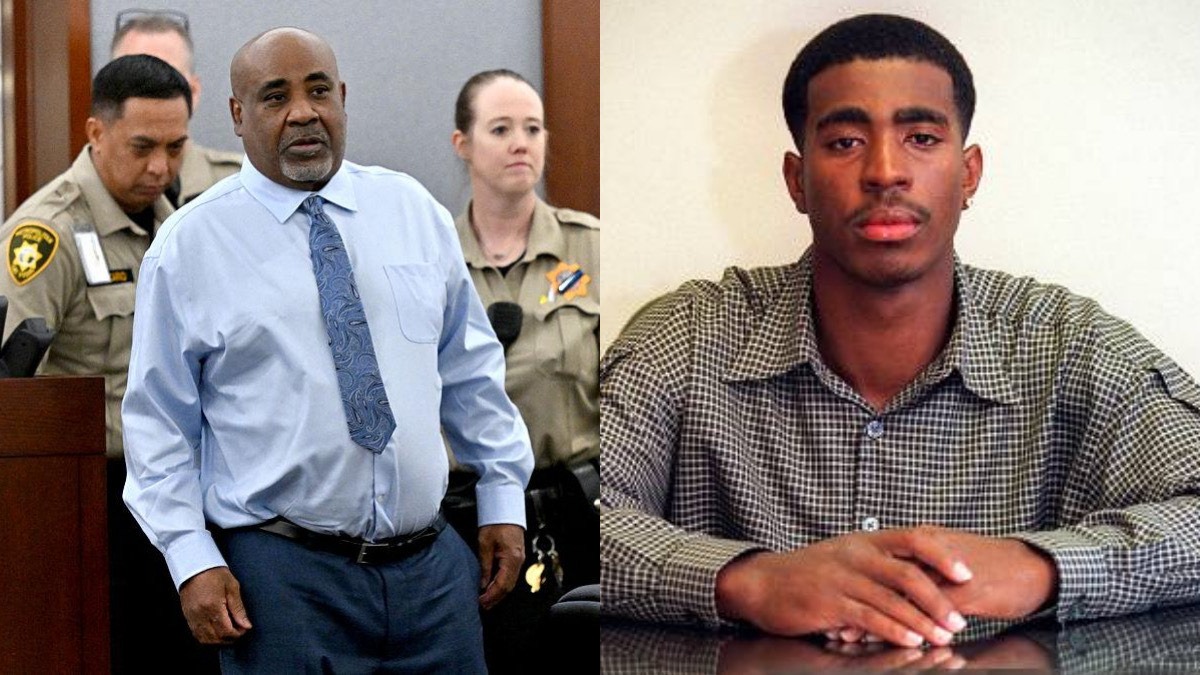
A critical distinction in the case is that prosecutors did not accuse Davis of personally firing the shots that killed Shakur. They said he orchestrated the revenge mission and supplied the gun used in the attack.
Nevada law permits a participant in a murder to be prosecuted for the killing even if that person did not personally pull the trigger.
The prosecution described Davis during the trial as the man directing the operation on the ground. And much of the evidence used to establish that role came from an extraordinary source — Davis himself.
For years, Davis spoke about what happened that night. He gave accounts to investigators, appeared in documentaries and interviews and eventually published details in his 2019 memoir, Compton Street Legend.
In his accounts, Davis placed himself in the front passenger seat of the Cadillac and said he passed a gun towards the two men sitting behind him before shots were fired at Shakur’s vehicle.
Those statements would eventually become the backbone of the prosecution case against him.
Authorities had long suspected Davis of involvement but lacked sufficient evidence to charge him. His later public accounts, memoir and recorded meetings with investigators helped transform a decades-old cold case into a prosecution.
Defence: He Lied For Fame And Money
Once charged, however, Davis repudiated the implication that his previous stories proved he was part of the murder. His defence portrayed him as a storyteller who exaggerated or fabricated his role to build his street reputation and make money.
His lawyers stressed the lack of physical evidence tying him to the 30-year-old crime and challenged prosecutors to prove that the stories Davis had repeatedly told were actually true.
But prosecutors turned that defence on its head, arguing that Davis could not spend years publicly placing himself at the centre of the killing and then dismiss those accounts as fiction when faced with criminal prosecution.
After nine days of testimony, the 12-member jury needed about three hours to reach a unanimous guilty verdict.
Davis’ lawyer, Michael Sanft, has said the conviction will be appealed, including on arguments surrounding the lengthy delay before prosecutors brought the case.
Who Pulled The Trigger?

Despite Davis’ conviction, one of the central mysteries surrounding Shakur’s murder remains unresolved in court: who actually fired the fatal shots?
Prosecutors have never conclusively established the gunman through a criminal conviction.
Davis had identified his nephew, Anderson, as the shooter in his own account, but Anderson was never prosecuted for Shakur’s murder and was killed in an unrelated gang shooting in 1998.
The other three men prosecutors said were inside the Cadillac with Davis on the night of Shakur’s murder are now dead.
Clark County District Attorney Steve Wolfson has said prosecutors currently do not believe there is sufficient evidence to charge anyone else, although the case could be reconsidered if new evidence emerges.
A Murder That Refused To Die
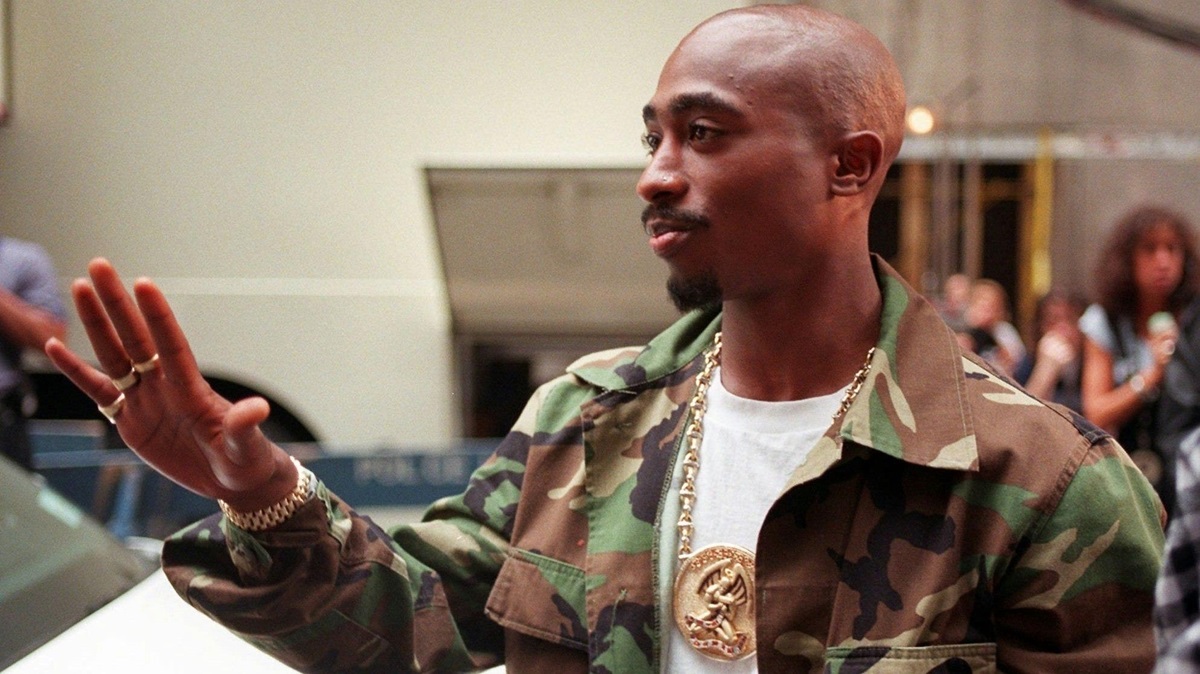
Shakur was already one of the biggest names in American music when he was killed.
Born Tupac Amaru Shakur in New York in 1971, he became a defining voice of 1990s hip-hop, combining commercial success with songs about poverty, racial inequality, violence, love and the struggles of Black Americans.
He was also establishing himself as an actor before his death at 25.
His murder became inseparable from the turbulent history of 1990s hip-hop and intensified perceptions of violence surrounding the East Coast-West Coast rivalry.
Six months later, another rap giant, Christopher Wallace — The Notorious B.I.G. — was shot dead in Los Angeles. His murder remains unsolved, and speculation has long linked the two killings, although no court has established such a connection.
Davis was arrested near his Las Vegas-area home in September 2023, 27 years after Shakur was killed. Three years later, a jury found him guilty.
Tuesday’s sentence completed the first prosecution arising from the killing.
For Shakur’s family, it was the end of a 30-year wait for someone to be held accountable. For Davis, the stories he repeatedly told about one of hip-hop’s most infamous murders ultimately helped secure a conviction and a 40-years-to-life prison sentence.
Felix Ifijeh is a journalist with years of professional reporting experience. Known for his keen news sense, compelling storytelling and commitment to accurate, impactful reporting, he has built a reputation for turning leads into clear, engaging, and well-structured reports that resonate with readers. His work reflects deep newsroom experience and a commitment to accurate, impactful journalism.
