
September 28, (THEWILL) – West Africa faces a climate-finance problem that extends beyond the amount of capital available. The deeper constraint is that many countries must finance increasingly expensive climate adaptation while managing high debt, limited fiscal space and elevated borrowing costs.
The result is a structural mismatch as governments need long-term, affordable capital for energy systems, agriculture, transport and coastal protection. Yet the projects most important for climate resilience often generate limited commercial returns. Countries consequently struggle to attract private investors without guarantees or concessional finance.
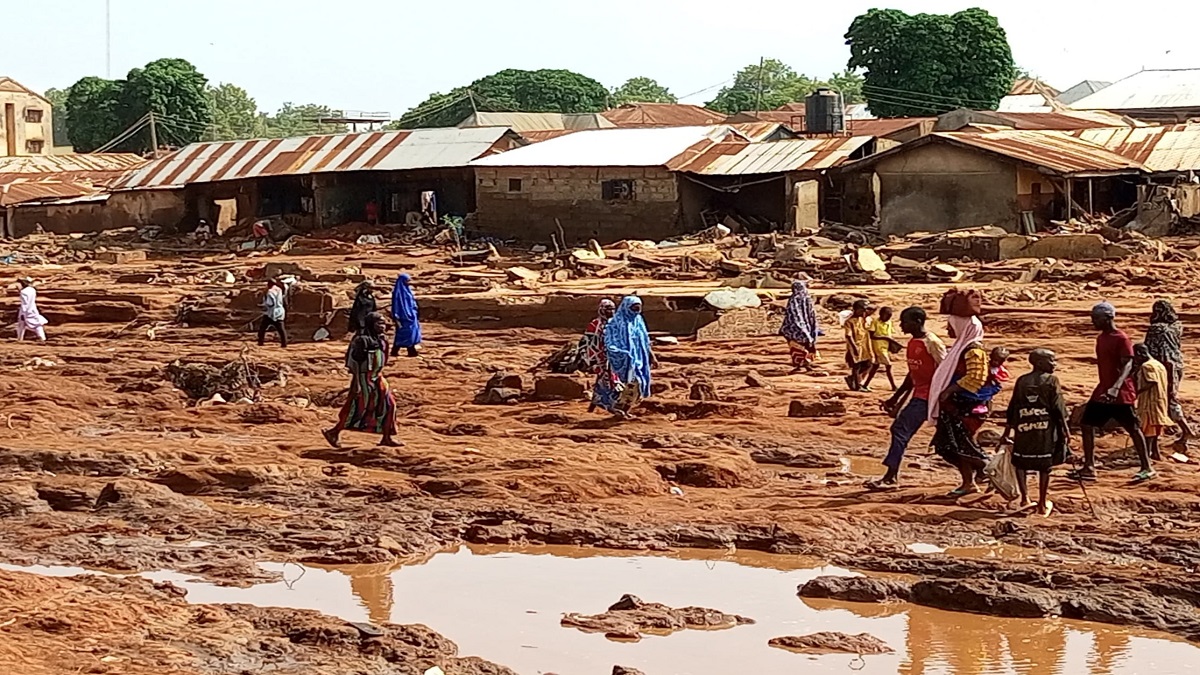
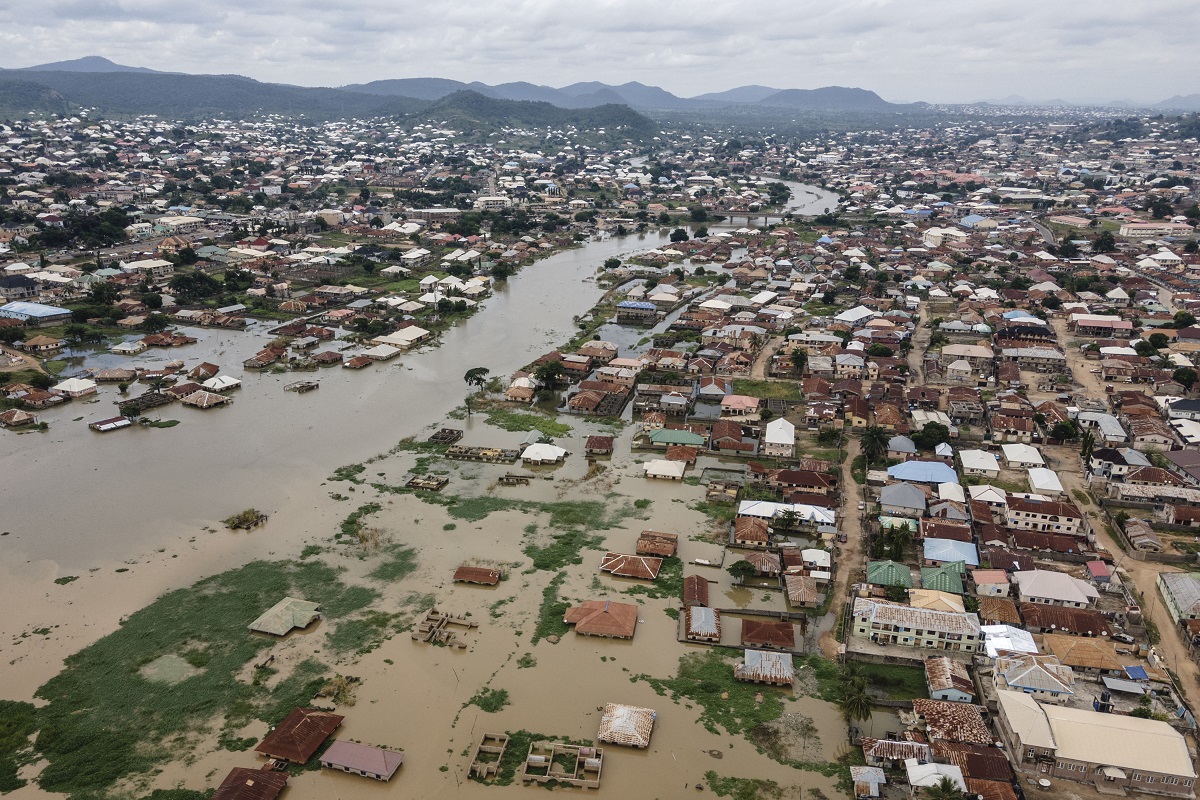
The scale of the problem is already visible along West Africa’s coastline. Coastal erosion, flooding and pollution cost Benin, Côte d’Ivoire, Senegal and Togo an estimated $3.8 billion in 2017. That represented about 5.3 percent of their combined GDP.

Climate pressures could increasingly influence migration and economic geography. The World Bank estimates that up to 32 million people could become internal climate migrants across West Africa by 2050 without stronger climate and development policies.
ECOWAS estimates that West Africa requires about $294 billion in climate finance under its 2022 Regional Strategy for Access to Climate Finance. The requirement could increase as member states strengthen their climate commitments.
That estimate should not be directly compared with broader continental calculations because methodologies and timeframes differ. The African Development Bank estimates that Africa requires approximately $242.4 billion annually to implement its Nationally Determined Contributions through 2030. Under one scenario, the continent’s annual private climate-financing gap could reach $213.4 billion.
Both estimates, however, reveal the same structural problem. Climate investment is not reaching vulnerable economies at anything close to the required scale.
Nigeria Exposes The Mismatch
Nigeria provides the clearest illustration of the financing imbalance at present. Between 2015 and 2021, Nigeria received $4.928 billion for 828 international climate-related projects. That represented average annual financing of about $704 million, according to the climate-finance assessment released by Connected Development and Oxfam. The assessment estimates annual climate commitments at $177.7 billion.
The financing structure creates another problem. Adaptation received 52 percent of recorded financing and mitigation received 43 percent. However, concessional loans accounted for 75 percent of the financial instruments, while grants represented only 12 percent.
This means climate action can increase liabilities for governments already facing fiscal constraints.
Nigeria’s Energy Transition Plan uses a different methodology and timeframe. It estimates approximately $1.9 trillion of spending through 2060, including about $410 billion above business-as-usual expenditure. This would require roughly $10 billion in additional annual financing.
The allocation of existing capital also matters. Fair Finance Nigeria reports that financial institutions extended about $15.5 billion to Nigeria’s upstream and downstream oil sectors in 2022. The report curated by six civil society groups simultaneously documents environmental and socioeconomic pressures in oil-producing communities.
Its recommendations include stronger environmental, social and governance standards for financial institutions. It also calls for financing that reduces gas flaring and supports alternative energy systems in host communities.
Nigeria therefore demonstrates that the climate-finance challenge involves more than capital scarcity. The destination, cost and financial structure of capital are equally important.
READ ALSO:
Debt Restricts Climate Investment
Ghana estimates that implementing 47 measures under its Nationally Determined Contribution requires between $9.3 billion and $15.5 billion from 2020 to 2030. Its longer-term Energy Transition and Investment Plan envisages about $550 billion in capital investment to reach net zero by 2060.
Those ambitions confront difficult fiscal conditions. Ghana lost international capital-market access during its 2022 macroeconomic crisis and subsequently undertook comprehensive debt restructuring. Climate investment must therefore compete with debt servicing, infrastructure and social expenditure.
Senegal faces a similar constraint as the World Bank estimates that the West African giant requires approximately $1.36 billion annually in climate investment through 2030. Average climate finance in 2019 and 2020 was approximately $561 million, equivalent to about 41 percent of estimated annual requirements under that methodology.
Failure to increase adaptation investment carries substantial economic consequences. The World Bank estimates climate-related losses could reach three to four percent of Senegal’s GDP by 2030 and 9.4 percent by 2050 without sufficient action. Senegal’s debt position makes borrowing a difficult solution. The IMF estimated total public-sector debt at 132 percent of GDP at the end of 2024.
This creates a reinforcing mechanism. Climate vulnerability increases investment requirements, while debt reduces governments’ capacity to make those investments. Insufficient investment can then increase future economic losses and fiscal pressures.
The type of finance consequently becomes as important as its quantity. Commercial loans can work for renewable-energy projects with predictable revenues. Financing sea walls, flood defences or ecosystem restoration through additional sovereign debt is more problematic because these investments often produce public benefits rather than direct revenues.
That problem extends beyond West Africa. UNEP estimates that developing countries will require between $310 billion and $365 billion annually for adaptation by 2035. International public adaptation finance stood at only $26 billion in 2023.
Adaptation Attracts Less Capital
Private capital tends to favour climate projects with identifiable revenue streams. Solar farms sell electricity. Electric transport systems collect fares. Commercial agricultural projects can generate cash flows. These characteristics allow investors to estimate repayment capacity and returns.
Adaptation is different. Mangrove restoration, flood protection and drought-resistant public infrastructure can prevent large economic losses without generating predictable revenue.
This explains part of the financing imbalance. The West Africa blended-finance study by LEBEC reports that adaptation accounted for only 13 percent of climate blended-finance volumes over the preceding five years. Yet it cites research suggesting every dollar invested in adaptation can generate between $2 and $10 in economic benefits through avoided losses and higher productivity.
Several West African projects show how financial structures can partly overcome this problem. Dakar’s electric Bus Rapid Transit system combines public financing and private operation. The electric network is designed to transport as many as 300,000 passengers daily along an 18-kilometre corridor.
The West Africa Coastal Areas Management Programme provides another model. The programme operates across nine countries with $492 million in financing and supports coastal resilience in areas responsible for a significant share of regional economic activity.
Côte d’Ivoire has experimented with sovereign financing mechanisms. In 2025, it established a Sustainability-Linked Finance Framework with World Bank support. The mechanism links financing conditions to environmental targets while using guarantees to reduce risks for commercial lenders.
The country’s financing requirement remains substantial. The World Bank estimates that Côte d’Ivoire needs approximately $22 billion for climate action. Without adequate intervention, climate impacts could reduce real GDP by as much as 13 percent by 2050.
These cases demonstrate that private finance can support climate investment when projects have identifiable revenues or when public institutions absorb specific risks. They do not remove the need for concessional public finance.
The Climate Justice Problem
West Africa’s financing constraints also raise questions about responsibility within the international climate system. Sub-Saharan Africa generated approximately five percent of global greenhouse-gas emissions in 2022 despite containing about 15 percent of the world’s population. Africa’s historical contribution is smaller when measured through cumulative fossil-fuel and industrial carbon dioxide emissions. This imbalance underpins African governments’ argument that international climate finance should not operate primarily as conventional development lending.
Developed economies eventually exceeded their longstanding commitment to mobilise $100 billion annually for developing countries. OECD data show financing reached $115.9 billion in 2022, $132.8 billion in 2023 and $136.7 billion in 2024. The original target, however, was supposed to have been reached by 2020.
The composition of that finance remains contested because loans account for a substantial proportion of public climate finance. For indebted countries, a nominal increase in climate finance therefore does not necessarily produce an equivalent increase in usable fiscal capacity.
COP29 established a new target of at least $300 billion annually for developing countries by 2035. Governments also agreed to pursue a wider goal of mobilising at least $1.3 trillion annually from public and private sources. The negotiating issue is consequently shifting from headline commitments towards cost, accessibility, instruments and distribution.
Making Climate Capital Cheaper
West Africa cannot close its financing gap through a single instrument. Adaptation projects that produce broad public benefits will continue to require grants and highly concessional finance. Development banks can amplify these resources through guarantees, first-loss capital and currency-risk protection.
Blended finance has greater potential where projects possess viable cash flows but remain too risky for commercial investors. The West Africa study estimates that such structures have historically mobilised about four commercial dollars for every concessional dollar.
However, blended finance has clear limits. The study notes that projects without realistic revenue or repayment pathways remain unsuitable for commercial structures and require direct grants.
Debt-for-climate swaps can provide fiscal relief, but their scale is generally insufficient where sovereign debt itself is unsustainable. Green bonds can broaden investor participation, but attaching a climate label does not automatically reduce high borrowing costs.
Carbon markets represent another possible source of capital. ECOWAS is developing a regional platform intended to harmonise standards, reduce transaction costs and strengthen participation under Article 6 of the Paris Agreement.
Their contribution will depend on credible carbon accounting, transparent registries and effective benefit-sharing. Weak governance or low carbon prices would substantially reduce their financing potential.
Domestic capital is equally important as pension funds, commercial banks and sovereign investors hold resources that could finance climate infrastructure. Mobilising them requires credible projects, standardised contracts, predictable regulation and mechanisms to reduce currency and political risks.
The West Africa blended-finance study argues that governments should move from isolated transactions towards scalable project pipelines and larger portfolios. Standardised documentation, guarantees and catalytic capital could reduce transaction costs and improve project creditworthiness.
That shift addresses one of the region’s most persistent constraints: insufficient numbers of investment-ready projects. West Africa’s climate-finance challenge is therefore not simply a search for larger international commitments. It requires changes on both sides of the financing system.
Regional governments need stronger project preparation, climate-budgeting systems, domestic capital mobilisation and regulatory certainty. International institutions need to provide more grants for adaptation, expand concessional lending and use their balance sheets more aggressively to reduce private investment risks.
Without those changes, the $294 billion requirement identified by ECOWAS will translate into a larger development constraint. Governments will face rising costs from damaged infrastructure, agricultural disruption, coastal erosion and energy insecurity while retaining limited capacity to finance preventive investment.
Closing the gap requires a different allocation of risk. Countries with limited responsibility for accumulated global emissions cannot sustainably finance climate resilience primarily through expensive additional debt.
For West Africa, the central question is therefore no longer whether sufficient global capital exists. It is whether the international and regional financial systems can convert that capital into affordable investment before climate losses further weaken the economies expected to repay it.

Segun Adeyemi serves as the Associate Editor of THEWILL Newspaper, leveraging more than ten years of editorial expertise and a proven track record in mainstream journalism.
