
-
The Home Office announced the policy on September 3, but the formal rule takes effect next month.
-
Workers must have received a positive Conclusive Grounds decision under the National Referral Mechanism.
-
Eligible workers will be able to take other jobs, including self-employment and voluntary work.
-
Their existing immigration permission remains unchanged and is not extended by the measure.
September 03, (THEWILL) — Britain is changing its immigration rules to give recognised victims of modern slavery on Skilled Worker visas the freedom to leave their sponsoring employers and work elsewhere.
The Home Office said the change is intended to stop immigration status being used to keep exploited workers in abusive employment.
“No victim of modern slavery should be trapped with an exploitative employer because of their immigration status”, the department said in a post on X.

Skilled Worker visas normally restrict migrants to the job for which they have been sponsored. Anyone changing employer generally has to apply to update their immigration permission.
From October 8, that restriction will be removed for a defined group of modern slavery victims.
Eligibility depends on a positive “Conclusive Grounds decision” under the National Referral Mechanism, the UK system for identifying and supporting potential victims of modern slavery. A worker must have received that decision during their most recent period of immigration permission.
Once recognised, the worker can undertake any work for the remainder of their existing permission. The new rules cover employment with another employer as well as self-employment and voluntary work. Professional sportspersons, including sports coaches, are excluded.
The change does not give qualifying workers a fresh visa or extend the time they can remain in Britain. It changes the conditions attached to their existing permission.
READ ALSO:
What Changes For Sponsored Workers
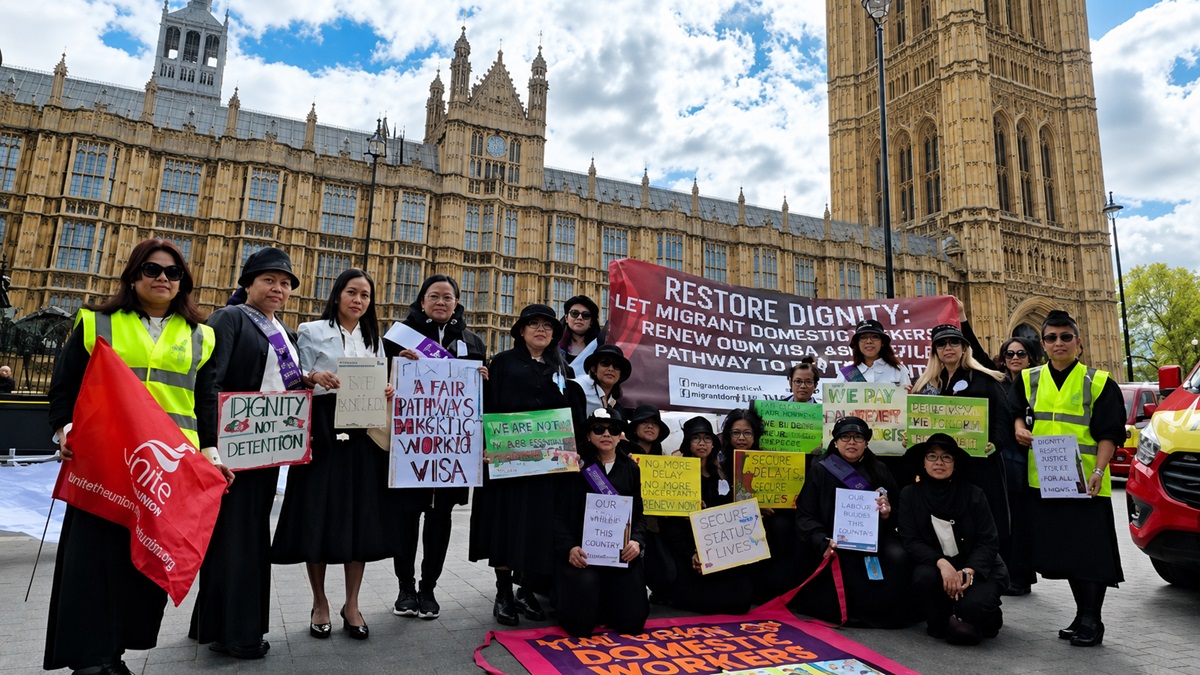
Employer sponsorship is central to the Skilled Worker route. Migrants are admitted to work in specified roles for approved sponsors, and changing employers normally requires an application to update their permission.
That system creates a particular problem when the sponsor is also the employer accused of exploitation. A worker who wants to leave may fear that doing so will put their immigration position at risk.
Home Office documents accompanying the rule change say the new provision is intended to prevent the sponsorship system from being used in that way and to encourage victims to report exploitation.
Not every complaint about an employer will qualify.
A worker must first be referred through the National Referral Mechanism and receive the positive Conclusive Grounds decision required by the new immigration rule.
Simply reporting abuse, leaving a job or entering the NRM does not by itself provide the new freedom to work elsewhere.
Modern slavery referrals have risen sharply in Britain. Home Office figures show 23,411 potential victims were referred through the NRM in 2025, 22% more than in 2024 and the highest annual total since the system began.
Labour exploitation accounted for a substantial share of those referrals. The figures cover potential victims generally and do not show how many held Skilled Worker visas.
No estimate has been published for the number of Skilled Worker visa holders who will benefit from the new provision.
Although the Home Office announced the policy on September 3, the legal change does not take effect immediately.
The Statement of Changes to the Immigration Rules, laid before Parliament on Thursday, specifies October 8 as the commencement date for the amendment to Appendix Skilled Worker.
Until then, the ordinary Skilled Worker conditions remain relevant to affected workers. Once the new provision comes into force, qualifying victims will be able to work outside the employment for which they were originally sponsored without having to remain tied to that employer for the balance of their existing immigration permission.
The government has said further guidance will accompany implementation of the change.
For workers who meet the eligibility test, the practical change is narrow but clear; recognition as a victim of modern slavery will no longer leave them subject to the usual Skilled Worker employment restriction.
The measure applies across the United Kingdom.

Joy Onuorah is a business journalist and brand communications specialist covering financial markets, artificial intelligence, digital economy, and the ideas reshaping business across Africa and the global market. Beyond her reporting for TheWill, Joy uses brand strategy, storytelling, copywriting, and high-value SEO to help brands build lasting market authority.