
-
A rights group is challenging alleged restrictions in Kano, Kaduna, Kebbi and Sokoto.
-
Users reportedly face frozen feeds, failed uploads and videos that will not load.
-
Responsibility for the disruption has not been established.
-
Civil society organisations want an independent technical investigation.
October 07, (THEWILL) – TikTok is facing a lawsuit in Abuja over reported access problems in four northern Nigerian states, where users say videos fail to load and uploads stall while the application remains available elsewhere.
The Foundation for Digital Justice and Sustainable Development filed the action at the Federal High Court on October 5, alleging that TikTok restricted access in Kano, Kaduna, Kebbi and Sokoto. It wants the court to order the company to restore service and declare the alleged restrictions a violation of users’ rights.
However, the cause of the disruption remains unresolved. Reports of failed connections establish a problem for users, but do not establish that TikTok deliberately excluded them.

That uncertainty is central to both the lawsuit and a separate demand by civil society organisations for regulators and telecommunications companies to investigate.
Failed Uploads, Unanswered Questions
According to an affidavit described in published reporting on the suit, access difficulties began around September 11 and worsened over the following days.
“These users cannot load videos, refresh their feeds and upload content on TikTok,” the foundation’s legal officer, Abidat Idowu, stated in the affidavit.
The organisation says some affected users regained access through virtual private networks, commonly called VPNs. It considers that evidence of a regional restriction.
Nevertheless, a working VPN connection does not identify who caused the original failure. In its own October 5 statement, the Nigeria Network of NGOs said available information could not establish if the problem involved a technical fault, network routing, traffic management or an intentional restriction.
READ ALSO:
“Neither public authorities nor civil society should reach conclusions that the technical record does not support,” the network said.
TikTok had not responded to requests for comment, according to TechCabal’s October 7 report. Its silence does not establish responsibility for the disruption.
Creators and Businesses Caught in the Dispute
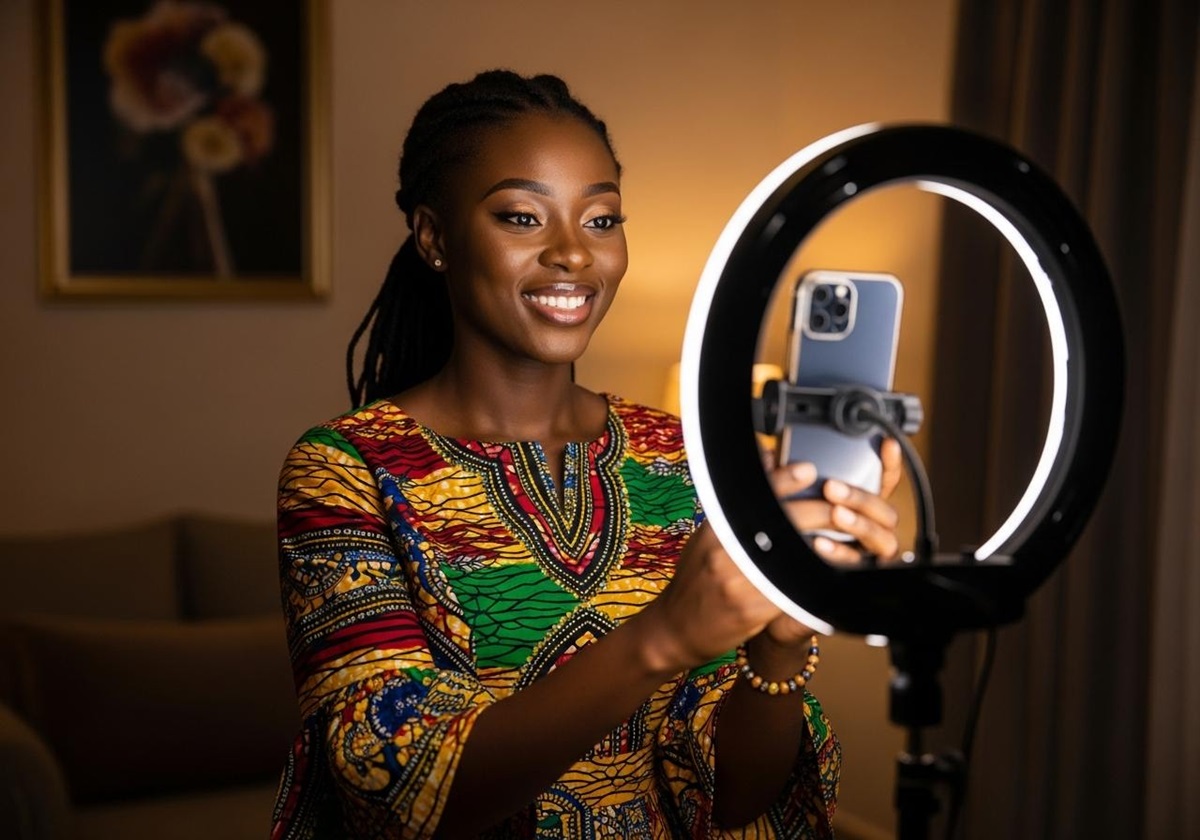
A woman uses a smartphone and ring light for content creation in Abuja. Source: David Kwewum / Pexels.For people who use TikTok to find customers or distribute their work, unreliable access can interrupt more than entertainment.
The Nigeria Network of NGOs identified potential consequences for creators, small businesses and community organisations that depend on the platform to reach audiences. It also highlighted public-information campaigns, citizen reporting and communication with people receiving assistance. Its statement did not quantify lost income or establish how many users were affected.
Meanwhile, the foundation’s legal challenge invokes constitutional protections for expression and against discrimination. It argues that preventing people in particular states from using the service would interfere with their ability to receive information and participate in public discussion.
“TikTok owes its users the duty to offer an explanation concerning the restriction and the discrimination,” the foundation’s lawyer, Festus Ogun, told TechCabal. Those descriptions remain the claimant’s allegations.
Alongside declarations that the alleged restrictions are unlawful, the foundation seeks an injunction against similar action without lawful justification. It also wants a public apology in three nationally circulating newspapers within seven days of judgment. These are requests to the court, not orders already issued.
Separately, the Nigeria Network of NGOs has asked the Nigerian Communications Commission, telecommunications providers and TikTok to publish an independent investigation identifying the affected networks, the cause and duration of the disruption, and any official directive behind it.

Joy Onuorah is a business journalist and brand communications specialist covering financial markets, artificial intelligence, digital economy, and the ideas reshaping business across Africa and the global market. Beyond her reporting for TheWill, Joy uses brand strategy, storytelling, copywriting, and high-value SEO to help brands build lasting market authority.
