
-
Former National Chairman of the Peoples Democratic Party (PDP), Alhaji Bamanga Tukur, has died at the age of 90, with family sources confirming his death on Saturday.
-
Tukur, who was the Tafidan Adamawa, was a major figure in Nigeria’s political and business history, having served as Governor of the old Gongola State, General Manager of the Nigerian Ports Authority and Minister of Industries.
-
His political career spanned the Second Republic, the military era and the Fourth Republic, including a brief tenure as Governor of Gongola State in 1983 before the military coup that ended the civilian administration.
-
Tukur later emerged as National Chairman of the PDP in 2012 but resigned in 2014 amid a prolonged internal crisis in the ruling party, leaving behind a career that also included major roles in African business and investment circles.
September 12, (THEWILL) – Alhaji Bamanga Tukur, former National Chairman of the Peoples Democratic Party (PDP) and former Governor of the old Gongola State, has died at the age of 90.
Family sources disclosed his death on Saturday, although details surrounding his death were not immediately available as of the time of filing this report.
Tukur, who held the traditional title of Tafidan Adamawa, was born on September 15, 1935. His death comes just three days before his 91st birthday and marks the passing of one of Nigeria’s prominent political figures whose career stretched across several decades and different political eras.

A businessman, administrator and politician, Tukur first gained national prominence as the General Manager of the Nigerian Ports Authority (NPA), a position he held between 1975 and 1982.
He subsequently ventured into partisan politics and was elected Governor of Gongola State in 1983. At the time, Gongola State comprised the areas that later became Adamawa and Taraba states.
However, his administration was short-lived, as the military coup of December 1983 terminated the Second Republic and brought the civilian administration to an abrupt end.
Following the collapse of the Second Republic, Tukur returned to the private sector and established BHI Holdings, also known as the DADDO Group of Companies. His business career expanded beyond Nigeria, making him an influential figure in African private-sector circles.
He served as Executive President of the African Business Roundtable and Chairman of the NEPAD Business Group, while also holding several positions in international business and investment organisations.
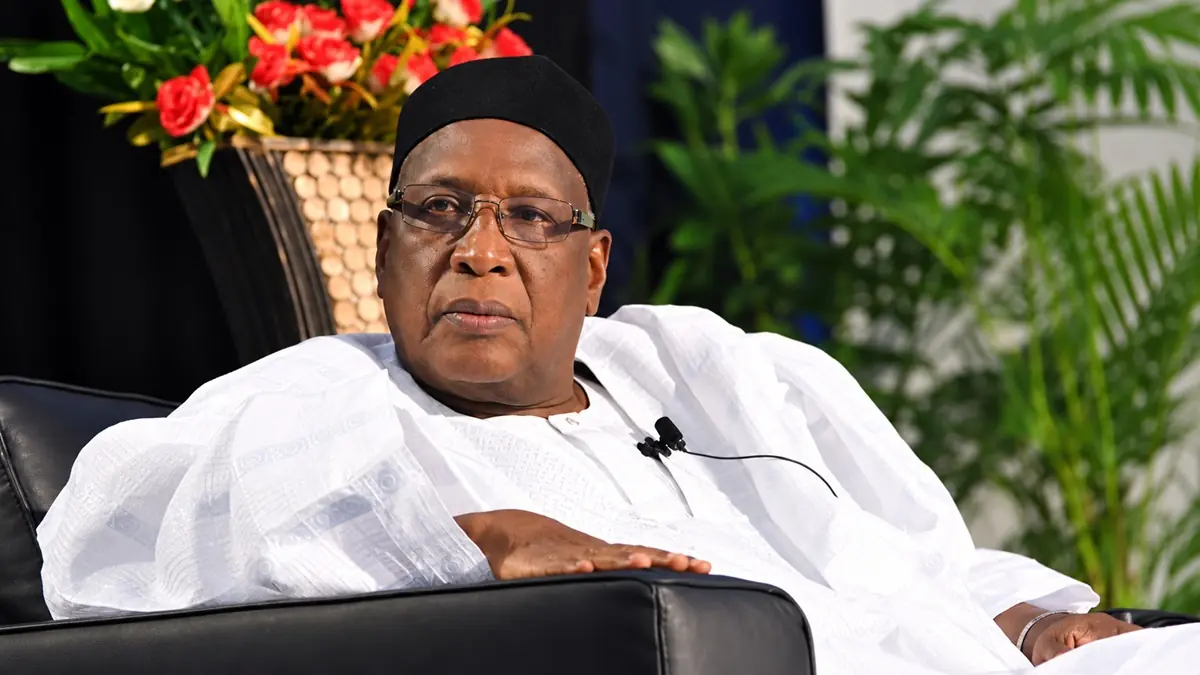
Late Bamanga Tukur, former National Chairman of the Peoples Democratic Party (PDP).
Political Career
Tukur returned to government in the 1990s when he was appointed Minister of Industries by the military administration of General Sani Abacha. He served in the position between 1993 and 1995.
He was also a presidential candidate of the defunct National Republican Convention (NRC), one of the two government-established political parties that operated during the political transition programme of the late military ruler, General Ibrahim Babangida.
With the return to democratic rule in 1999, Tukur became active in the PDP and rose through the ranks of the party. In March 2012, he emerged as National Chairman of the PDP with the backing of then-President Goodluck Jonathan.
His tenure, however, coincided with a period of intense internal disagreements within the party. The PDP was increasingly divided over issues involving its leadership structure, the presidency, governors and other influential stakeholders. The crisis eventually produced the breakaway New PDP faction, involving several senior politicians and governors, and contributed to the political realignment that preceded the 2015 general election.
Amid the mounting crisis, Tukur resigned as PDP National Chairman in January 2014. He was subsequently succeeded by Adamu Mu’azu.
Despite leaving the party leadership, Tukur remained a prominent elder statesman and continued to be associated with political and economic affairs in Nigeria and across Africa.
READ ALSO:
Business, National Service
Beyond partisan politics, Tukur’s career was marked by extensive involvement in business development and public administration.
His leadership of the NPA during the 1970s and early 1980s placed him at the centre of Nigeria’s maritime and economic activities at a critical period in the country’s development.
His subsequent work through BHI Holdings and his roles in African business organisations further established him as an advocate of private-sector participation in Africa’s economic development.
As Executive President of the African Business Roundtable and Chairman of the NEPAD Business Group, he was involved in efforts aimed at strengthening African businesses, investment and economic integration.
Tukur was also a recipient of Nigeria’s national honours, including Commander of the Order of the Niger (CON) and Commander of the Order of the Mono (COM).
Felix Ifijeh is a journalist with years of professional reporting experience. Known for his keen news sense, compelling storytelling and commitment to accurate, impactful reporting, he has built a reputation for turning leads into clear, engaging, and well-structured reports that resonate with readers. His work reflects deep newsroom experience and a commitment to accurate, impactful journalism.