
-
Secretary to the Government of the Federation, Senator George Akume, warns promoters of the Renewed Hope Electric Transportation Initiative against raising public expectations without demonstrating their capacity to deliver.
-
Federal Government expresses interest in the proposed electric mass transit scheme but withholds final approval pending a credible implementation framework.
-
Promoters say the initiative will be privately funded, with no request for a kobo from the Federal Government. The project proposes pilot electric bus routes in one city across each of Nigeria’s six geopolitical zones.
-
FG demands clear answers on electricity supply, charging infrastructure, affordable fares, passenger safety and sustainability.
November 13, (THEWILL) – The Federal Government has challenged promoters of the Renewed Hope Electric Transportation Initiative (RHETI) to demonstrate their capacity to deliver affordable electric mass transit, warning against raising Nigerians’ expectations with promises that may not translate into tangible relief.
Secretary to the Government of the Federation (SGF), Senator George Akume, gave the warning on Thursday when he received promoters of the initiative at his office, making it clear that expressions of interest and good intentions would not automatically translate into government approval.
Although the Federal Government has expressed interest in the proposed private-sector-driven initiative, which seeks to deploy affordable electric mass transit across Nigeria’s six geopolitical zones, Akume insisted that the promoters must first provide a credible, and implementable framework demonstrating how the scheme would work.
His message was unequivocal: Nigerians, already burdened by rising transportation costs, should not be made to embrace another promise without concrete evidence that it can be fulfilled.
“Good intentions do not move buses. Electricity moves them. Maintenance keeps them on the road. Sound management keeps fares within reach and passengers safe”, the SGF declared.
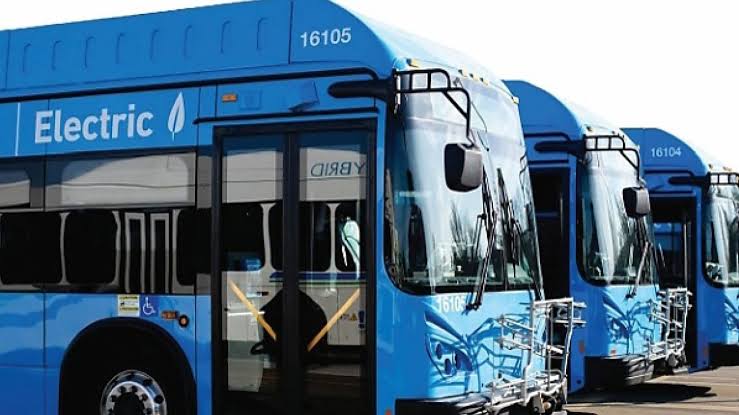
The proposed initiative is designed to introduce electric buses for mass transportation across the six geopolitical zones, with the promoters claiming they would provide the required capital without seeking financial assistance from the Federal Government.

Akume said the proposal attracted the attention of his office partly because, unlike many other submissions, it did not come with a request for government funding.
“In this building we receive a great many proposals, and most of them, sooner or later, find their way to the same address: the federal budget. This one is different. Dr Achile, you have said that you did not come here with a begging bowl, and I take you at your word. You are telling government: we will bring the capital; give us your blessing, your coordination and the right environment, and let the results speak for themselves”, he said.
The SGF, however, stressed that the absence of a request for public funds did not remove the need for rigorous scrutiny, particularly where the welfare and economic interests of millions of Nigerians were concerned.
He said the proposal was being considered against the background of the rising cost of living, especially the increase in transportation expenses following the removal of the petrol subsidy by President Bola Ahmed Tinubu.
Akume acknowledged that although the subsidy removal was a necessary decision that successive administrations had postponed for decades, its consequences had been painful for Nigerians, with transportation costs emerging as one of the most immediate burdens.
Illustrating the daily struggle of commuters, he painted a picture of a young nurse leaving home early in Kubwa, Abuja, and calculating how much of her earnings would be consumed by transportation before she arrived at work.
“It is six o’clock in the morning in Kubwa. The same scene is playing out in Ikorodu, Nkpor, Rigasa, and Rumuokoro. A young nurse stands by the roadside waiting for a bus, and while she waits, she is doing arithmetic in her head. How much of today’s pay will be gone before she even reaches the hospital gate? Millions of our people do that sum every morning. That sum is the reason we are gathered here today,” he said.
According to Akume, the proposed electric transportation system could help address this challenge, but only if the promoters could guarantee affordable fares, operational efficiency and reliable services.
Four Reasons FG Is Considering the Initiative
Akume identified four major reasons the government was taking the proposal seriously: reduction in the cost of living, support for Nigeria’s energy transition, employment generation and equitable development across the six geopolitical zones.
On the cost of living, he said affordable transportation would leave households with more disposable income for food, school fees, rent and other essential needs.
He noted that for families spending a substantial portion of their earnings on daily transportation, reduced fares could make a significant difference between financial stability and continued hardship.
On energy transition, the SGF said the initiative would complement existing government policies, including the Presidential CNG Initiative and Nigeria’s Energy Transition Plan. He maintained that the proposed deployment of electric buses would demonstrate Nigeria’s commitment to participating in the global transition towards cleaner energy.
On employment, Akume said the project could create opportunities for drivers, technicians, charging-station operators and other professionals required to maintain and operate electric vehicle fleets.
He also identified the potential for local assembly and the eventual manufacture of electric vehicle components.
The SGF disclosed that the promoters were already collaborating with the National Directorate of Employment to train young Nigerians in electric vehicle repairs and maintenance.
On equitable development, he insisted that no geopolitical zone should be excluded from the benefits of the proposed initiative.
He welcomed the promoters’ plan to commence with one pilot route in one city in each of the six geopolitical zones before expanding the programme based on performance and measurable results.
The SGF also proposed regular reports to his office detailing the number of jobs created, kilometres covered by the buses and the amount of money commuters had saved.
READ ALSO:
Akume Demands Answers Before Final Approval
Despite welcoming the proposal, the SGF made it clear that the Federal Government’s interest should not be mistaken for final approval.
He demanded detailed explanations on how the promoters intended to overcome the challenges of electricity supply and charging infrastructure, maintain operational standards, guarantee passenger safety and ensure that fares remained affordable.
The role of state governments in providing the necessary cooperation for the proposed pilot routes was also identified as a critical consideration.
Akume emphasised that these were fundamental requirements, not bureaucratic obstacles.
“These are not obstacles. They are the foundations on which the whole project will stand or fall,” he said.
He explained that his office would facilitate engagements between the promoters and relevant government institutions, including the Federal Ministries of Transportation, Power and Finance, the Presidential CNG Initiative and the National Automotive Design and Development Council.
According to him, bringing these institutions together was part of the coordinating responsibility of the Office of the SGF.
On the promoters’ requests concerning incentives and the use of national symbols, Akume said the matters would be handled through the appropriate government procedures.
He further disclosed that a team from the Office of the SGF, working under the Permanent Secretary, Political and Economic Affairs, had been constituted to work closely with the promoters.
The team is expected to assist in developing a comprehensive implementation framework covering the proposed pilot cities, deliverables, timelines, funding model and measurable outputs and outcomes.
Akume said the framework would form the basis for the government’s final consideration of the proposal and possible approval.
Promoters: We Are Not Asking FG For Kobo
Earlier, the Convener and Initiator of RHETI, Dr Madisca Achile, said the initiative was conceived to contribute to the Federal Government’s efforts to reduce poverty and ease the transportation burden on Nigerians.
Achile said the timing was appropriate, given the rising cost of transportation and the need to introduce affordable alternatives to conventional mass transit. He recalled Akume’s expressed commitment to supporting initiatives capable of reducing poverty, explaining that this informed his decision to develop the electric transportation proposal.
“The SGF said he would support anything that would reduce poverty in the country. That is why I come up with this idea to bring electric vehicles that would ease mass transportation at an equally affordable rate throughout the federation”, Achile said.
He described the initiative as a private-sector contribution to President Tinubu’s Renewed Hope Agenda, insisting that the promoters were not seeking financial assistance from the Federal Government.
“We are here to add value to the agenda of Mr President, and we are doing this without asking a kobo from the Federal Government. We are here just to get approval, and this is a way out to contribute to mass transit in the country and the reduction of the cost of transportation”, he stated.
The proposal was formally submitted to the Office of the SGF in a letter dated September 16, signed by Achile.
Akume closed his remarks by returning to the image of the young nurse in Kubwa, saying the ultimate measure of the initiative’s success would not be the number of promises made or meetings held, but the actual difference it would make in the lives of ordinary Nigerians.
“If, some months from now, she steps onto a clean, quiet and affordable bus, and arrives at work with money still in her purse, then together we will have done something worthwhile. That is what Renewed Hope looks like on our streets,” he said.
He thanked the promoters for their vision and confidence in Nigeria, as well as the Grand Patrons for lending their names and experience to the initiative.

Felix Ifijeh is a journalist with years of professional reporting experience. Known for his keen news sense, compelling storytelling and commitment to accurate, impactful reporting, he has built a reputation for turning leads into clear, engaging, and well-structured reports that resonate with readers. His work reflects deep newsroom experience and a commitment to accurate, impactful journalism.