
-
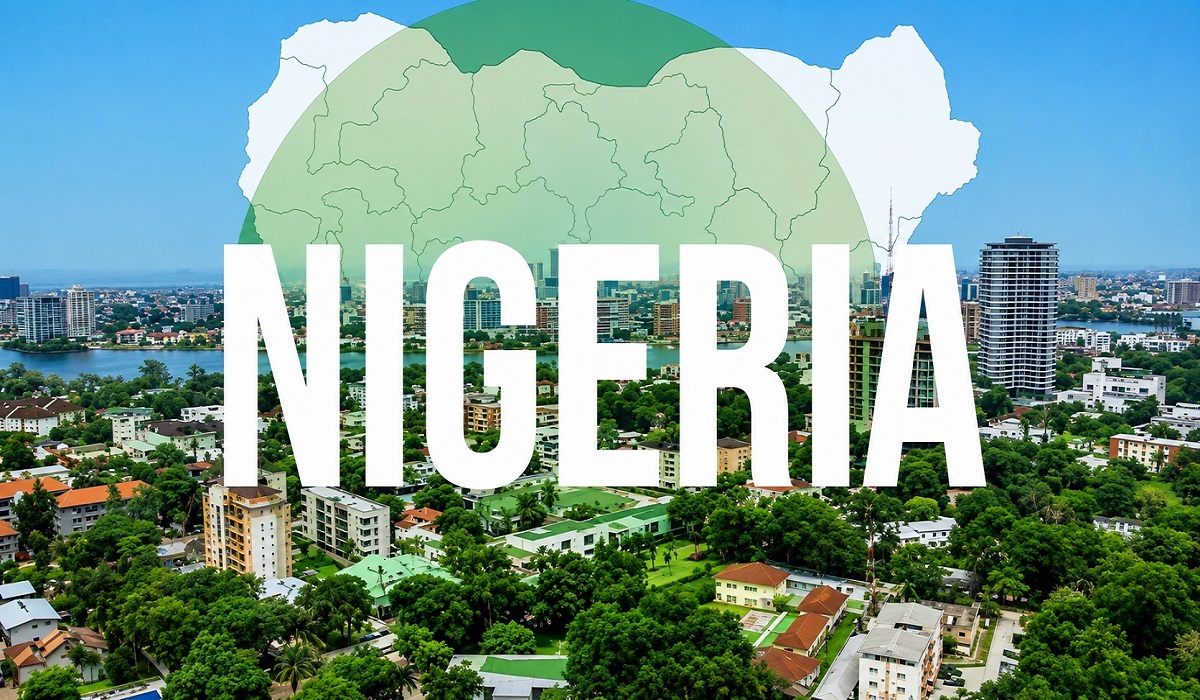
US Congressman Chris Smith says persistent attacks on Christian communities have raised fresh questions about Nigeria’s response, more than a year after President Donald Trump designated the country a Country of Particular Concern.
-
Citing testimony by religious freedom advocate Nina Shea, Smith says Nigeria accounts for 72 per cent of faith-related killings of Christians worldwide, while more than one million survivors of attacks have reportedly been displaced.
-
The US lawmaker identifies Benue, Plateau, Kaduna and Taraba among the worst-affected areas, accusing armed Fulani militants, Boko Haram and ISWAP of sustaining violence against Christian communities.
-
Smith urges Washington to intensify diplomatic pressure, consider targeted sanctions and link assistance to measurable progress, while demanding accountability under the Nigeria Religious Freedom and Accountability Act of 2026.
November 13, (THEWILL) – More than a year after US President Donald Trump placed Nigeria on America’s list of Countries of Particular Concern over religious freedom violations, American lawmakers say the killings, kidnappings and displacement of Christian communities have continued, renewing calls for concrete action by the Nigerian government.
The renewed pressure came on Thursday, November 12, as the US House Foreign Affairs Subcommittee on Africa convened a hearing to assess Nigeria’s response to religious persecution and insecurity in the Middle Belt since the designation.
Opening the hearing, its chairman, Congressman Chris Smith, said the persistence of attacks on Christian communities had raised serious concerns about the effectiveness of measures taken by the Nigerian government since the United States issued its warning.
The hearing, titled “One Year Later: Assessing Nigeria’s Efforts to Protect Christians and Secure the Middle Belt”, marked Smith’s 14th congressional hearing focused on religious persecution in Nigeria.
Trump had designated Nigeria a Country of Particular Concern on October 31, 2025, citing what he described as an existential threat to Christianity and the killing of thousands of Christians by radical Islamist groups.
The designation was made under the International Religious Freedom Act of 1998 and the Frank R. Wolf International Religious Freedom Act of 2016.

Smith recalled that the decision was intended to serve as a warning to Abuja and a demand for urgent action to protect religious communities.
But, according to him, the situation remained troubling, with Christian communities continuing to suffer killings, abductions, attacks on churches and the destruction of homes and livelihoods.
“Today, just over one year later, we confront an even more troubling reality. The violence has not ended”, Smith declared.
He said the congressional hearing was not simply another expression of concern by Washington but an opportunity to examine the Nigerian government’s record, determine whether American diplomatic engagement had produced results and identify further measures required to stop the violence.
Central to the hearing was testimony by Nina Shea, who described Nigeria as the world’s deadliest country for Christians targeted because of their faith.
Quoting Shea’s submission, Smith said Nigeria accounted for 72 percent of faith-related killings of Christians worldwide, according to figures from Open Doors.
Shea identified armed Fulani militants as a major threat to Christian communities in the Middle Belt, particularly in Benue, Plateau, Kaduna and Taraba states.
In her testimony, she alleged that armed groups had repeatedly invaded rural Christian villages and farming settlements, killing and maiming residents, committing rape and abducting people, including church leaders, for ransom. She further alleged that the attacks exhibited patterns suggesting organisation, coordination and financial support.
The consequences, according to the testimony, have been devastating for affected communities. Thousands of Christians have reportedly been killed or taken hostage, while more than one million survivors have been forced from their homes and ancestral lands.
Many of the displaced, Shea said, remain in camps, deprived of their livelihoods and uncertain about returning to their communities. She accused the Nigerian government of failing to protect Christian communities in the Middle Belt from the attacks.
Smith said the allegations reflected longstanding concerns raised by him and other members of Congress about the activities of armed groups and the apparent lack of accountability for those responsible.
He listed armed Fulani militants, Boko Haram and the Islamic State West Africa Province (ISWAP) among the groups involved in violence, killings and displacement across Nigeria.
“For too long, the Nigerian Government and the world have looked away — a culture of denial — as radical Fulani militants, Boko Haram and ISIS/West Africa have waged a relentless campaign of terror, murder, and displacement across Nigeria”, he said.
READ ALSO:
The American lawmaker said his involvement in the issue dated back several years, during which he had chaired congressional hearings, undertaken fact-finding visits and met survivors of attacks in Nigeria.
He recalled a 2012 hearing on Boko Haram, during which former US Assistant Secretary of State for African Affairs, Johnnie Carson, attributed the emergence of the insurgency partly to dissatisfaction with the Nigerian government’s failure to deliver services.
Smith said he had challenged that explanation, questioning why the insurgents abducted and raped Christian girls and employed force, coercion and threats of death to compel Christians to convert to Islam.
He also questioned the sources of the group’s weapons and improvised explosive devices, arguing that the nature of its activities warranted its designation as a Foreign Terrorist Organisation.
According to Smith, after three years of lobbying the administration of former President Barack Obama and the US State Department, Boko Haram was eventually designated a Foreign Terrorist Organisation on the day the House considered his Boko Haram Terrorist Designation Act of 2013.
He cited the experience as an example of how sustained legislative pressure could translate into action by the US government.
Turning to the current situation, Smith said American lawmakers had repeatedly advocated a more robust response, including stronger diplomatic pressure on Nigeria, targeted sanctions against perpetrators, direct humanitarian assistance to displaced communities and possible conditions on US assistance tied to measurable improvements.
He said Washington must ensure that its engagement with Abuja produced tangible results rather than remain at the level of diplomatic exchanges and expressions of concern.
Smith acknowledged recent efforts by the US State Department, including visits to Nigeria by Undersecretary Hooker and Assistant Secretary of State Frank Garcia, as well as meetings of the US-Nigeria Joint Working Group.
However, he said lawmakers wanted to know how those engagements had translated into concrete action by the Nigerian government.
The committee, he disclosed, had also worked with the House Committee on Appropriations, following a request from the White House, to prepare recommendations on measures needed to maximise the impact of Nigeria’s CPC designation.
Those recommendations were subsequently translated into legislation through the Nigeria Religious Freedom and Accountability Act of 2026, introduced as House Resolution 7457.
The proposed legislation is intended to strengthen accountability and establish further measures to address religious freedom violations in Nigeria.
Smith said the objective of the congressional intervention remained the protection of religious freedom and the right of every Nigerian to practise their faith without fear of violence.
“We cannot allow this opportunity to fall flat once more. The Nigerian government has a critical responsibility to protect its citizens, and I urge the State Department to leverage all diplomatic tools to bring action and accountability”, he said.
The first panel of the hearing featured Assistant Secretary of State for African Affairs Frank Garcia and Assistant Secretary of State for Democracy, Human Rights and Labour Riley Barnes.
The officials were expected to brief lawmakers on the measures taken by their respective departments over the preceding year, the challenges confronting US engagement with Nigeria and additional steps required to end the violence.
The second panel featured Shea, Open Doors US Chief Executive Officer Ryan Brown and Oge Onubogu, Director and Senior Fellow of the Africa Programme at the Centre for Strategic and International Studies.
The hearing represents a further stage in congressional scrutiny of Nigeria’s religious freedom record following the CPC designation, with lawmakers seeking evidence that diplomatic pressure and bilateral engagements are producing improvements in the protection of vulnerable communities.
In his closing remarks, Smith reiterated that the opportunity created by the designation must not be allowed to pass without meaningful results.
“One year ago, we sounded the alarm. Today, we must ensure that alarm is answered with action”, he said.
Felix Ifijeh is a journalist with years of professional reporting experience. Known for his keen news sense, compelling storytelling and commitment to accurate, impactful reporting, he has built a reputation for turning leads into clear, engaging, and well-structured reports that resonate with readers. His work reflects deep newsroom experience and a commitment to accurate, impactful journalism.