
-
Human rights lawyer and activist Deji Adeyanju calls for the next administration after President Bola Tinubu to appoint an FCT minister with the “guts” of former minister Nasir El-Rufai to reverse what he describes as “senseless allocations” of Abuja parks, green areas, canals and waterways.
-
Adeyanju accuses FCT Minister Nyesom Wike of prioritising revenue over environmental protection, warning that Abuja could eventually face an urban and environmental collapse.
-
Emeka Umeh alleges that Wike approved a development involving about 20 duplexes inside a canal in Maitama Extension and challenges the minister to begin his demolition exercise there. Umeh claims he has photographs and videos showing more than 20 other developments allegedly taking place in different locations across Abuja.
-
The allegations come as Wike orders the immediate demolition of structures obstructing waterways following renewed flooding in parts of the Federal Capital Territory.
August 18, (THEWILL) — The Federal Capital Territory Minister, Nyesom Wike, is facing a fresh wave of criticism over land allocation and development control in Abuja, with activists and residents demanding that President Bola Tinubu intervene over alleged encroachment on parks, green areas, canals and waterways.
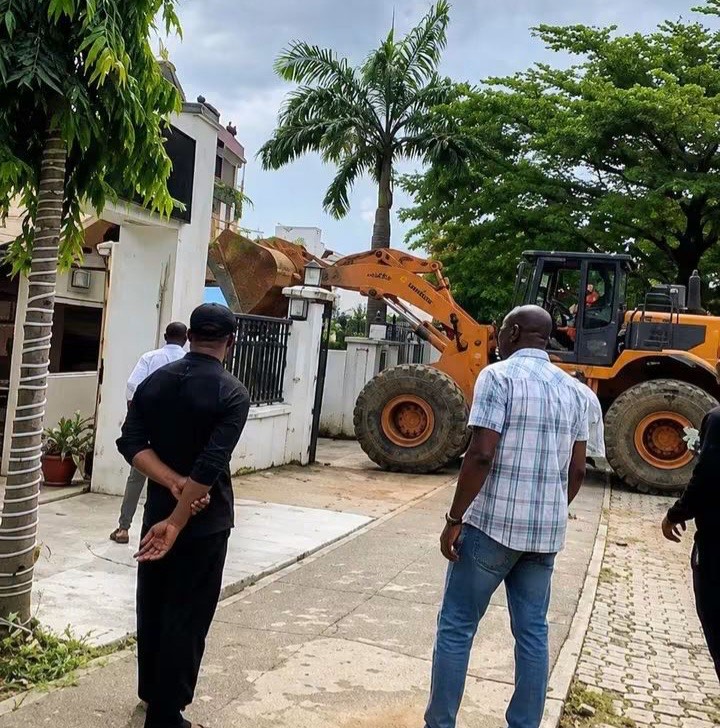
The latest controversy erupted after Wike ordered the immediate demolition of houses and other structures found to be obstructing waterways in Maitama and other flood-prone parts of Abuja following torrential rainfall.
While the minister has presented the demolition order as a decisive attempt to restore Abuja’s drainage channels and enforce the city’s masterplan, critics have questioned whether the administration is applying the same standards to developments allegedly approved or allocated by government authorities.


“The next president after Tinubu should appoint someone with El-Rufai’s guts to revoke all these senseless allocations of parks, green areas, canals and waterways done by Wike if not Abuja will eventually collapse”, Adeyanju said.
He accused Wike of being primarily concerned with revenue generation rather than the long-term environmental sustainability of the capital.
“All Wike cares about is money and nothing more”, he alleged.
The statement marks a significant escalation of the criticism surrounding the FCT’s land administration, coming at a time when flooding has once again exposed the vulnerability of parts of Abuja to intense rainfall.
‘Wike Should Start Demolition From Maitama Extension’
Another critic, Emeka Umeh, directly challenged Wike to turn the demolition exercise against a development he alleged was approved by the minister himself.
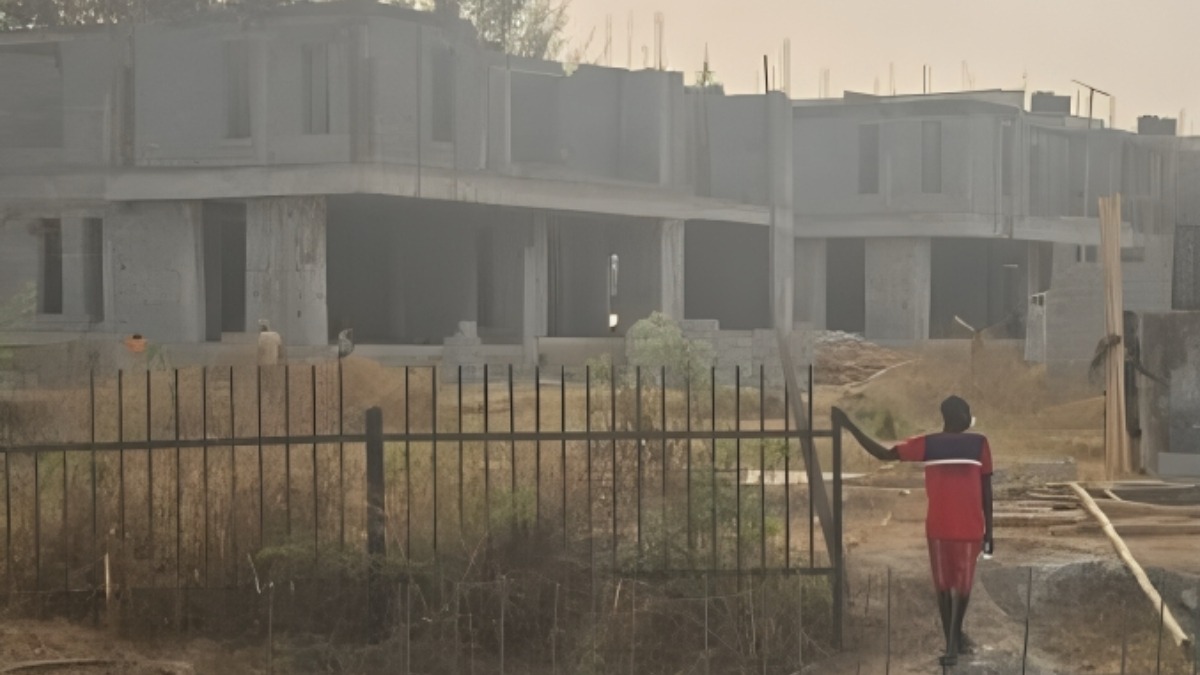
In a post on X on Tuesday, Umeh alleged that a developer was constructing about 20 duplexes inside a canal in Maitama Extension with Wike’s approval.
“Wike can continue lying to himself, Wike approved this to the developer building in this canal in Maitama extension. To construct 20 duplexes building inside a canal. This is the highest level of rascality. He should start the demolition from here”, Umeh alleged.
He added that he had photographs and videos of more than 20 other buildings allegedly under construction in different parts of Abuja.
“I have pictures and videos of more than 20 different buildings going on in different places”, he said.
Umeh also issued a direct appeal to the President.
“President Tinubu must do the needful. If not he will destroy Abuja”, he said.
The allegations have not been independently established, and neither Adeyanju nor Umeh’s claims regarding specific approvals were accompanied in the posts by publicly verifiable government documents.
However, they have intensified an already heated debate over the administration of land in the FCT, particularly the fate of areas originally reserved for public, recreational, environmental and drainage purposes.
Abuja’s Masterplan At Centre Of Dispute
At the heart of the controversy is the Abuja masterplan and whether successive administrations have adequately protected the land-use structure on which the capital was designed.
Abuja was conceived as a planned city, with designated areas for residential and commercial development alongside parks, recreational spaces, green belts, drainage corridors and waterways.
The preservation of these spaces is particularly important in a city vulnerable to intense rainfall because natural drainage channels and undeveloped areas provide routes through which stormwater can move.
The debate over the alleged conversion of such areas is not entirely new.
In January 2026, Adeyanju had raised concerns over construction of about 20 duplexes on a designated green area in Maitama Extension and alleged that developers were converting a canal into an access road after discovering that the estate lacked an approved access route.
In March, Wike also ordered the demolition of an estate in Guzape which the FCT Administration said had been built on land designated for park and recreation. The minister said the approval granted to the developer would be revoked and insisted that the administration would not tolerate deliberate violations of the Abuja masterplan.
The developments have made the current dispute particularly contentious: critics are now demanding to know whether the same enforcement standard is being applied to all developments across the territory.
Wike Has Previously Defended Land Enforcement
Wike has previously maintained that his administration is determined to restore order to Abuja’s land administration.
In May 2026, the minister defended planned developments around Jabi Lake, arguing that the government could not allow land to remain undeveloped indefinitely while shanties and other informal activities proliferated. He said land that was not developed within stipulated conditions could be taken back and reallocated to developers prepared to execute approved projects.
The minister has also spoken about the need to address longstanding problems in the FCT’s land administration, including land grabbing, non-development and abuse of land-use designations.
In another land-related intervention, Wike said the FCT Administration was introducing timelines for development and that land not developed within the stipulated period could revert to the government.
However, critics argue that a government committed to strict land-use enforcement must also answer questions about developments allegedly taking place with official approvals.
‘Who Approved The Buildings?’
The question of government responsibility is becoming increasingly central to the debate.
If a structure is genuinely built illegally on a waterway, critics say the property owner should be held accountable. But where a development has received government approval, obtained land documentation or passed through official planning processes, questions inevitably arise about the role of the agencies responsible for land allocation and development control.
Wike himself has previously acknowledged that some illegal developments may occur with the collaboration of officials within government agencies.
During the March 2026 Guzape enforcement exercise, he questioned how building approvals could be issued where developers did not possess the necessary Certificate of Occupancy.
“If there is no C-of-O, how was approval granted? These are some of the problems we face”, Wike said.
That statement now assumes greater significance as critics challenge the FCT Administration to explain the chain of approvals behind developments they allege are located on canals and protected green areas.
READ ALSO:
‘No Politician Will Be Spared’ – Wike Orders Demolition of Abuja Houses On Waterways
El-Rufai’s Legacy Invoked
Adeyanju’s reference to former FCT Minister Nasir El-Rufai is also significant because El-Rufai’s tenure between 2003 and 2007 was associated with a controversial but aggressive enforcement of Abuja’s original masterplan.
His administration demolished numerous structures considered illegal or inconsistent with planned land use, including properties belonging to powerful individuals, earning both praise for restoring planning discipline and criticism over alleged harshness and the treatment of property owners.
By invoking El-Rufai, Adeyanju is effectively calling for a similarly uncompromising approach to what he sees as the erosion of Abuja’s planning framework.
The comparison also places Wike’s current demolition campaign under greater scrutiny: critics want to know whether the minister will apply the same level of enforcement to developments allegedly connected to politically influential developers or government allocations.

Felix Ifijeh is a journalist with years of professional reporting experience. Known for his keen news sense, compelling storytelling and commitment to accurate, impactful reporting, he has built a reputation for turning leads into clear, engaging, and well-structured reports that resonate with readers. His work reflects deep newsroom experience and a commitment to accurate, impactful journalism.