
-
FCT Minister Nyesom Wike orders immediate demolition of houses and structures built on designated waterways in Maitama and other flood-prone areas of Abuja.
-
Some of them are senators. Some of them are big men,” Wike says, insisting political status or wealth will not shield offenders from demolition. The exercise will begin immediately and continue until Saturday, regardless of ongoing political activities or the identity of property owners.
-
Wike blames worsening floods partly on buildings erected on waterways, blocked drainage channels, indiscriminate dumping of refuse and poor development control.
-
Public reactions are sharply divided, with some Nigerians praising Wike for confronting wealthy property owners while others demand compensation, due process and transparency.
August 18, (THEWILL) — Minister of the Federal Capital Territory (FCT), Nyesom Wike, has ordered the immediate demolition of houses and other structures obstructing waterways in Maitama and other flood-prone parts of Abuja, declaring that no property owner, regardless of political influence, wealth or social status, will be spared.
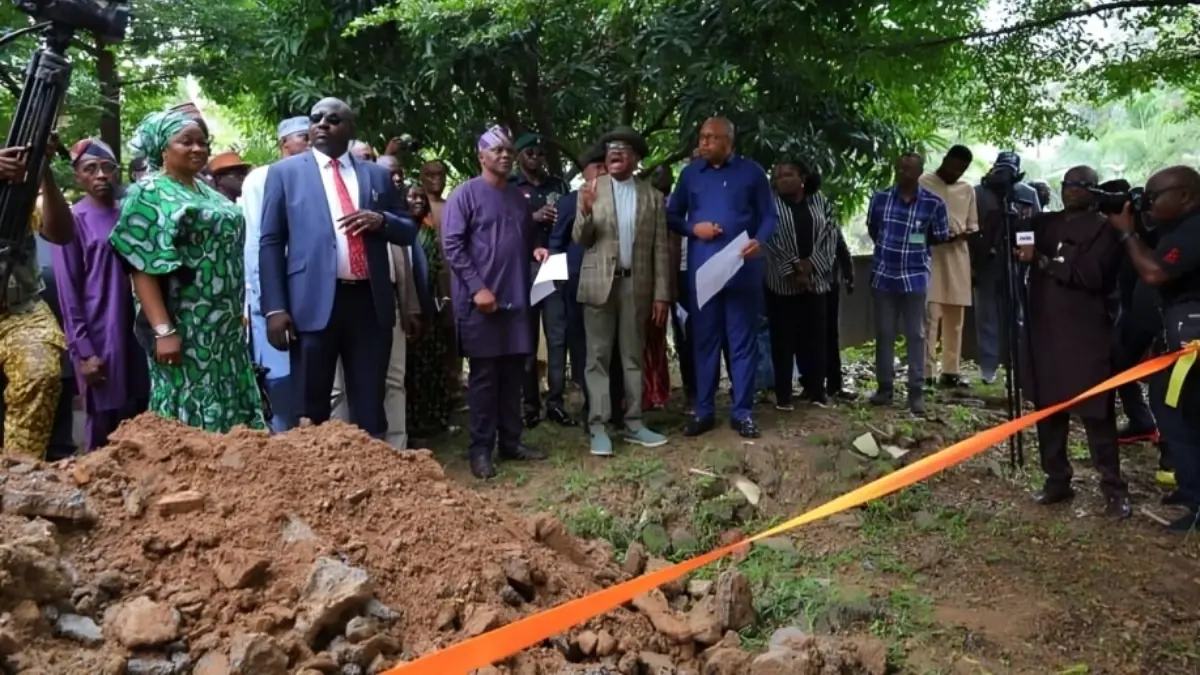
THEWILL reports that Wike issued the directive on Tuesday after inspecting areas of Maitama and other parts of the nation’s capital affected by flooding following torrential rainfall.
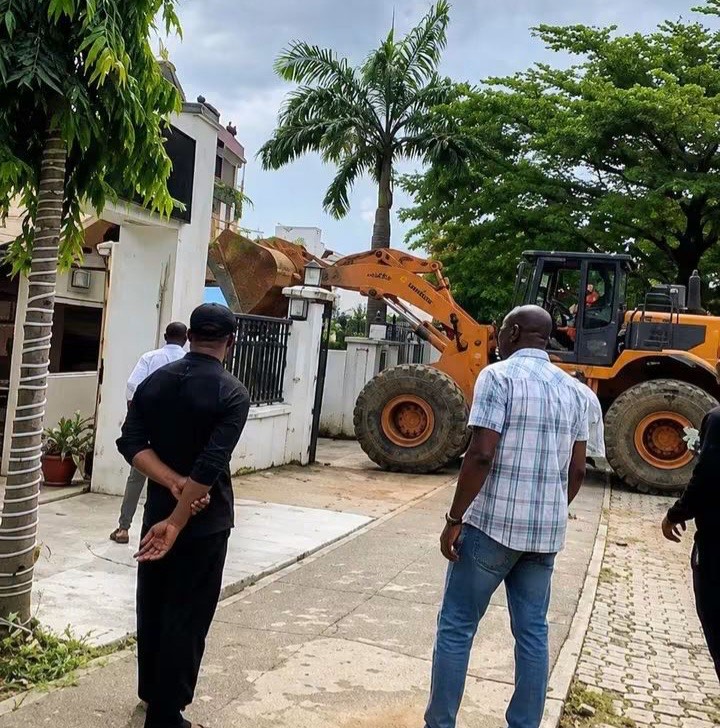
The minister said the demolition exercise would commence immediately and continue until Saturday, insisting that political activities, the status of property owners or other considerations would not stand in the way of enforcing the FCT’s development regulations.

He specifically warned that houses and other structures found to have been built on designated water channels would be pulled down.
“We will demolish all those houses found on the water channel. Some of them are senators. Some of them are big men. Whether there’s election or there’s no election, all those houses will go down. Heaven will not fall. Rather, heaven will be at peace that the right thing has been done,” he said.
The minister’s directive came amid renewed concerns over flooding in Abuja, where intense rainfall has inundated several areas, damaged property and exposed the consequences of development on drainage corridors and waterways.
Wike said the latest flooding had exposed several man-made factors aggravating the effects of heavy rainfall in the capital.
He identified the construction of buildings on waterways, blockage of drainage channels, indiscriminate dumping of refuse and inadequate supervision of developments as some of the factors worsening flooding in Abuja.
According to him, an inspection of affected areas revealed that some property owners had blocked channels specifically designated in the Abuja masterplan for the movement of stormwater.
“Unfortunately, we have gone there, and we have seen how people have blocked channels where, in the masterplan, that is the right way where the water is supposed to be channelled,” he said.
Wike said many of the structures were owned by wealthy Nigerians and had existed for several years.
He noted that some of the buildings had been standing for eight to 10 years or longer, raising questions about how such developments were allowed to remain despite their alleged encroachment on designated waterways.
“All those built-up areas that were not supposed to be built up, not a single poor person will live there. Those houses are houses built by well-to-do Nigerians,” the minister said.
He insisted that the government would enforce planning regulations without regard to the identity of the owners.
Wike also suggested that previous administrations may not have had the political will to enforce development regulations, while some officials may have failed to perform their responsibilities.
He, however, said the current FCT Administration was prepared to take action.
“And let nobody make the mistake that this government lacks the political will to do anything. The person must be making a very big mistake. If there is one minister that has that political will, I have. I have the political will,” he said.
‘Are The Owners Compensated?’
While some Nigerians have welcomed Wike’s decision to remove structures obstructing waterways, others have questioned whether property owners will be compensated for demolished buildings.
The issue has become one of the major points of public debate following videos showing demolition activities in parts of Abuja.
One commentator, Yusuf, asked a direct question: “Are the owners of the houses compensated?”
Another reaction similarly questioned whether compensation had already been paid to the affected property owners.
The concerns come amid rising construction costs and a difficult economic climate.
Marcus, reacting to footage of the demolitions, said he had watched buildings being pulled down at a time when the cost of construction materials had risen sharply.
“I just watched a video where they’re demolishing buildings in this hard economy when a bag of cement is 12k,” he said.
Supporters Back Wike’s Tough Stance
Despite concerns over compensation and due process, several Nigerians expressed strong support for the minister’s decision.
Ikyum described the action as what a responsible government should do in the interest of the majority. He argued that Abuja had witnessed excessive and unregulated development, particularly by wealthy property owners whom he said appeared to believe their influence could shield them from consequences.
“That is what a reasonable government would do in the best interest of the majority masses. The level of anyhowness in Abuja is too much especially the rich, who thinks they can get away with anything and nothing will happen. Wike is their nightmare now,” he said.
Umar also commended the minister, saying action against people who recklessly build on waterways was long overdue.
“It’s high time we took action against those who recklessly build on waterways, causing harm to innocent people; Minister Wike’s efforts are truly commendable,” he said.
For supporters of the demolition exercise, private property rights should not take precedence over public safety where structures genuinely obstruct waterways and contribute to flooding.
Critics Question Demolition, Land Allocations
Not everyone agreed with the approach. Tanko criticised the decision to demolish structures rather than invest in broader infrastructure and development projects.
Another commentator, Nonso, alleged that the exercise could be connected to attempts to take over privately held land.
“Idea to steal people land,” he said.
Leo also expressed scepticism over the circumstances surrounding some of the properties, alleging that certain lands may have recently been allocated to investors.
“Let’s see how this drama unfold… They just allocated these lands to investors… mind go touch ground,” he said.
The allegations were not independently substantiated, but they reflect concerns over land administration, property rights and the transparency of development control in Abuja.
‘Who Approved These Buildings?’
Some of the strongest reactions focused not on whether illegal structures should be removed but on the responsibility of government agencies that permitted them to exist.
Habu Dauda questioned whether government officials themselves had been involved in the allocation or sale of the affected properties.
“Were you not the one who sold it to them?” he asked.
He also suggested that officials responsible for questionable allocations could face investigation by the Independent Corrupt Practices and Other Related Offences Commission (ICPC).
Adegboyega called for caution, saying Nigerians could support the demolition of structures genuinely obstructing waterways but should be assured that the exercise would not become a tool for witch-hunting or victimisation.
“This is Nigeria, and we can only hope that the properties being identified as obstructing waterways are genuinely there illegally and that the exercise is free from witch-hunting and victimisation,” he said.
He questioned how long the properties had existed, who approved or allowed them to be built and why enforcement had become urgent only after flooding had caused damage.
“If these structures have truly been built on waterways, how long have they been there, who approved or allowed them to be built, and why is enforcement only becoming urgent after flooding has destroyed vehicles and properties?” he asked.
He also questioned the role of the FCT Administration and relevant agencies.
“What has the FCT Minister and the relevant agencies been doing all this while?” he asked.
The questions touch on a fundamental issue surrounding Abuja’s development: if buildings have been constructed illegally on designated waterways for years, enforcement cannot rest solely on the property owners. The officials responsible for approving, monitoring or failing to act against such developments could also come under scrutiny.
Wike Orders Immediate Desilting Of Drains
Beyond the demolition of structures, Wike directed relevant agencies of the FCT Administration to immediately commence desilting of identified drainage systems. He also urged residents, traders and other members of the public to stop dumping refuse into drainage channels.
The minister said the intensity of recent rainfall was partly connected to climate change and changing weather patterns but stressed that human activities had significantly worsened the situation.
“We are in a climate change period. The kind of rains we have experienced, or we are experiencing now, we have not experienced before. But that is not that there are no man-made factors. There are,” he said.
Wike Rejects Political Attacks Over Flooding
The flooding has also generated political controversy, particularly following comments by Senator Ireti Kingibe, who represents the FCT in the National Assembly.
Kingibe said in an interview with Arise TV on Monday that she had raised concerns about the risk of flooding in Abuja before the recent deluge but alleged that her warnings were ignored by Wike.
The minister rejected attempts to turn the flooding into a political dispute, saying he would not be distracted by political commentators.
“I don’t want to reply to political commentators. I don’t want to reply to people who think that appearing on TV, in their houses, will give them an edge to win an election that they have lost. No,” Wike said.
He maintained that flooding was not peculiar to Abuja or Nigeria and that the intensity of rainfall was part of a broader climate-related challenge.
However, he acknowledged that the government had a responsibility to address man-made factors within its control.
Wike said the FCT Administration had recorded significant achievements over the past three years, although he acknowledged that the territory still faced major challenges.
“Nobody can diminish what this administration has done in the past three years. Nobody can diminish it. This administration has done very well as far as the Federal Capital Territory is concerned. That does not mean that I can claim that it has solved all problems, no. Are there problems? Yes. Have they solved major problems? Yes. Will they continue to solve problems? Yes.”
He also defended his administration’s record on land documentation.
Wike said 26,272 Certificates of Occupancy (C-of-Os) had been signed in the FCT during the past three years, compared with about 7,000 signed by two previous administrations over a combined period of 13 years.
He urged critics to assess his administration’s performance holistically rather than use the flooding incident to discredit its achievements.
Felix Ifijeh is a journalist with years of professional reporting experience. Known for his keen news sense, compelling storytelling and commitment to accurate, impactful reporting, he has built a reputation for turning leads into clear, engaging, and well-structured reports that resonate with readers. His work reflects deep newsroom experience and a commitment to accurate, impactful journalism.