
-
US President Donald Trump announced an agreement with Venezuela’s interim government to secure majority control over 65 billion barrels of crude reserves.
-
Negotiations led by Secretary of State Marco Rubio and Defence Secretary Pete Hegseth yield a 55 percent US stake in a new joint venture with 100-year field concessions.
-
The framework aims to direct $100 billion in private capital into Venezuelan fields to boost production, restock US strategic reserves, and curb domestic fuel prices.
-
Energy analysts cite deep operational risks, legal hurdles under Venezuelan law, and severe infrastructure decay that will delay immediate production gains.
August 29, (THEWILL) — US President Donald Trump announced that Washington signed an agreement with Venezuela to gain majority control over more than 65 billion barrels of proven crude reserves.
Negotiated by the Secretary of State, Marco Rubio, Defence Secretary, Pete Hegseth, and Venezuelan Interim President, Delcy Rodríguez, the deal establishes a public-private partnership, giving the US an effective 55 percent stake in operations across 17 oil fields.
Writing on Truth Social, Trump called the agreement “the biggest oil deal in world history” and said it was reached “at no cost to the American taxpayer”.

The administration expects the added reserves to expand domestic supply networks and lower pump prices over the long term.
“This deal is a huge win for both the American and Venezuelan people”, Rubio wrote in a statement following the announcement.
“For the Venezuelan people, this deal will bring nearly $100 billion in private investment, support thousands of high-paying jobs, and drive the reconstruction of Venezuela’s economy.”
Welcoming the framework, Rodríguez said the deal secures 100-year operating concessions for the joint venture and is projected to bring in over $209 billion in state tax revenues.
“Venezuela is thus ushering in a new era of recovery, growth, production, security, and prosperity for our people”, she stated.
READ ALSO:
- Venezuela Declares State of Emergency After Twin Powerful Earthquakes Rock Capital
- No More Oil, Money, Make A Deal Now — Trump Moves Against Cuba, Promises American Protection For Venezuela
- Power Shift in Caracas: Venezuela Top Court Names Rodríguez Acting President After Maduro’s Capture
- Trump Announces Capture Of Venezuela’s President Maduro As U.S. Launches Major Strike
Rebuilding Orinoco Fields To Replenish Us Oil Reserves
The agreement comes as Washington seeks alternatives to stabilise energy markets following months of shipping disruptions in the Strait of Hormuz and a decline in the US Strategic Petroleum Reserve below 300 million barrels.
Heavy crude from Venezuela offers US Gulf Coast refineries a direct raw material match.
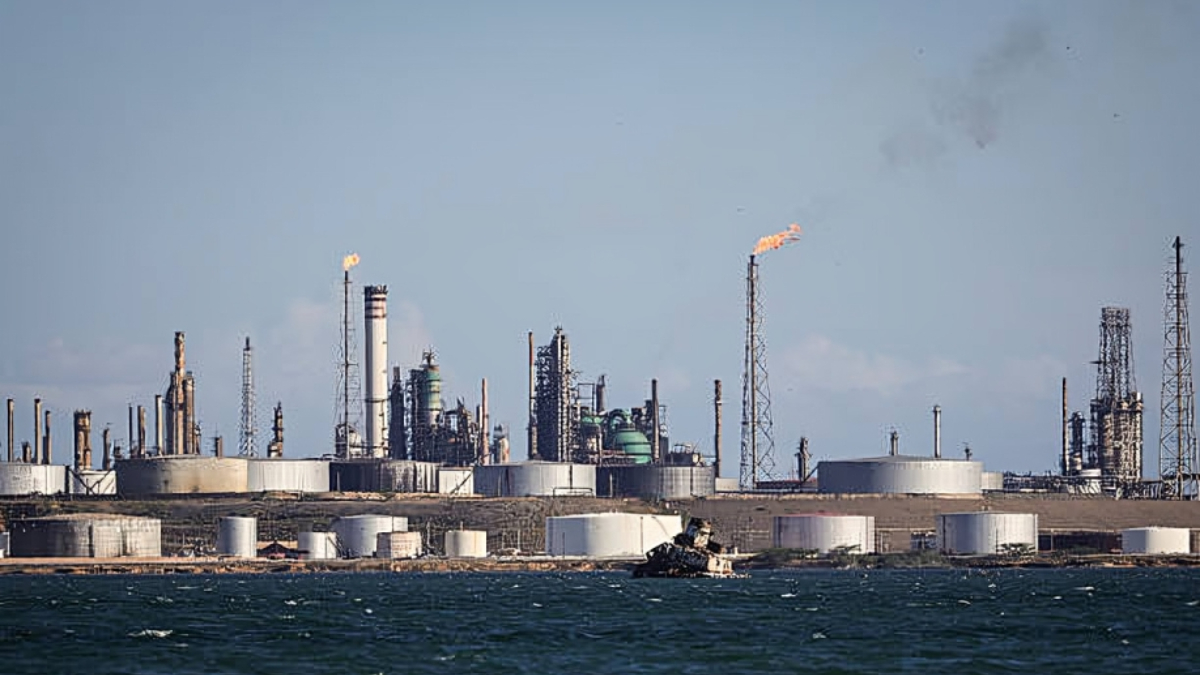
However, energy analysts warn that turning paper reserves into physical barrels will take years. While Venezuela holds over 300 billion barrels in total reserves, years of severe underinvestment and ruined infrastructure limit current national output to roughly 1.25 million barrels per day.
Constitutional experts also point to potential legal friction in Caracas, where national laws strictly limit foreign state control over subsoil assets.
Restoring field infrastructure, expanding pipeline capacity, and navigating legal challenges mean the deal will offer little immediate relief to current global supply pressures.

Joy Onuorah is a business journalist and brand communications specialist covering financial markets, artificial intelligence, digital economy, and the ideas reshaping business across Africa and the global market. Beyond her reporting for TheWill, Joy uses brand strategy, storytelling, copywriting, and high-value SEO to help brands build lasting market authority.