-
Nigeria has failed the United States’ minimum fiscal transparency assessment for the second consecutive year, with Washington concluding that the Federal Government made no significant progress in improving budget openness, financial disclosure and accountability throughout 2025.
-
The U.S. Department of State accused the Federal Government of operating an opaque budget system, citing incomplete revenue and expenditure disclosures, weak budget implementation, poor procurement transparency and inadequate public access to key financial information.
-
The report also questioned the effectiveness of Nigeria’s accountability institutions, faulting the Office of the Auditor-General for failing to meet international independence standards and for not publishing substantive audit reports needed to strengthen public oversight.
-
While the Presidency defended ongoing fiscal reforms and insisted transparency remains a priority, the report piles fresh pressure on the Tinubu administration to address persistent weaknesses in public financial management ahead of the 2027 budget cycle.
August 13, (THEWILL) — Nigeria’s public finance management has come under fresh international scrutiny after the United States Department of State declared that Africa’s largest economy failed to meet minimum fiscal transparency standards for the second consecutive year, citing persistent budget opacity, weak public accountability and the absence of meaningful reforms.
The damning assessment, contained in the 2026 Fiscal Transparency Report released on Tuesday, concluded that Nigeria made no significant progress in improving the transparency of its public finances during the 2025 review period, placing it among 53 countries that failed to advance towards internationally recognised fiscal governance standards.
The report comes amid mounting domestic criticism over the Federal Government’s management of public finances, including concerns over the simultaneous implementation of the 2024, 2025 and 2026 budgets, controversial spending provisions in the 2026 Appropriation Act and growing calls for greater accountability in the management of public resources.

US Faults Budget Openness, Procurement, Audit Oversight
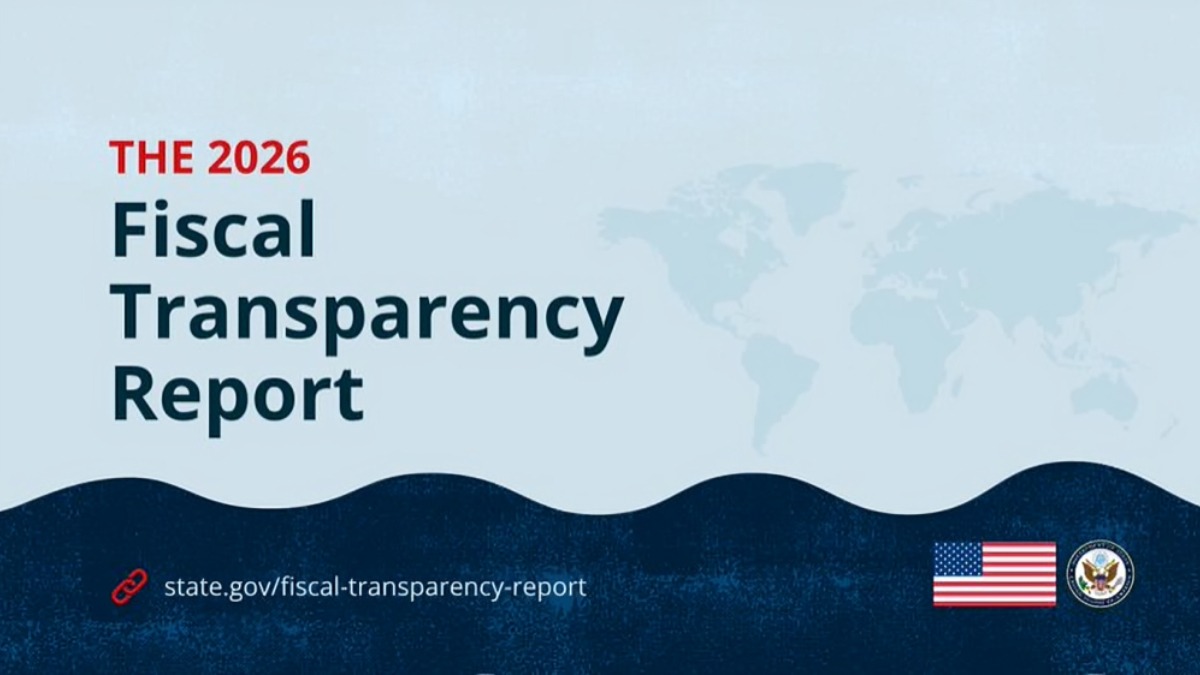
The annual report assessed 139 governments and the Palestinian Authority, with only 73 countries meeting the minimum fiscal transparency requirements established by the United States. Sixty-seven countries failed the assessment, although 14 of them were recognised for making significant progress. Nigeria, however, was listed among the 53 countries that recorded no meaningful improvement.
According to the State Department, the findings were based on information gathered between January 1 and December 31, 2025, from the U.S. Embassy in Abuja, federal agencies, international organisations and civil society groups.
The report criticised Nigeria’s budget process, stating that official budget documents failed to present a substantially complete picture of government revenues and expenditures.
It said the Federal Government did not provide sufficient details on revenue sources or adequately break down expenditure across ministries and executive offices, making it difficult for citizens and oversight institutions to understand how public resources were generated and spent fully.
“Budget documents did not provide a substantially complete picture of the government’s revenues and expenditures, or break down expenditures to support executive offices in the budget”, the report stated.
Washington also questioned the credibility of Nigeria’s budget implementation, noting that actual government revenues and expenditures differed significantly from the figures in the approved budget, with inadequate explanations.
The report further faulted the government for failing to publish its Executive Budget Proposal within the internationally accepted timeframe that would allow public scrutiny before legislative approval.
The State Department also criticised the Office of the Auditor-General for the Federation, saying it failed to meet international standards of institutional independence and did not publish substantive audit reports capable of strengthening public accountability.
It equally faulted Nigeria’s public procurement system, saying procurement contract information remained largely inaccessible to the public. Although it acknowledged that Nigeria had legal procedures governing the award of natural resource licences, the report said critical details of concessions—including the companies involved, locations, duration and contractual terms—were not publicly disclosed after approvals.
The report further introduced a new transparency benchmark requiring governments to disclose the terms and conditions of sovereign loans, including liabilities and collateral arrangements. While Nigeria was commended for publishing information on public debt obligations, the State Department stopped short of concluding that the country had fully met the new requirement.
Despite its criticisms, the report acknowledged that Nigeria publishes its enacted budget and end-of-year financial reports online, makes debt information publicly available and operates a Sovereign Wealth Fund under a legal framework that discloses its funding sources and withdrawal mechanisms.
However, it maintained that those measures were insufficient to meet the minimum fiscal transparency threshold.
To improve its performance, the report urged Nigeria to publish executive budget proposals earlier, provide comprehensive breakdowns of government revenues and expenditures, align actual spending with approved budgets, strengthen the independence of the Auditor-General’s office, publish audit reports promptly and improve public access to procurement information.
The report stressed that fiscal transparency is fundamental to good governance because it promotes accountability, strengthens investor confidence, reduces corruption risks and enables citizens to monitor how public funds are spent.
Globally, major economies including China, Egypt, Saudi Arabia, Pakistan and Ukraine also failed the assessment, while countries such as Bangladesh, Cameroon, Chad, Ethiopia, Liberia, Libya, Niger, São Tomé and Príncipe and Senegal were recognised for making significant progress.
Nigeria was grouped alongside Algeria, Angola, Uganda, Tanzania, The Gambia, Guinea, Guinea-Bissau, Mali, Sierra Leone and Togo among countries that made no significant progress.
The latest assessment comes amid growing controversy over the 2026 Federal Budget, particularly allocations for religious infrastructure, duplicated capital projects, constituency projects embedded in unrelated ministries and large lump-sum provisions with little or no spending details.
Presidency Defends Reforms, Says Transparency Remains Priority
Responding to the report, the Presidency insisted that fiscal transparency, accountability and prudent public financial management remain central priorities of the Tinubu administration.
Special Adviser to the President on Media and Public Communication, Sunday Dare, said the report should be viewed as an external benchmark rather than a comprehensive assessment of Nigeria’s ongoing fiscal reforms.
He argued that the Federal Government had continued to strengthen public financial management through initiatives such as the Open Treasury platform, expanded budget documentation, debt disclosures, procurement reforms and digital financial management systems.
According to Dare, the government acknowledged the concerns raised in the report but remained committed to improving budget reporting, strengthening audit institutions, expanding procurement transparency and ensuring greater public access to information on the management of national resources.
Background
The U.S. Fiscal Transparency Report is an annual assessment mandated by the U.S. Congress to evaluate how governments manage, disclose and account for public finances. The report serves as a key benchmark for Washington’s engagement with partner countries and helps determine eligibility for certain categories of U.S. foreign assistance.
Nigeria first fell below the minimum fiscal transparency threshold in the 2025 report. Its failure for a second consecutive year places renewed pressure on the Federal Government to improve budget credibility, strengthen independent oversight institutions and deepen accountability as preparations gather pace for the 2027 federal budget cycle

Felix Ifijeh is a journalist with years of professional reporting experience. Known for his keen news sense, compelling storytelling and commitment to accurate, impactful reporting, he has built a reputation for turning leads into clear, engaging, and well-structured reports that resonate with readers. His work reflects deep newsroom experience and a commitment to accurate, impactful journalism.