
-
Tennessee death-row inmate Christa Pike has survived an execution attempt after officials administered two doses of pentobarbital without causing her death. She was later taken to hospital, where her lawyer said she remained in critical condition.
-
Governor Bill Lee has ordered an independent investigation into the failed execution and suspended Tennessee’s remaining scheduled execution for 2026, saying there were “a lot of questions” that needed answers.
-
Pike’s execution proceeded after the US Supreme Court overturned a last-minute stay issued by the Sixth Circuit Court of Appeals.
-
Pike was sentenced to death for the 1995 murder of 19-year-old Colleen Slemmer. Her lawyers have argued that her age, traumatic childhood, severe abuse and neglect were not adequately considered during sentencing.
October 2, (THEWILL) – Tennessee’s attempt to execute death-row inmate Christa Pike has failed after she survived two doses of the lethal-injection drug pentobarbital, prompting Governor Bill Lee to suspend the state’s remaining execution for 2026 and order an independent investigation.
Pike, 50, was executed at the Riverbend Maximum Security Institution in Nashville on Wednesday for the 1995 murder of 19-year-old Colleen Slemmer.
Officials administered two doses of pentobarbital, but Pike remained alive more than 40 minutes after the second dose, according to media witnesses and court filings by her lawyers.

She was subsequently taken by ambulance to an outside medical facility.
The Tennessee Department of Correction confirmed the transfer but said officials had followed the state’s established execution protocol. It did not disclose why the two doses failed to produce the intended result.
Prolonged Procedure
Pike’s lawyers said the execution team spent about an hour attempting to establish an intravenous line before the lethal drug was administered.
Spivey said he counted at least seven needles used in Pike’s left arm, while a media witness reported hearing Pike complain about pain during the procedure.
After the second dose, witnesses continued to hear breathing and what sounded like snoring for an extended period.
Her lawyers subsequently sought an emergency halt to the execution, arguing that the procedure subjected Pike to unnecessary suffering and violated constitutional protections against cruel and unusual punishment.
The state maintained that the execution team had followed its approved protocol.
READ ALSO:
Legal Battle
The failed execution followed a last-minute legal battle over Pike’s sentence.
The Sixth Circuit Court of Appeals had temporarily halted the execution after her lawyers argued that evidence of childhood sexual abuse and neglect had not been adequately presented during sentencing.
The US Supreme Court subsequently overturned the stay, allowing Tennessee to proceed.
Pike’s lawyers have maintained that her age at the time of the crime and history of severe childhood abuse and neglect should have been given greater consideration.
Murder Case
Pike was 18 when she and her then-boyfriend, Tadaryl Shipp, 17, attacked Slemmer, whom they knew from the Knoxville Job Corps training centre.
Prosecutors said Pike accused Slemmer of trying to take her boyfriend before the attack.
Slemmer was beaten and stabbed, and a pentagram was carved into her body. Pike was convicted of first-degree murder in 1996 and sentenced to death.
Shipp received life imprisonment with the possibility of parole because he was 17 when the crime occurred.
Pike’s execution had attracted national attention because she was set to become the first woman executed by Tennessee in more than 200 years.
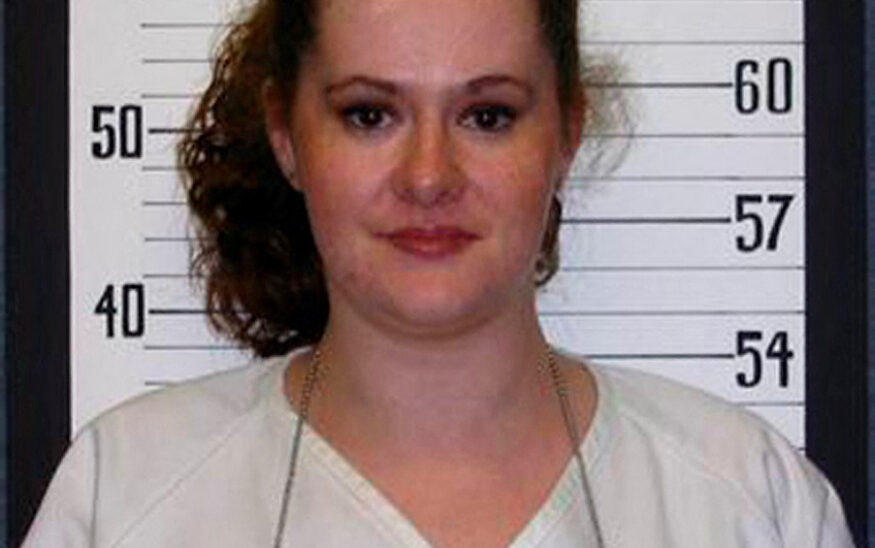
Caption: Tennessee’s attempt to execute death-row inmate Christa Pike has failed after she survived two doses of the lethal-injection drug pentobarbital, prompting Governor Bill Lee to suspend the state’s remaining execution for 2026 and order an independent investigation.

Felix Ifijeh is a journalist with years of professional reporting experience. Known for his keen news sense, compelling storytelling and commitment to accurate, impactful reporting, he has built a reputation for turning leads into clear, engaging, and well-structured reports that resonate with readers. His work reflects deep newsroom experience and a commitment to accurate, impactful journalism.