
-
Tinubu sends sweeping NDLEA, transport safety and international crimes reform bills to the Senate.
-
President seeks Presidency oversight for Safety Investigation Bureau and stronger anti-drug framework.
-
Senate advances bill to decriminalise attempted suicide and replace punishment with medical care.
-
Akpabio kicks against proposal as senators clash over imprisonment, treatment for survivors.
October 13, (THEWILL) – President Bola Tinubu has moved to overhaul Nigeria’s drug enforcement and transport safety laws and domesticate the Rome Statute of the International Criminal Court (ICC), as a separate bill seeking to decriminalise attempted suicide triggered a sharp disagreement in the Senate on Tuesday.
Tinubu, in a series of executive communications read at plenary by Senate President Godswill Akpabio, transmitted bills proposing far-reaching changes to the legal frameworks governing the National Drug Law Enforcement Agency (NDLEA), the Nigerian Safety Investigation Bureau (NSIB), public-sector leadership training and Nigeria’s obligations under international humanitarian and criminal law.
While the presidential bills were referred for further legislative processing, debate over the separately sponsored suicide prevention bill exposed divisions among senators, with Akpabio insisting that attempted suicide should remain punishable while other lawmakers argued that survivors need medical and psychological treatment rather than imprisonment.

Tinubu Seeks Overhaul Of Safety Investigation Bureau
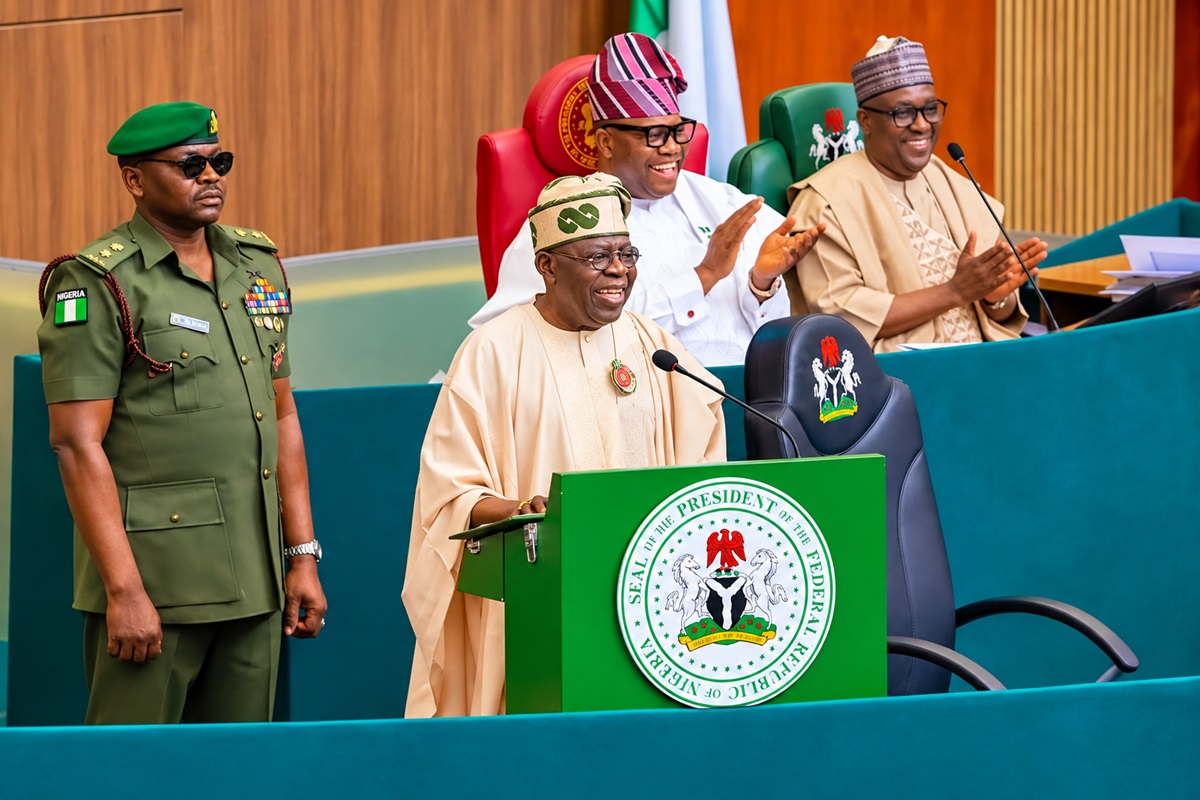
One of the executive proposals, the Nigerian Safety Investigation Bureau Amendment Bill, 2026, seeks to amend the Nigerian Safety Investigation Bureau Act 2022 and reposition the agency as an independent multimodal safety investigation authority.
The amendment would broaden the bureau’s mandate beyond aviation accidents and incidents to cover maritime and other transport occurrences.
Significantly, the proposed legislation also seeks to transfer supervisory oversight of the bureau to the Presidency while strengthening its institutional, operational and administrative structure.
“The Nigerian Safety Investigation Bureau Amendment Bill seeks to reposition the Bureau as an independent multimodal safety investigation authority, expanding its mandate beyond aviation to maritime and other transport occurrences. It also proposes transferring the Bureau’s oversight to the Presidency and strengthening its institutional, operational, administrative and constitutional framework”, Tinubu stated in the communication.
The NSIB currently operates as Nigeria’s safety investigation agency, with responsibility for independently investigating transport accidents and serious incidents with the objective of identifying safety failures and preventing recurrence rather than determining criminal liability.
New Legal Framework For NDLEA
Tinubu also transmitted the National Drug Law Enforcement Agency Bill, 2026, proposing a consolidated legal framework for the operations of the country’s anti-narcotics agency.
The legislation seeks to repeal the existing NDLEA Act and the Indian Hemp Act contained in the Laws of the Federation of Nigeria 2004.
In their place, the Federal Government is proposing a comprehensive framework to tackle the cultivation, production, processing, trafficking and use of illicit drugs.
The proposed legislation would also strengthen the NDLEA’s authority to investigate individuals suspected of involvement in illicit drug activities.
“The National Drug Law Enforcement Agency Bill seeks to repeal the existing NDLEA Act and the Indian Hemp Act, both contained in the Laws of the Federation of Nigeria, 2004.
“The proposed legislation is intended to establish a consolidated legal framework for combating the cultivation, processing, trafficking and use of illicit drugs. It also seeks to empower the agency to investigate persons suspected of involvement in drug-related activities”, the President said.
The proposal comes against the backdrop of an intensified national campaign against drug trafficking and abuse, with the NDLEA expanding interdiction operations at airports, seaports, land borders and communities across the country.
ASCON To Become National School Of Government
The President also forwarded the National School of Government Bill, 2026, seeking to repeal the Administrative Staff College of Nigeria Act and establish a National School of Government.
Under the proposal, the new institution would become a national centre for leadership development, policy delivery, governance training, executive capacity-building and institutional strengthening.
The Administrative Staff College of Nigeria (ASCON), located in Topo, Badagry, Lagos State, has for decades served as a major training institution for public-sector administrators and managers.
The proposed restructuring would expand that role, with greater emphasis on developing leadership and policy implementation capacity across government.
Tinubu Moves To Domesticate ICC Statute
 In another significant legislative move, Tinubu transmitted bills seeking to strengthen Nigeria’s domestic enforcement of international humanitarian and criminal law.
The Geneva Conventions and Additional Protocols Bill seeks to repeal the existing Geneva Conventions Act and give effect in Nigeria to the four Geneva Conventions of 1949 and two Additional Protocols adopted in 1977.
The conventions establish international legal protections for wounded and sick combatants, prisoners of war, civilians and other victims of armed conflicts.
Tinubu also forwarded the Rome Statute of the International Criminal Court (Enforcement) Bill, seeking to domesticate the treaty establishing the ICC.
The legislation proposes a domestic framework for dealing with genocide, crimes against humanity, war crimes and related offences.
“The Rome Statute of the International Criminal Court (Enforcement) Bill seeks to domesticate the Rome Statute and establish a framework for the enforcement and punishment of genocide, crimes against humanity, war crimes and related offences. It also provides for Nigeria’s cooperation with the International Criminal Court in the performance of its functions”, the presidential communication read.
Nigeria signed the Rome Statute in 2000 and ratified it in 2001. Domestication through national legislation is intended to provide a clearer domestic legal framework for implementing the country’s obligations under the treaty.
Akpabio subsequently referred the executive bills to the Senate Committee on Rules and Business for further legislative action.
Tinubu Assents To University Amendment Bills
 Meanwhile, the Senate received formal notification of Tinubu’s assent to two amendment bills dealing with federal universities of technology.
Akpabio told senators that one of the amendments provides for the inclusion of the Federal University of Technology and Vocational Studies, Yaba, Lagos, in the relevant legislation governing federal universities of technology.
The second provides for the inclusion of the Federal University of Technology and Vocational Studies in Kaduna.
The Senate President referred the documents to the Clerk to the National Assembly for further action and commended Tinubu for assenting to the legislation, describing the development as an important contribution to the advancement of education in Nigeria.
Suicide Bill Sparks Row In Senate
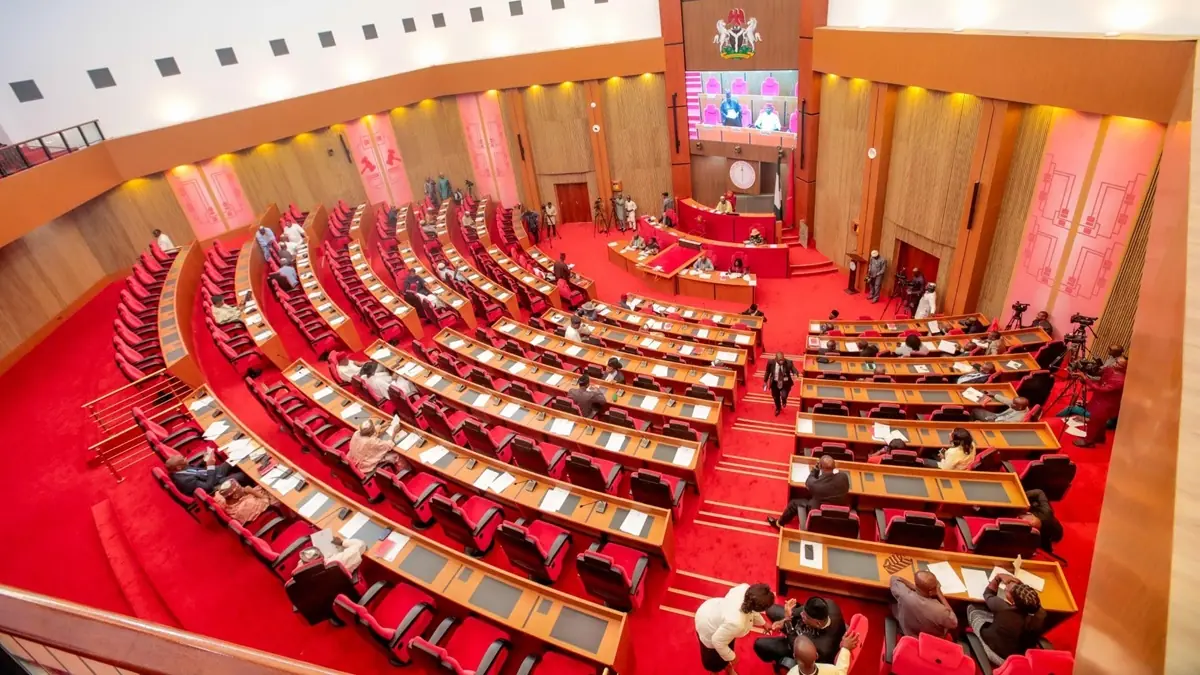 In a separate but contentious proceeding, the Senate passed for second reading a bill seeking to establish a national suicide prevention framework and decriminalise attempted suicide.
The legislation, sponsored by Senator Ekpenyong Asuquo (APC, Cross River South), seeks to replace the existing punitive response to suicide attempts with medical assessment, treatment, rehabilitation and continuing psychological support.
It also seeks to reconcile what its sponsor described as a contradiction between Nigeria’s criminal laws and the National Mental Health Act.
Leading the debate on the bill, Asuquo told the Senate that the fundamental issue was whether someone who survived a suicide attempt should be treated as a criminal or as a person requiring urgent medical intervention.
“At the heart of this bill is a simple question. When a Nigerian survives a suicide attempt, should the first response of the state be persecution or protection?” he asked.
According to him, while the National Mental Health Act recognises attempted suicide as a psychiatric emergency requiring medical intervention, provisions of the Criminal Code and Penal Code continue to criminalise the act.
“Our law presently speaks with two voices”, Asuquo said, arguing that the contradiction must be addressed.
He warned that criminalisation could force families to conceal suicide attempts, discourage vulnerable people from seeking assistance and make health workers reluctant to report cases.
Asuquo also argued that prosecution and imprisonment could deepen the stigma associated with mental-health conditions and undermine the collection of reliable data needed to formulate effective suicide-prevention policies.
“The police station or correctional facility should not be the default destination for a person who requires urgent clinical care”, he said.
Beyond decriminalisation, the legislation proposes coordinated suicide-prevention services, crisis-response mechanisms, referral pathways and continuing support for survivors.
It also provides for public education and training for healthcare professionals, teachers, law-enforcement personnel and emergency responders to help identify people at risk and connect them to appropriate services.
READ ALSO:
Akpabio: Failed Attempt Should Attract Jail

But Akpabio strongly disagreed with the push to remove criminal sanctions for attempted suicide, arguing that abolishing punishment could weaken deterrence.
“If you attempt suicide, make sure you die. Anyone who attempts and fails will go to jail”, the Senate President said during the debate.
His intervention put him at odds with several senators who maintained that attempted suicide should primarily be treated as a mental-health emergency rather than a criminal offence.
Akpabio also raised a wider constitutional issue, noting that the proposal touches provisions of both the Criminal Code and Penal Code.
He argued that State Houses of Assembly should therefore be given an opportunity to make submissions during the public hearing to avoid conflicts between federal and state criminal laws.
Senators Push Back, Demand Treatment
Senator Dayo Faduyile (APC, Ondo South), drawing on his medical experience, backed the proposed decriminalisation and argued that people who survive suicide attempts require treatment rather than incarceration.
Faduyile said depression and other mental-health conditions could severely impair judgement and warned that sending survivors to police cells or correctional facilities would do little to address the underlying conditions.
“The best way to treat anybody who did not succumb to a suicide attempt is actually not to criminalise it. They need help”, he said, warning that some people who survived initial attempts could remain vulnerable to further self-harm if the underlying medical or psychological problems were not treated.
Senator Abdul Ningi (Bauchi Central) also supported allowing the legislation to proceed, describing the subject as an important public-health and legal issue requiring wider national examination.
Ningi said the legislative process would provide psychologists, medical professionals, lawyers and other stakeholders an opportunity to contribute to the development of an effective response.
He argued that people react differently to severe personal, social and economic pressures and that an inability to cope with a crisis should not automatically turn a distressed person into a criminal.
Bamidele Raises Constitutional Concerns
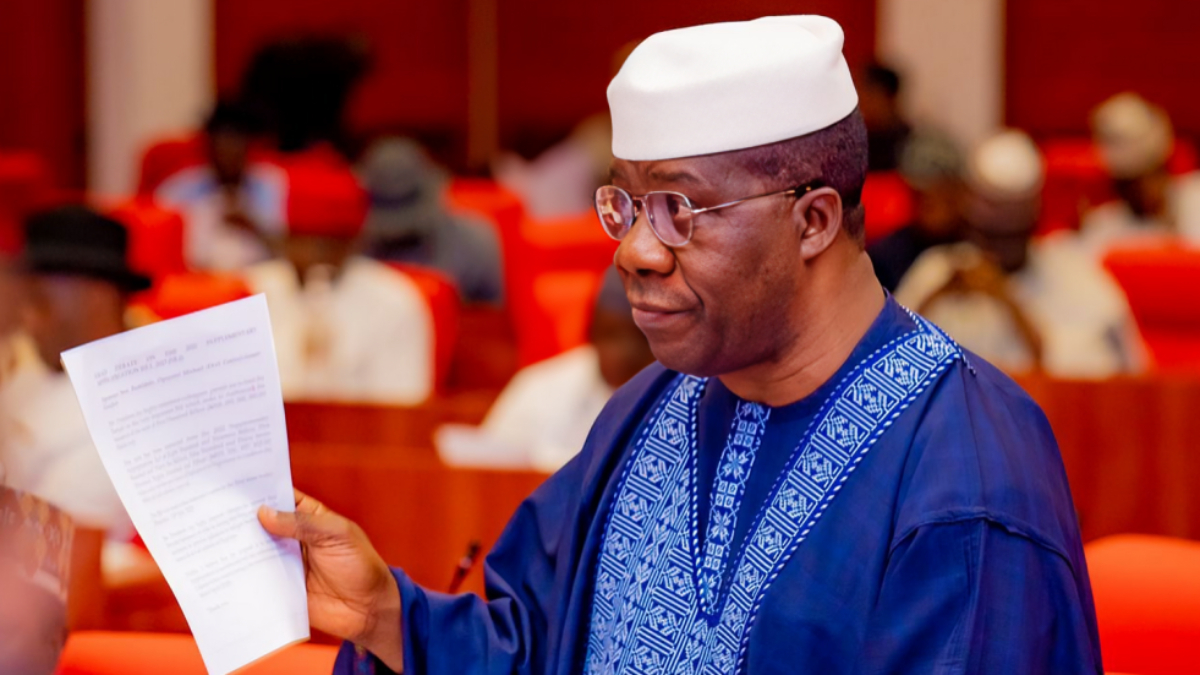
Senate Leader Opeyemi Bamidele (APC, Ekiti Central) urged caution over the application of the proposed legislation across the federation.
Bamidele noted that criminal justice provisions are not necessarily uniform across all states and said lawmakers would have to determine the extent to which the proposed changes could operate nationally without conflicting with laws enacted by State Houses of Assembly.
Despite Akpabio’s opposition to decriminalisation and the constitutional concerns raised during debate, senators voted to allow the legislation to proceed to the next stage.
The bill was consequently referred to the Senate Committee on Health (Secondary and Tertiary) and the Committee on Judiciary, Human Rights and Legal Matters for further legislative scrutiny.
The committees are expected to examine its medical, legal and constitutional implications, receive submissions from relevant stakeholders and report back to the chamber.
Felix Ifijeh is a journalist with years of professional reporting experience. Known for his keen news sense, compelling storytelling and commitment to accurate, impactful reporting, he has built a reputation for turning leads into clear, engaging, and well-structured reports that resonate with readers. His work reflects deep newsroom experience and a commitment to accurate, impactful journalism.
