
-
APM presidential candidate proposes channeling crude oil earnings above the national budget benchmark into programmes that directly improve citizens’ welfare.
-
Makinde questions the disconnect between macroeconomic reforms and worsening living conditions, pledges measurable performance targets within his first 100 days.
-
Oyo governor proposes a presidential election victory threshold of more than 50 per cent of votes, a transitional government of national unity, and a national conference.
-
Running mate, Daura, condemns suppression of opposition parties, while APM chairman challenges INEC to guarantee peaceful, free and credible elections.
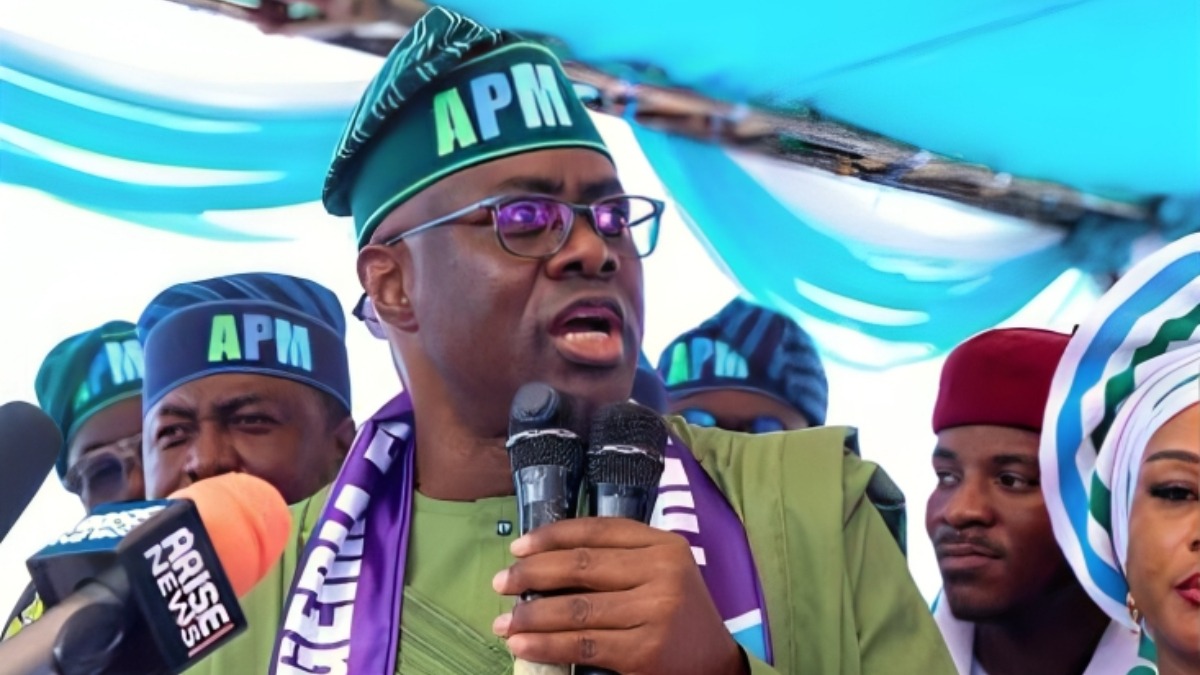
November 05, (THEWILL) – Oyo State Governor and presidential candidate of the Allied Peoples Movement (APM), Seyi Makinde, has declared that Nigeria has no business being poor despite its enormous oil and natural resource wealth, proposing a new revenue management system that would ensure that additional earnings from crude oil translate into improved living conditions for citizens.
Makinde made the declaration on Wednesday in Abuja during the unveiling of his Reset Agenda manifesto ahead of the January 16, 2027 presidential election.
The governor, who was accompanied by his running mate, Lawal Musa Daura, and the APM National Chairman, Yusuf Mamman Dantalle, said his proposed economic framework would prioritise the welfare of Nigerians and ensure that the country’s natural resources deliver tangible benefits to the population.

He argued that the persistent poverty confronting millions of Nigerians was unacceptable in a country endowed with substantial natural and human resources.
Makinde proposed a system for deploying revenue generated from crude oil sales above the benchmark used in preparing the national budget to improve citizens’ welfare.
Nigeria’s annual budgets are traditionally based on a benchmark crude oil price, with earnings above the projected benchmark historically saved or distributed among the federal, state and local governments.
The governor, however, maintained that the benefits of increased oil earnings must be reflected in the living conditions of ordinary Nigerians rather than remain disconnected from their economic realities.
“For us, macroeconomic reforms must translate into improvements in people’s lives,” he said.
Questioning the practical value of macroeconomic stability without corresponding improvements in citizens’ welfare, Makinde identified the disconnect between economic reforms and living conditions as one of the major challenges confronting the country.
He insisted that the success of government policies should not be measured solely by economic indicators but also by their impact on households, businesses and communities.
100-Day Performance Targets
The APM presidential candidate said his proposed administration would move away from government promises that lacked clearly defined implementation strategies, measurable targets and institutions capable of enforcing accountability.
He pledged to establish performance targets within his first 100 days in office, stressing that government must be held accountable for its spending and the delivery of public services.
According to him, public resources must produce measurable results, while government institutions must be strengthened to ensure that policies are effectively implemented.
On electricity, Makinde urged Nigerians to hold the Federal Government accountable for its promise to improve power supply, arguing that the transfer of greater regulatory powers to states did not absolve the central government of its responsibilities.
He maintained that the Federal Government must continue to address the challenges of electricity generation and distribution, notwithstanding the new legal framework permitting states to participate more actively in the electricity market.
The governor said his decision to seek the presidency was informed by the need to address the country’s development challenges and restore the vision of its founding fathers.
He pledged to prioritise improved living conditions for millions of Nigerians, particularly residents of rural communities, while expanding access to opportunities regardless of ethnicity, religion or regional background.
“We must develop people’s abilities and expand their access to opportunities. We must also have institutions that work,” he said.
READ ALSO:
Proposes New Electoral Framework, National Conference
On political and constitutional reforms, Makinde proposed that a presidential candidate should secure more than half of the votes cast to emerge victorious in an election.
He argued that the proposed threshold would encourage candidates and political parties to build broader political alliances and secure wider support across the country.
The governor also proposed a transitional government of national unity and the convocation of a national conference to deliberate on Nigeria’s challenges and agree on a common direction for the country’s future.
The proposals formed part of the political and institutional reforms outlined in his Reset Agenda, which he said would address the country’s longstanding development challenges.
His running mate, Daura, a former Director-General of the Department of State Services (DSS), also expressed concern over what he described as the suppression of opposition parties in the country.
Daura said the survival of democracy depended on the existence of a level playing field for all political parties and candidates, insisting that opposition groups must be allowed to operate freely and participate in the electoral process without undue interference.
He maintained that democratic governance could only be sustained where political competition was protected and all parties enjoyed equal opportunities.
APM Chairman Warns INEC Against Electoral Fraud
Earlier, Dantalle, in his welcome address, said the 2027 presidential election should not be viewed merely as a contest for the electoral fortunes of the APM but as an opportunity to determine the future of millions of Nigerians.
He said the election represented the aspirations of citizens seeking a reset of the country’s political and economic direction.
The APM chairman urged the Independent National Electoral Commission (INEC) to remain neutral and ensure that the 2027 elections were peaceful, free, fair and credible. He warned against electoral malpractice, describing electoral fraud as the worst form of banditry.
Dantalle called on the electoral umpire to discharge its constitutional responsibilities without favouring any political party or candidate, stressing the importance of public confidence in the electoral process.
The unveiling of the Reset Agenda marks Makinde’s formal presentation of the APM’s policy proposals ahead of the 2027 presidential contest, with economic prosperity, citizens’ welfare, institutional accountability, electricity supply and political reforms featuring prominently in the manifesto.
Felix Ifijeh is a journalist with years of professional reporting experience. Known for his keen news sense, compelling storytelling and commitment to accurate, impactful reporting, he has built a reputation for turning leads into clear, engaging, and well-structured reports that resonate with readers. His work reflects deep newsroom experience and a commitment to accurate, impactful journalism.
