
-
Presidential hopeful Omoyele Sowore has renewed his opposition to fuel subsidy removal, accusing successive governments of shifting the burden of economic reforms to ordinary Nigerians while political elites and state governors benefit.
-
Speaking at the Nigerian Bar Association (NBA) conference in Port Harcourt, Sowore said Nigerians had been promised better living conditions after previous subsidy removals but continued to face worsening economic hardship decades later.
-
The activist also criticised former Rivers State governor, Rotimi Amaechi, over infrastructure projects executed under his administration and former Anambra State governor, Peter Obi, over his administration’s handling of education and healthcare.
-
A young lawyer at the conference challenged Amaechi’s reported claim that Sowore could not win a presidential election, arguing that opposition politicians should unite and suggesting that Peter Obi remains the most popular among the contenders.
August 24, (THEWILL) — Presidential candidate and human rights activist, Omoyele Sowore, has launched a fresh attack on President Bola Tinubu, former Rivers State governor, Rotimi Amaechi, and former Anambra State governor, Peter Obi, over the controversial removal of fuel subsidy and the management of public resources.
Sowore, who spoke during a session at the ongoing Nigerian Bar Association (NBA) conference in Port Harcourt, Rivers State, accused Nigerian politicians of misleading citizens about the benefits of subsidy removal and challenged them to account for the use of resources saved from the policy.
Responding to a question on whether fuel subsidy should be removed and what should be done with the savings, Sowore said he had remained consistent in opposing the removal of the subsidy.

“If there’s anyone who has been consistent about non-removal of fuel subsidy, it has been me,” he said.
According to him, the central question Nigerians should ask is who actually benefits from the subsidy system and who has benefited from its removal.
“The question about subsidy is: who are you subsidising? You are subsidising the elite. You are subsidising the governors. The only people who are doing well since they removed subsidy are the governors of states,” Sowore said.
He rejected the impression that subsidy removal was a new policy, recalling that previous administrations had removed or attempted to remove subsidies while promising that Nigerians would ultimately enjoy better economic conditions.
“I was a student in 1988, I mean 1989, they removed subsidies. In 1992, they removed subsidies. They said Nigeria will be better. We are in 2026, they are still removing subsidies,” he said.
Sowore also accused political leaders of imposing the consequences of their policies on ordinary Nigerians while failing to deliver commensurate improvements in public services.
“They are robbing Peter Obi to pay for Tinubu. That is what it is all about,” he said.
He maintained that the poorest Nigerians had historically benefited most directly from petrol subsidy, particularly because of its effect on transportation and the cost of essential goods.
“The poor people of this country only benefit from subsidy from petro-gasoline. There is no subsidy on kerosene. What did they build with it? There’s no subsidy on a one jet,” he said.
Sowore subsequently issued a warning to Nigerians against accepting what he described as misleading explanations from politicians on the subsidy policy.
“Please, please don’t let these politicians lie to you. You guys should be apologising to the Nigerian people,” he said.
Sowore Tackles Amaechi
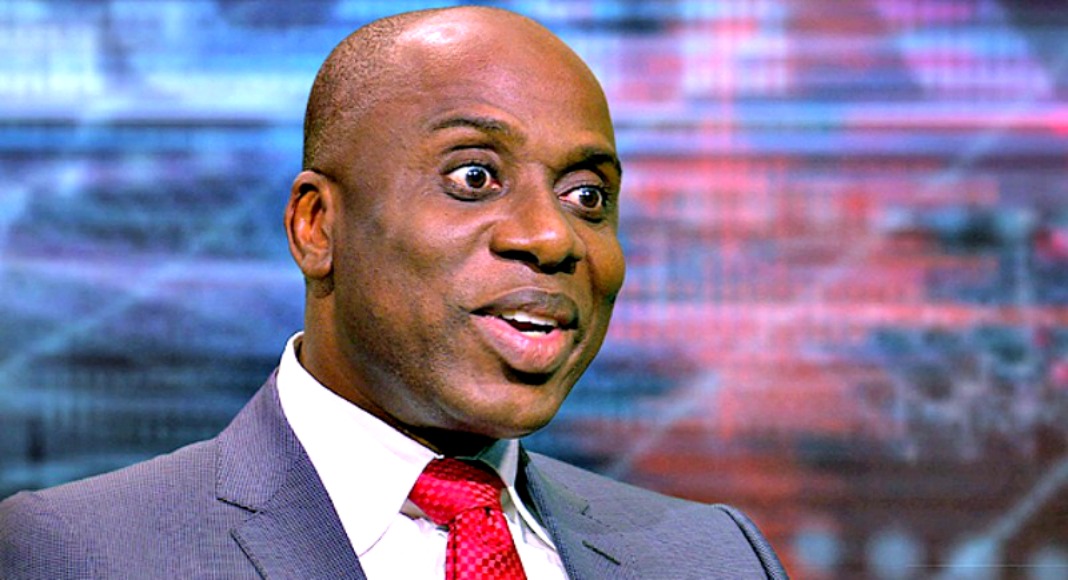
Sowore also criticised Amaechi over projects undertaken during his tenure as Minister of Transportation, using a rail project as an example of what he described as questionable allocation of public resources.
He argued that resources committed to such projects could instead have been used to provide direct support to Nigerians through social programmes.
“One other thing I want to say is that when it comes to subsidy, we have a former governor of Rivers who built a rail line that went nowhere. If that rail line was redirecting subsidy, subsidy would have been working for the people of Rivers State,” he added.
Attack On Obi’s Record
![Peter Obi, presidential candidate of the Nigeria Democratic Congress (NDC). [Photo Credit: Peter Obi/Facebook]](https://thewillnews.com/wp-content/uploads/2026/07/FotoJet-60.jpg "Peter Obi - THEWILL NEWS MEDIA")
He said politicians who had previously held executive office should not be exempted from scrutiny over their decisions on public spending and social services.
“We cannot ignore that those of you who have governed before who refuse to subsidise your people. Peter Obi did not subsidise education in state. Lecturers and doctors went on strike for 13 months,” he alleged.
The claim was part of Sowore’s wider argument that political leaders should be judged not only by their positions on national economic policies but also by their records in office.
READ ALSO:
Young Lawyer Challenges Amaechi
The subsidy debate at the NBA conference also triggered a political exchange involving Amaechi and Sowore.
A young lawyer at the event challenged Amaechi’s reported assertion that Sowore could not win a presidential election, arguing that political leaders should not make definitive claims about the outcome of elections.
The lawyer pointed to the formation of the All Progressives Congress (APC), which emerged from the merger of several political parties, as an example of how political forces could come together to form a stronger platform.
“Now we all know how APC came about — by several parties coming together. Several parties coming together to form the APC,” he said.
Addressing Amaechi directly, the lawyer said: “You made bold to say that Mr. Sowore cannot win the presidential election. Without due respect, sir, I also make bold to say that, with all due respect, sir, you also cannot win the presidential election.”
He subsequently questioned why opposition politicians could not similarly unite under a single platform to challenge the ruling party.
“Why can’t all of you come together to have one party?” he asked.
The lawyer also expressed his preference for Obi, declaring that the former Anambra governor was, in his view, “the most popular” among the presidential contenders.
Background
Fuel subsidy has remained one of Nigeria’s most contentious economic and political issues for decades. Successive governments have argued that subsidising petrol places an unsustainable burden on public finances, creates opportunities for corruption and diverts resources that could otherwise be invested in infrastructure and social services.
Critics of removal, however, have consistently argued that the policy provides indirect relief to millions of Nigerians by keeping petrol prices lower and limiting the knock-on effect of fuel costs on transportation, food and other essential goods.
The debate intensified after Tinubu announced the removal of the petrol subsidy shortly after assuming office in May 2023. The decision triggered a sharp increase in petrol prices and contributed to higher transportation and living costs, while the Federal Government maintained that the reform was necessary to restore fiscal sustainability and redirect public resources towards development.
The government has subsequently introduced various measures aimed at cushioning the impact of the reforms, while state governments have also received increased allocations following changes in federal revenue flows.
Sowore’s comments at the NBA conference have therefore added another political dimension to the subsidy debate, with the activist questioning whether Nigerians have received sufficient value from the resources freed by subsidy removal.
The exchanges also underscore the growing political contest over the direction of Nigeria ahead of the next general elections, with subsidy removal, economic hardship, governance records and opposition unity expected to remain major issues in the national conversation.
Felix Ifijeh is a journalist with years of professional reporting experience. Known for his keen news sense, compelling storytelling and commitment to accurate, impactful reporting, he has built a reputation for turning leads into clear, engaging, and well-structured reports that resonate with readers. His work reflects deep newsroom experience and a commitment to accurate, impactful journalism.