
-
French tech company, Sesterce, plans a €10 billion AI computing campus at the former Kaipola paper mill in Jämsä, Finland.
-
The site offers ready-made industrial infrastructure, including high-voltage power lines and water cooling systems.
-
Initial capacity is set at 200 megawatts starting in 2026, with plans to expand to 600 megawatts.
-
Sesterce has not disclosed its anchor client, and local officials stress the project remains subject to financing and regulatory approvals.
October 8, (THEWILL) – French technology company, Sesterce, has announced plans to transform a former Finnish paper mill into a massive artificial intelligence computing campus, proposing an investment of more than €10 billion.
The project will occupy the historic Kaipola industrial site in Jämsä, central Finland. Construction is scheduled to begin in 2026, though the company’s announcement does not confirm that full financing for the €10 billion commitment is currently secured.
Sesterce claims to have secured an anchor customer for the facility but has declined to name the entity publicly.

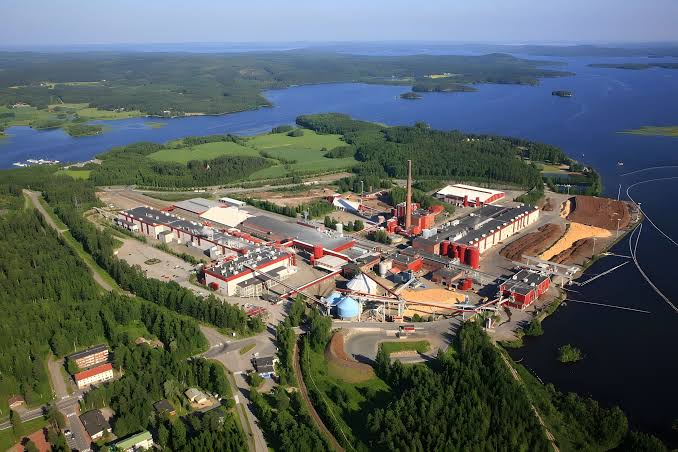
Attraction Is Already On Ground
Rather than starting on a greenfield site, Sesterce is capitalising on heavy infrastructure left behind by decades of industrial manufacturing.
The Kaipola mill, which produced paper for global markets for over 60 years, comes equipped with high-voltage electricity grid connections, industrial water systems, existing structures, and established transport links.
The company plans an initial power capacity of 200 megawatts, rising to 600 megawatts in its second phase. Grid operator Elenia confirmed that the site’s existing high-voltage connections provide a solid foundation for the initial rollout.
READ ALSO:
For governments and developers chasing global AI capital, the proposal highlights a fundamental reality of modern tech development: available real estate is secondary.
The true bottleneck for AI data centres is immediate access to massive, reliable electrical power capable of handling concentrated computing loads.
That energy hunger is expanding at an unprecedented rate. Updated International Energy Agency (IEA) projections estimate global data-centre electricity consumption will reach approximately 950 terawatt-hours by 2030, up from 485 terawatt-hours in 2025.
Projected Jobs And Environmental Guarantees
Sesterce forecasts that the project will create roughly 2,000 construction jobs and 300 permanent operational roles, promising to prioritise Finnish contractors. However, local officials note that these figures represent long-term projections rather than immediate job openings.
To address environmental concerns, Sesterce has promised to build or fund new renewable energy generation equal to the campus’s power consumption within ten years of opening. The company also promised a €10 million community fund for the city of Jämsä upon commissioning, alongside annual public audits of its commitments.
Local leadership remains cautiously optimistic but grounded. Jämsä Mayor Jori Reijula emphasised that the proposal must move from press announcements to concrete implementation while satisfying all environmental and regulatory hurdles.
As energy storage and grid stability become central to the AI boom, Sesterce’s venture on a 60-year-old paper mill proves that the fastest path to the digital future may run through the heavy industrial grounds of the past.

Joy Onuorah is a business journalist and brand communications specialist covering financial markets, artificial intelligence, digital economy, and the ideas reshaping business across Africa and the global market. Beyond her reporting for TheWill, Joy uses brand strategy, storytelling, copywriting, and high-value SEO to help brands build lasting market authority.