
-
Nigeria has $6.4bn in sovereign Eurobond principal falling due between 2024 and 2030, the World Bank says.
-
The country ranks joint third with Ghana behind South Africa, which faces $11.8bn in maturities over the period.
-
Higher borrowing costs and shorter Eurobond maturities could intensify refinancing pressures and further constrain fiscal space.
October 8, (THEWILL) – Nigeria faces a $6.4bn sovereign Eurobond repayment burden between 2024 and 2030, placing it among the African countries with the largest concentrations of external bond maturities, the World Bank has said.
The disclosure was contained in the World Bank’s October 2026 Africa Economic Update, titled Building AI Readiness, which examined the growing debt-servicing and refinancing pressures confronting governments across Sub-Saharan Africa.
The World Bank said Nigeria’s $6.4bn exposure puts it joint third with Ghana, behind South Africa, which has $11.8bn in Eurobond principal falling due during the period.

Angola follows with $3.9bn, while Kenya has $3.2bn, Côte d’Ivoire $2.8bn and Zambia $2.2bn in significant obligations.
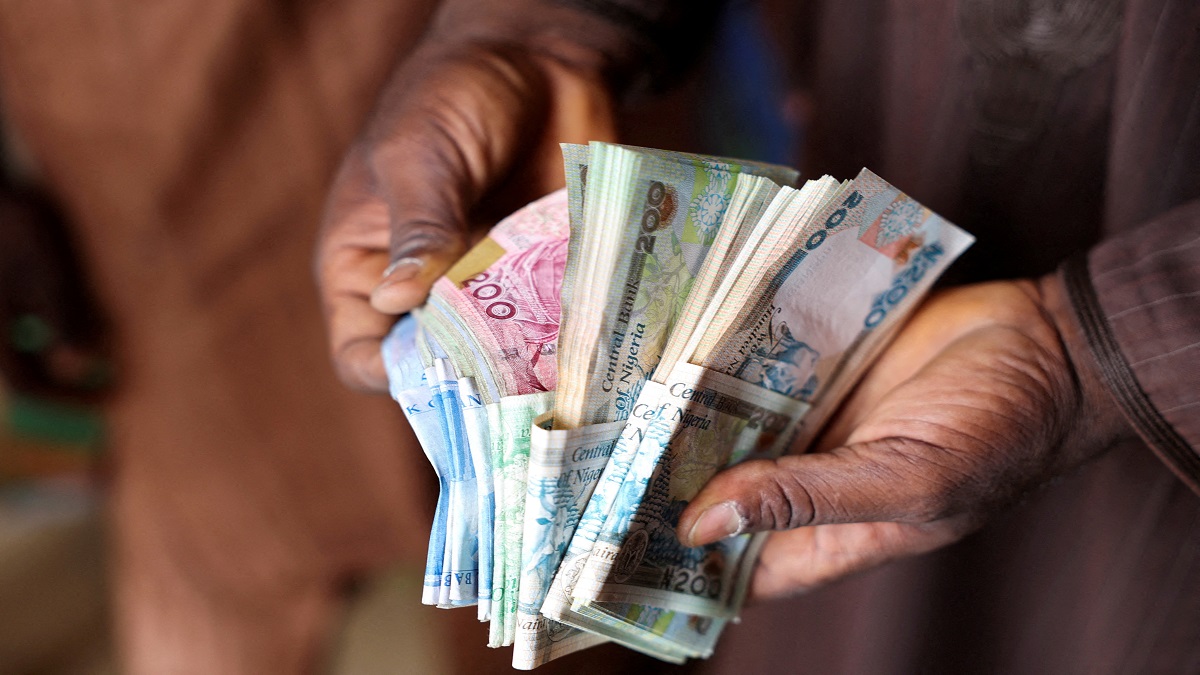
Nigeria Accounts For 14.7 Percent Of Maturity Burden
Across 13 Sub-Saharan African countries, the World Bank estimated that sovereign Eurobond principal maturing between 2024 and 2030 stood at about $43.6bn, after accounting for bond buybacks and liability-management operations completed through August 2026.
Nigeria’s $6.4bn exposure represents about 14.7 percent of the total maturity burden.
South Africa, Ghana and Nigeria together account for $24.6bn, representing about 56 percent of the $43.6bn in Eurobond principal scheduled to mature during the period.
The size of the maturity wall means refinancing conditions will be critical for Nigeria and other heavily exposed sovereigns, particularly as international borrowing costs remain considerably higher than before the 2022 global interest-rate tightening cycle.
The World Bank noted that most African governments facing maturing Eurobonds have increasingly relied on refinancing rather than repaying the debt entirely from government revenues.
While refinancing can reduce immediate pressure on government finances, the bank warned that it can also result in higher long-term debt-service costs when new bonds are issued at more expensive rates.
READ ALSO:
Nigeria Among Region’s Biggest Eurobond Issuers
The report also highlighted Nigeria’s significant role in the African sovereign Eurobond market.
Sub-Saharan African governments issued about $122bn through 158 Eurobond transactions between 2015 and August 2026, with six countries accounting for more than 80 percent of the total.
South Africa was the largest issuer, raising $23.7bn through 15 transactions, while Nigeria ranked second with $20bn raised across 18 transactions.
Angola followed with $15.8bn, Côte d’Ivoire with $15bn, Ghana with $12.6bn and Kenya with $12.2bn.
However, access to international capital markets became significantly more difficult after global interest rates began rising in 2022.
Nigeria, Angola and South Africa were the only Sub-Saharan African sovereigns able to issue Eurobonds that year, according to the World Bank.
Market access improved in 2024, when Nigeria raised $2.2bn, alongside $3.5bn raised by South Africa, $2.6bn by Côte d’Ivoire and $1.5bn by Kenya.

Higher Borrowing Costs Raise Refinancing Risk
The return of African sovereigns to international debt markets came at a significantly higher cost.
Nigeria’s 2024 Eurobond issuances carried coupons of 9.6 percent and 10.4 percent, around 300 basis points above comparable Nigerian issuances in 2021.
Across the region, yields on bonds issued during the 2024 reopening ranged from 7.1 percent to 10.4 percent, about 300 to 500 basis points above comparable pre-2022 levels.
The World Bank warned that refinancing at those higher rates could provide immediate relief while increasing debt-service costs over subsequent years.
“Although refinancing operations help ease near-term rollover pressures, they also lock in higher debt service costs for years to come, increasing fiscal burdens and reducing policy space even as immediate refinancing risks subside,” the bank said.
Kenya provides an example of the refinancing challenge. It refinanced most of a $2bn Eurobond that matured in 2024 by issuing $1.5bn in new debt, supplemented with budget resources. The new borrowing carried a 10.4 percent yield, compared with the 6.9 percent coupon on the maturing bond.
Ghana, meanwhile, addressed its obligations through a debt exchange completed in October 2024, while Ethiopia restructured its $1bn debut Eurobond after defaulting in late 2023.
Shorter Maturities Could Increase Pressure
The World Bank said the maturity pressure would remain significant across the region, with $6.6bn due in 2027 and $7.5bn in 2029 following liability-management operations that reduced obligations due in 2028 to about $5.5bn.
The bank also raised concerns about the shorter maturities attached to many Eurobonds issued during the 2024-2026 reopening.
While African sovereign Eurobonds commonly had 10- to 12-year maturities before the COVID-19 pandemic, many of the more recent issuances have maturities of only five to six years.
That means countries could face another refinancing cycle sooner, potentially before fiscal conditions have improved sufficiently to absorb higher debt-service costs.
“For several Sub-Saharan African sovereigns, Eurobond financing increasingly resembles a refinancing cycle in which successive rollovers address near-term maturities but gradually erode fiscal space through higher debt service costs,” the World Bank said.
Beyond Eurobonds, the bank said public and publicly guaranteed external debt service across Sub-Saharan Africa has remained elevated at around 1.6 to 1.7 per cent of GDP since 2021.
It warned that rising interest and principal payments are absorbing government revenues that could otherwise go to infrastructure, human capital development, and social protection.
For Nigeria, the $6.4bn maturity exposure therefore extends beyond the question of meeting individual repayment dates. The bigger challenge will be securing refinancing on sustainable terms without letting higher borrowing costs further restrict the government’s fiscal space.

Ogochukwu Onwaeze is a writer specializing in business and economic journalism. At THEWILL News Media, she translates market trends, financial developments, and policy shifts into clear and engaging stories.