
-
Nigeria handled more than 18.8 million domestic and international air passengers in 2025, up 11.9 percent year-on-year.
-
Lagos recorded a 24.1 percent increase in scheduled seat capacity in September, while Nigeria’s total capacity rose 37.4 percent.
-
Industry experts warn that rising passenger traffic may not translate into stronger Nigerian airlines as foreign carriers retain a cost-of-capital advantage.
September 23, (THEWILL) – Nigeria recorded more than 18.8 million domestic and international air passengers in 2025, representing an 11.9 percent year-on-year increase and making the country Africa’s fourth-largest aviation market.
Olubunmi Onabanjo-Kuku, Managing Director and Chief Executive Officer of the Federal Airports Authority of Nigeria, disclosed the figures at the Airports Council International Africa Regional Conference and Exhibition 2026 in Abuja.

Airline Capacity Expands
Onabanjo-Kuku, who is also Vice-President of Airports Council International Africa, said the growth reflected rising demand and renewed interest from international airlines.
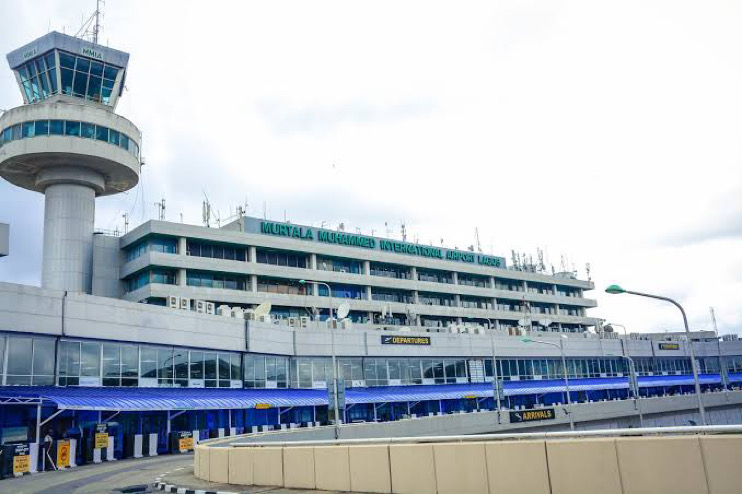
The Murtala Muhammed International Airport, Lagos, recorded a 24.1 percent increase in scheduled seat capacity among Africa’s 10 largest airports in September. Nigeria’s total scheduled airline capacity reached 1.19 million seats, up 37.4 percent from the corresponding period of the previous year.
She attributed the expansion partly to currency reforms, new aircraft leasing arrangements and increased confidence among international airlines.
She also cited International Air Transport Association data showing international passenger demand among African airlines rose 6.4 percent year-on-year in July 2026, while overall passenger demand in Africa increased 5.2 percent.
Despite the growth, she said Africa still accounts for only about one per cent of global air traffic, indicating significant room for expansion.
READ ALSO:
Local Carriers Face Financing Pressure
Samuel Caulcrick, an aviation industry expert, said rising passenger numbers did not necessarily mean Nigerian airlines were benefiting from the expansion.
He said domestic carriers remained commercially disadvantaged against foreign airlines because of differences in financing costs.
“Both pay the same charges, but foreign carriers have one decisive advantage: lower cost of capital”, Caulcrick said.
Onabanjo-Kuku identified funding constraints, infrastructure deficits, high operating costs and fragmented connectivity as persistent challenges for the industry.
FAAN, she said, was focusing on runway safety, terminal upgrades, airfield lighting and digital systems, including faster check-in, automated e-passport gates and enhanced security systems.
The authority obtained ISO 9001:2015 and ISO 14001:2015 certifications in January 2026, while more than 3,500 FAAN personnel had undergone training and certification through International Civil Aviation Organisation and ACI programmes.

Government Targets Resilient Airports
Festus Keyamo, Minister of Aviation and Aerospace Development, said next-generation airports must be safe, financially sustainable, technologically enabled and resilient to disruptions.
He cited Nigeria’s 91.45 percent Effective Implementation score following the 2026 International Civil Aviation Organisation Coordinated Validation Mission.
Keyamo also highlighted the rehabilitation and expansion of Terminal 1 at the Murtala Muhammed International Airport and efforts to attract private investment into airport infrastructure, aircraft leasing, cargo facilities and Maintenance, Repair and Overhaul operations.
He called for stronger intra-African connectivity, arguing that it should not be easier to fly from one African city to a destination outside the continent than to another African city.

Ogochukwu Onwaeze is a writer specializing in business and economic journalism. At THEWILL News Media, she translates market trends, financial developments, and policy shifts into clear and engaging stories.