
-
Lagos State has emerged as Nigeria’s electoral heavyweight with 7,488,633 registered voters, the highest in the country, putting it ahead of Kano and Kaduna as political parties and candidates position themselves for the 2027 general elections.
-
Kano, Kaduna and Katsina feature among the states with the largest voter populations, while the North-West geopolitical zone leads all six zones with 25,083,411 registered voters.
-
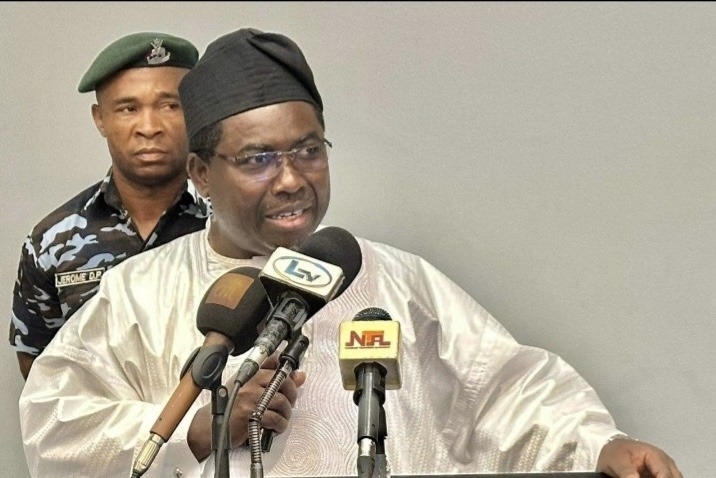
INEC Chairman Joash Amupitan said the national register currently contains 103,428,715 registered voters, with the commission set to display the register for public scrutiny between October 9 and 15.
-
Voters aged 35 to 49 account for 41.83 percent of the register, while men represent 51.75 percent and women 48.25 percent. INEC also recorded 232,658 persons with disabilities across 10 categories.
October 7, (THEWILL) – The Independent National Electoral Commission (INEC) has disclosed that 103,428,715 Nigerians are registered to vote in the 2027 general elections, with Lagos State emerging as the country’s largest electoral constituency, ahead of Kano and Kaduna.
The figures, unveiled in Abuja on Tuesday by INEC Chairman, Joash Amupitan, provide the clearest picture yet of the electoral weight that states and geopolitical zones will carry as political parties intensify preparations for the 2027 elections.
Amupitan said the register followed the completion of the three phases of the voter registration exercise, describing Nigeria as Africa’s largest democracy.

According to the final state-by-state breakdown, Lagos leads with 7,488,633 registered voters, followed by Kano with 6,570,276 and Kaduna with 4,662,640.
Katsina occupies the fourth position with 3,876,051 voters, while Rivers has 3,736,434.
Other states in the top 10 are Oyo with 3,588,111, Delta with 3,525,988, Benue with 3,057,225, Ogun with 3,037,981, and Bauchi with 3,012,547.
The figures underline the enormous electoral significance of Lagos, which alone has more registered voters than several Nigerian states combined and remains a critical battleground for political parties seeking to build a nationwide electoral coalition.
The large voter population in Kano, Kaduna and Katsina also reinforces the electoral importance of the North-West, which recorded the highest number of registered voters among the six geopolitical zones.
The North-West has 25,083,411 registered voters, followed by the South-West with 19,614,274 and North-Central with 16,965,787.
The South-South recorded 15,823,550 voters, while the North-East has 13,965,475 and the South-East 11,976,218.
READ ALSO:
The figures mean the North-West has 5,469,137 more registered voters than the South-West, highlighting the region’s substantial influence in national elections.
At the other end of the register, Ekiti has the lowest registered voters, with 1,055,708, followed by Bayelsa with 1,200,691.
The Federal Capital Territory recorded 1,732,043 registered voters, while Ondo has 1,733,641 and Gombe 1,768,560.
Amupitan also provided a demographic breakdown of the register, showing a marginally higher number of male voters.
According to him, male voters number 53,528,218, representing 51.75 per cent, while female voters stand at 49,900,497, representing 48.25 per cent.
The age distribution shows that voters between 35 and 49 constitute the largest voting bloc, with 43,265,946 people, representing 41.83 percent of the register, followed by voters aged 18 to 34, numbering 29,777,576, or 28.79 percent.
Voters between 50 and 69 years account for 22,982,900, representing 22.22 percent, while those aged 70 and above constitute the smallest group, with 7,402,291 voters, or 7.16 percent.
The commission also recorded 232,658 persons with disabilities, spread across 10 disability categories, representing approximately 0.23 percent of the register.
Amupitan said the figures would now be subjected to public scrutiny as part of INEC’s statutory obligation to ensure the integrity of the voters’ register ahead of the elections.
The commission said the register would be displayed nationwide from October 9 to 15, 2026, in accordance with Section 19(1) of the Electoral Act 2026.
The exercise is expected to give registered voters an opportunity to inspect the register and raise objections over omissions, inaccurate entries, or other irregularities before the 2027 elections.
Background
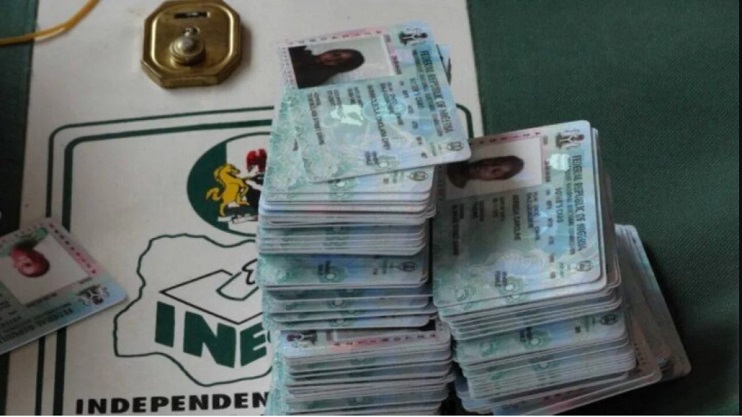
The voters’ register is one of the most important components of Nigeria’s electoral process because only citizens whose names appear on the register and who possess valid Permanent Voter Cards are eligible to vote.
The latest figures come as political parties and prospective candidates increasingly turn their attention to the 2027 general elections, with the size and distribution of registered voters expected to influence campaign strategies, mobilisation efforts and the allocation of political resources.
Lagos’ emergence as the state with the largest voter population places additional electoral importance on the state, while the North-West’s dominant regional figures underscore the strategic importance of the region in any national electoral calculation.
INEC’s decision to display the register for public scrutiny is also to allow errors and questionable entries to be identified and addressed before the elections.
With more than 103 million registered voters, the 2027 election is set to involve one of the largest electorates in Nigeria’s history, making the credibility, accuracy and transparency of the final voters’ register a crucial test for the electoral commission and the political system.
Felix Ifijeh is a journalist with years of professional reporting experience. Known for his keen news sense, compelling storytelling and commitment to accurate, impactful reporting, he has built a reputation for turning leads into clear, engaging, and well-structured reports that resonate with readers. His work reflects deep newsroom experience and a commitment to accurate, impactful journalism.