-
Manchester City’s long-running legal battle with the Premier League has taken a fresh turn after details of evidence the club has repeatedly described as “irrefutable” emerged following the publication of the commission’s verdict.
-
The evidence reportedly includes government bank statements and witness statements which Manchester City intends to rely on as it challenges findings over alleged disguised sponsorship funding.
-
An independent commission found Manchester City guilty of the charges and concluded that the club used “sham contracts” and “sham agreements” to artificially inflate revenues and reduce costs between 2009 and 2018.
-
Manchester City, which has consistently denied wrongdoing, is expected to appeal the verdict, with its defence centred on the ownership of the sponsors involved and how funds were transferred to the club.
October 01, (THEWILL) – Manchester City’s 115-charge case has taken another dramatic turn after details of the evidence the club has previously described as “irrefutable” emerged following the publication of the independent commission’s verdict.
The Premier League champions have spent years contesting allegations relating to their financial dealings between 2009 and 2018, with the case becoming one of the most significant legal battles in the history of English football.
An independent commission has now found Manchester City guilty of the charges, but the verdict has not brought the dispute to an end.

Instead, the club is preparing to appeal, and evidence presented during the lengthy hearing could now become central to its attempt to overturn the findings.
At the heart of Manchester City’s defence is the argument that sponsorship payments involving companies connected to the government of Abu Dhabi were legitimate commercial transactions rather than disguised financial contributions from the club’s ownership.
The newly disclosed evidence is expected to form a significant part of that argument.
Evidence at centre of Manchester City appeal
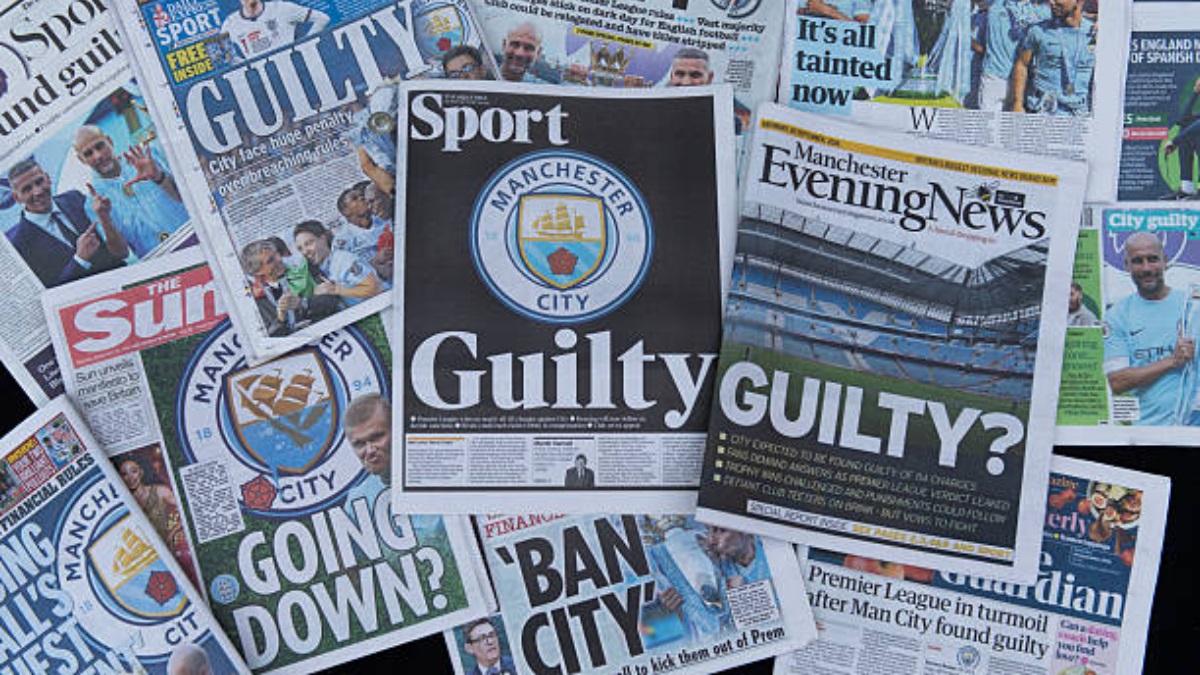 According to reports, Manchester City’s evidence includes government bank statements and witness statements relating to the movement of funds between government accounts, sponsors and the football club.
The evidence was presented during the hearing, which lasted three months and involved more than 700 pages of statements.
Manchester City believes the material supports its longstanding position that the sponsorship arrangements were legitimate.
The club is expected to argue that the companies involved were owned by the government of Abu Dhabi rather than by Abu Dhabi United Group (ADUG), the investment group that owns Manchester City.
That distinction is crucial to the club’s defence.
Manchester City’s position is that sponsorship agreements involving government-backed companies were legitimate commercial arrangements and that similar relationships have existed elsewhere in the Premier League.
The club therefore disputes the suggestion that the sponsorship payments should be regarded as money provided by its owners and subsequently disguised as commercial revenue.
However, the independent commission reached a different conclusion.
What did the commission find?
 The commission found Manchester City guilty of the charges and concluded that the club had arranged what it described as “sham contracts” and relied on “sham agreements” between 2009 and 2018.
According to the findings, the arrangements were used to artificially inflate Manchester City’s revenues and reduce its costs.
The alleged arrangements were reportedly worth around £380 million and were said to have been used to circumvent financial regulations and disguise the source of funding.
The commission rejected Manchester City’s explanation that the sponsorship arrangements represented genuine commercial transactions.
It reportedly described the club’s argument concerning the source of the funding as an explanation that was developed after the events in question in an attempt to conceal the reality of what it considered a disguised funding scheme.
That finding represents one of the biggest obstacles facing Manchester City as it prepares its appeal.
Government bank statements form part of City’s defence
The government bank statements could now become particularly important in the next stage of the case.
Manchester City has maintained that the documents demonstrate how money was transferred from government accounts to sponsors before being used by those sponsors to make payments to the club.
The club’s argument is that this financial trail supports its claim that the sponsorship arrangements were not simply a mechanism through which ADUG secretly provided additional money to Manchester City.
Witness statements presented during the hearing are also expected to form part of the appeal.
Manchester City believes the testimony can provide further context about the sponsorship arrangements and how the transactions were conducted.
The club’s legal team will therefore seek to challenge the commission’s interpretation of the evidence and establish that the payments were legitimate commercial transactions.
READ ALSO:
Leaked emails also feature in the case
Another important part of the Premier League’s case has been a series of leaked emails obtained by whistleblower Rui Pinto and subsequently published through Football Leaks.
The emails, which involved senior Manchester City officials, included discussions about how additional sponsorship funds could move through companies linked to the club.
One email from former Manchester City chief financial officer Jorge Chumillas questioned the mechanism through which additional sponsorship money would flow through ADUG and Etihad Airways before reaching Manchester City.
The correspondence became part of the wider evidence examined during the case.
Manchester City, however, has disputed the interpretation of the emails.
The club’s position is that some of the correspondence represented assumptions made by employees based in Manchester rather than proof that Manchester City had deliberately constructed an illegal financial arrangement.
That argument is likely to be revisited during the appeal.
Etihad rejects allegations of improper arrangements
Etihad Airways, one of Manchester City’s major sponsors, has also rejected suggestions that it was involved in improper commercial arrangements.
The Abu Dhabi-based airline, which is state-owned, has strongly disputed any implication that its sponsorship relationship with Manchester City involved wrongdoing.
Etihad has maintained that its commercial dealings with the club were legitimate and has reportedly threatened legal action over suggestions to the contrary.
The airline’s position is significant because Manchester City’s defence relies heavily on the argument that sponsorship agreements with government-linked companies were genuine commercial transactions.
However, the commission ultimately rejected the club’s wider explanation of the financial arrangements.
Manchester City faces potentially serious consequences
The outcome of the case could have major consequences for Manchester City if the verdict survives the appeal process.
Potential sanctions discussed in relation to the case include a points deduction, expulsion from the Premier League and the possibility of titles being stripped.
The exact punishment, however, would depend on the final outcome of the legal process and any subsequent disciplinary decision.
Manchester City’s immediate focus is therefore expected to be its appeal.
The club has consistently denied the allegations and has maintained its position throughout the lengthy proceedings.
The appeal will give Manchester City an opportunity to challenge the commission’s interpretation of the evidence and present its case again.
A case far from over
The publication of the commission’s verdict may have delivered a major blow to Manchester City, but it has not ended the dispute.
The club’s legal team now faces the task of demonstrating that the evidence presented during the hearing does not support the conclusions reached by the commission.
The government bank statements, witness testimony, sponsorship agreements and leaked emails could all become important in that process.
Manchester City’s argument will continue to focus on the distinction between legitimate sponsorship revenue and disguised owner funding.
The Premier League, meanwhile, will have to defend the findings of the independent commission if the club formally challenges the verdict.
That means one of the biggest financial disputes in Premier League history is heading into another potentially decisive phase.
For Manchester City, the evidence it has previously described as “irrefutable” will now face its biggest test as the club attempts to overturn the findings against it.
The outcome of the appeal could ultimately determine not only the club’s immediate future but also how financial regulations and sponsorship arrangements are viewed across English football.

Olumide Atiba is a sports journalist with THEWILL, known for his keen news sense and compelling storytelling. He has built a reputation for turning leads into clear, well-structured reports that resonate with readers, with a strong focus on football coverage