
-
Public servants under the Joint National Public Service Negotiating Council (JNPSNC), Trade Union Side, have given President Bola Tinubu until Wednesday, September 30, 2026, to intervene in the worsening economic hardship, warning that the pressure on workers and their dependants is creating palpable tension.
-
The council wants the Federal Government to stabilise the price of Premium Motor Spirit (PMS) at ₦500 per litre, arguing that petrol selling for as much as ₦1,430 or more in some locations has compounded the cost of transportation, food and other essential commodities.
-
The workers are demanding an immediate Wage Award for Federal, State and Local Government employees, alongside an upward review of salaries and allowances across the public service to restore purchasing power and improve workers’ welfare.
-
The JNPSNC wants a committee constituted immediately to negotiate a new National Minimum Wage ahead of January 2027. It proposed ₦500,000 as the minimum salary for a Grade Level 01, Step 1 officer under the proposed 2027 salary template.
September 21, (THEWILL) – Public servants under the Joint National Public Service Negotiating Council (JNPSNC), Trade Union Side, have given President Bola Tinubu until September 30, 2026, to urgently address the worsening cost-of-living crisis, demanding that the Federal Government reduce the pump price of petrol to ₦500 per litre.
The workers also demanded an immediate Wage Award, upward review of salaries and allowances across the public service and the immediate constitution of a committee to negotiate a new National Minimum Wage ahead of January 2027.
The demands were contained in a letter addressed to President Tinubu at the State House, Abuja, in which the council warned that the continued deterioration in workers’ purchasing power was creating palpable tension among workers and Nigerians.

The council said the sharp increase in the price of Premium Motor Spirit (PMS), which it said had reached ₦1,430 per litre or more in some locations, had further deepened the cost-of-living crisis.
It traced the worsening situation to the removal of fuel subsidy three years ago, saying the policy had produced multiplier effects on the prices of essential commodities across the economy.
The JNPSNC urged the Federal Government to “look inward and stabilise the prices of fuel to an affordable minimum”, insisting that petrol remained an essential commodity with significant implications for the Nigerian economy.
It specifically demanded that the government make petrol available at ₦500 per litre, the price at which it said fuel was being sold when subsidy was initially removed in 2023.
“Consequent upon the above, it is preferable that the Federal Government should provide an intervention that will trickle down to all Nigerians by making fuel available at an affordable amount as low as ₦500”, the council said.
The workers also demanded the establishment of an intervention fund for stakeholders in the oil sector to stabilise fuel prices and eventually bring the pump price down to ₦500.
The council said the intervention could be given another description if the Federal Government considered the term “fuel subsidy” unacceptable. It argued that lowering the price of petrol would have a multiplier effect across the economy by reducing transportation and production costs and easing pressure on the prices of goods and services.
Palliatives No Solution, Workers Say
The council rejected the continued reliance on food palliatives as a sustainable response to the economic crisis.
It listed the distribution of rice, Indomie, vegetable oil, garri and other food items as examples of interventions that, in its view, could not address the structural causes of the hardship.
The JNPSNC said such measures were temporary and did not restore the purchasing power of workers or address the rising cost of production and transportation.
“It has dawned on Nigerian workers that the provision of palliatives such as bags of rice, Indomie, vegetable oil, garri, among other edible foods, is as good as weaponising Nigerians with poverty because it is a Pyrrhic intervention which is unsustainable, inaccessible to the majority of Nigeria’s population and also limited to political cronies”, it stated.
The council argued that a reduction in the cost of petrol would benefit Nigerians more broadly because its impact would filter through transportation, agriculture, manufacturing, distribution and household expenses.
JNPSNC Backs NLC Oil Proposals
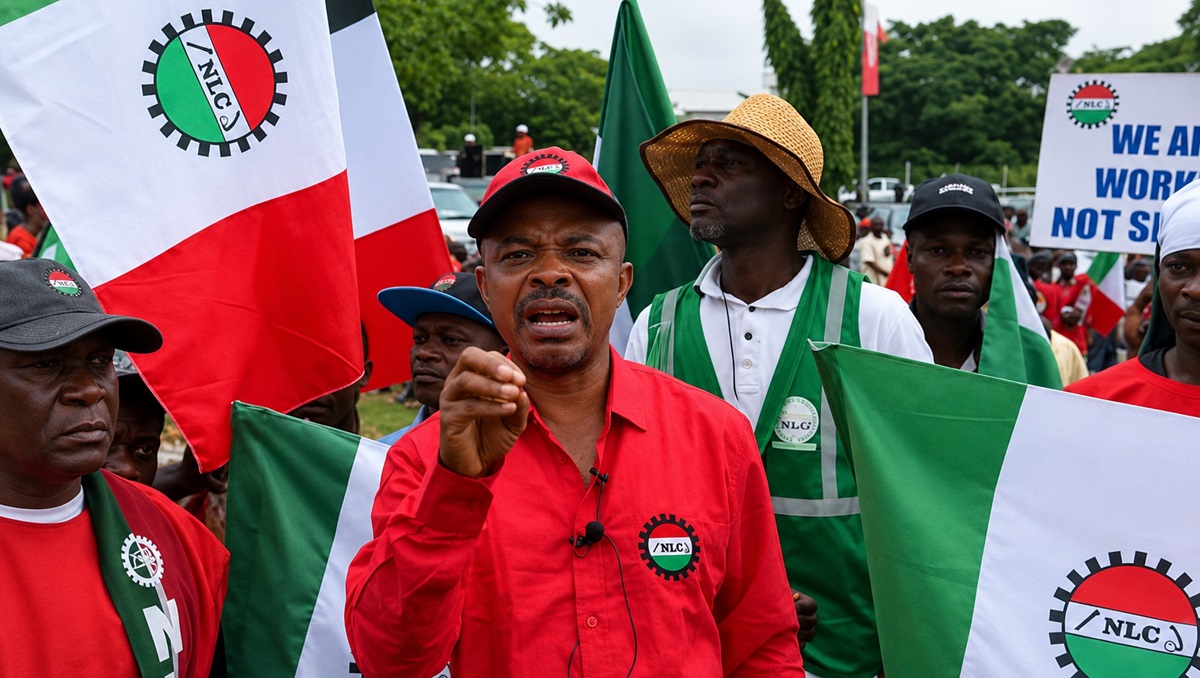 The workers also endorsed proposals attributed to the Nigeria Labour Congress (NLC) President, Joe Ajaero, on measures to address the fuel crisis.
Ajaero was quoted as arguing that Nigeria, as an oil-producing country, had sufficient local refining capacity, much of which was in private hands.
The NLC position cited by the council called for the Federal Government to sell sufficient crude oil in naira to local refineries and expand national storage capacity as part of measures to strengthen energy security.
According to the position, such measures would create jobs, generate economic value and address emerging security challenges.
The NLC position also argued that government intervention to cushion citizens from severe economic shocks was not necessarily incompatible with broader economic reforms.
It further claimed that Nigeria was earning substantially above the budgeted oil price in the international spot market, with the difference estimated at between $35 and $40 per barrel.
The JNPSNC said it “wholeheartedly subscribes to the submission of NLC leadership” and urged the Federal Government to consider the proposals for urgent implementation.
Workers Demand Immediate Wage Award
Beyond fuel prices, the council demanded an immediate Wage Award covering Federal, State and Local Government workers. It also called for an upward review of salaries and allowances across the public service, citing the erosion of workers’ real incomes by inflation and rising living costs.
The JNPSNC urged President Tinubu to direct the National Salaries, Incomes and Wages Commission (NSIWC) to begin discussions with the NLC, Trade Union Congress of Nigeria (TUC), JNPSNC and other relevant stakeholders on the Wage Award and salary review.
The council said improved remuneration was necessary to restore workers’ purchasing power, improve productivity and service delivery, promote integrity and accountability and strengthen industrial peace.
It said the combined effect of rising inflation, fuel prices, transportation costs and the increasing cost of food, housing, healthcare and education had significantly eroded the real value of workers’ salaries.
“Many workers are now struggling to meet basic financial obligations, which has inevitably affected the morale, motivation, and overall productivity within the Public Service”, it said.
READ ALSO:
₦500,000 Minimum Salary Proposed
 The JNPSNC also demanded the immediate constitution of a committee to negotiate a new National Minimum Wage ahead of January 2027.
It said early commencement of negotiations was necessary to prevent delays and ensure that the new wage takes effect from January 2027.
The council proposed ₦500,000 as the minimum monthly salary for an officer on Grade Level 01, Step 1, under the proposed 2027 salary template.
It also demanded harmonised wages across Ministries, Departments and Agencies (MDAs), while urging similar reviews at the State and Local Government levels.
The workers further called for periodic reviews of salaries and allowances linked to inflation to prevent future erosion of purchasing power.
The council also sought welfare measures, including subsidised transportation and affordable housing for public servants.
The JNPSNC described public servants as “the backbone of governance and national development” and the “live wire of any administration.”
It said civil servants were responsible for policy formulation, implementation of government programmes and delivery of essential public services.
According to the council, the worsening economic conditions were affecting workers’ morale and productivity and could undermine effective public service delivery.
It identified restoration of workers’ purchasing power, improved productivity, better service delivery, integrity, accountability, trust and industrial peace as key reasons for its demands.
September 30 Deadline
The council warned the Federal Government that it expected action on the demands by Wednesday, September 30, 2026, saying the deadline was necessary to “douse the palpable tension that may erupt.”
“Your Excellency, we trust that this request will receive the prompt attention and action it deserves in the interest of Nigerian workers and their dependants, the Public Service as an age-long institution and the nation at large on or before Wednesday, 30th September, 2026 to douse the palpable tension that may erupt”, the council said.
The workers also expressed expectations that President Tinubu’s Independence Day broadcast would address the concerns raised in the letter.
“It is the high expectations of Nigerian workers and all patriotic Nigerians that your Independence Day broadcast will attend to our sincere suggestions in order to bring succour and life back to all dying Nigerians”, the council noted.

Felix Ifijeh is a journalist with years of professional reporting experience. Known for his keen news sense, compelling storytelling and commitment to accurate, impactful reporting, he has built a reputation for turning leads into clear, engaging, and well-structured reports that resonate with readers. His work reflects deep newsroom experience and a commitment to accurate, impactful journalism.
