
-
The Federal Government has launched a $1 billion Renewed Hope Social Protection Programme aimed at moving vulnerable Nigerians beyond short-term palliatives to sustainable economic empowerment, recovery and self-reliance.
-
The Household Prosperity and Empowerment Social Protection Project (HOPE-SP), a major component of the programme, will target about 7.6 million vulnerable households, with eligible beneficiaries receiving a one-off digital shock-response cash transfer of ₦40,000.
-
Government says beneficiaries will be selected from the National Social Register and verified with their National Identification Numbers (NINs), while a unified national system will be used to coordinate humanitarian interventions and prevent duplication.
-
The initiative also introduces a poverty-graduation framework under which vulnerable households will be identified, assessed, supported and tracked towards economic inclusion, with the government insisting that success will be measured by households lifted out of poverty rather than the volume of relief materials distributed.
August 27, (THEWILL) — The Federal Government has launched a $1 billion Renewed Hope Social Protection Programme designed to shift vulnerable Nigerians from temporary relief and palliatives to sustainable economic empowerment, resilience and self-reliance.
The programme, unveiled on Wednesday at the Presidential Banquet Hall, State House, Abuja, includes the Household Prosperity and Empowerment Social Protection Project (HOPE-SP), alongside four other initiatives aimed at strengthening the country’s humanitarian response and poverty-reduction architecture.
The other initiatives are the One-Humanitarian-One Poverty Response System (OHOPRS), Emergency Cash Transfer Programme, Federal Ministry of Humanitarian Affairs and Poverty Reduction Ministerial Blueprint, and the Humanity First Magazine.

Speaking at the launch, First Lady Oluremi Tinubu said the initiatives were designed to improve the way government identifies vulnerable Nigerians and responds to their specific needs, particularly as the administration implements far-reaching economic reforms.
She said while the reforms being implemented by President Bola Tinubu’s administration were intended to strengthen the economy, lay the foundation for sustainable growth and promote shared prosperity, many households continued to face economic difficulties and would require targeted support.
“Given the size of our population and available resources, many families still face challenges and require our collective support”, she said.
Mrs Tinubu described HOPE-SP as a significant step towards improving the identification and support of vulnerable households. She said the project would not merely provide temporary assistance but would combine immediate stabilisation with measures designed to place beneficiaries on a pathway to recovery, empowerment and self-reliance.
“The Household Prosperity and Economic Social Protection Project is an important step towards strengthening how to identify and respond to vulnerable households facing various challenges by listening to their specific needs before taking action. It is designed to provide immediate stabilisation assistance while placing the households on a pathway to recovery, empowerment and self-reliance”, she added.
Under HOPE-SP, about 7.6 million vulnerable households are expected to benefit from a one-off digital shock-response cash transfer of ₦40,000.
The Federal Government said beneficiaries would be drawn from the National Social Register and validated using their NINs to improve transparency, reduce fraud and ensure that assistance reaches genuine beneficiaries. The government is also collaborating with the National Identity Management Commission (NIMC) to facilitate NIN registration and strengthen the verification process.
The First Lady said the One-Humanitarian-One Poverty Response System would provide a coordinated national platform for humanitarian emergencies, social protection and poverty reduction.
According to her, the system is expected to eliminate duplication of government interventions by creating unified national registries through which poor and vulnerable households can be identified, supported and tracked.
She said the Emergency Cash Transfer Programme would provide rapid financial assistance to households affected by economic shocks, while the ministerial blueprint would translate the administration’s humanitarian and poverty-reduction priorities under the Renewed Hope Agenda into measurable actions.
Mrs Tinubu also described the Humanity First Magazine as an avenue for documenting the experiences of Nigerians whose lives had been transformed through government interventions.
She commended the Minister of Humanitarian Affairs and Poverty Reduction, Dr Bernard Doro, and his team for developing the initiatives, saying they had the potential to transform humanitarian interventions from temporary assistance into sustainable pathways to resilience and prosperity.
Doro said the initiatives represented a new national architecture for humanitarian intervention and social protection, with the government moving from reactive palliatives to proactive empowerment.
He said the administration’s economic reforms, including the removal of fuel subsidy and unification of the foreign exchange market, were strengthening government revenues and investor confidence, but added that vulnerable Nigerians must be protected from the effects of economic shocks.
The minister said the government’s objective was to move from “reactive relief to anticipatory social protection” and from merely managing poverty to reducing it.
According to him, fragmentation has been one of the major weaknesses of Nigeria’s social intervention system, with ministries, departments, agencies and different tiers of government often operating separate programmes and databases. He said the situation had sometimes resulted in duplication, with some beneficiaries receiving multiple interventions while other vulnerable Nigerians were left without assistance.
Doro said the new architecture would, therefore, shift the focus from individual programmes to households and from merely counting beneficiaries to measuring the impact of interventions.
Under the system, vulnerable households will be identified, their needs assessed and appropriate interventions provided. They will subsequently be tracked through what the minister described as a “poverty graduation pathway” towards economic inclusion and self-reliance.
The system will be supported by unified data, digital delivery infrastructure, new financing mechanisms and real-time poverty intelligence, while strengthening coordination among the federal, state and local governments and development partners.
Doro said the One-Humanitarian-One Poverty Response System would create a single window for humanitarian and poverty-reduction interventions, ending the practice of government agencies maintaining separate registers and data centres.
He disclosed that existing databases would be integrated into a unified platform anchored on the National Social Register, which currently contains about 20 million households.
Beneficiaries, he said, would be tracked from identification and intervention through an exit mechanism and eventual movement into a growth register, with a digital dashboard providing visibility across government interventions.
The minister also announced plans to establish a National Poverty Intelligence Lab, stressing that the success of the government’s programmes would henceforth be judged by the number of households protected, economically included and ultimately moved out of poverty, rather than by the quantity of materials distributed.
Over ₦600bn Cash Transfers
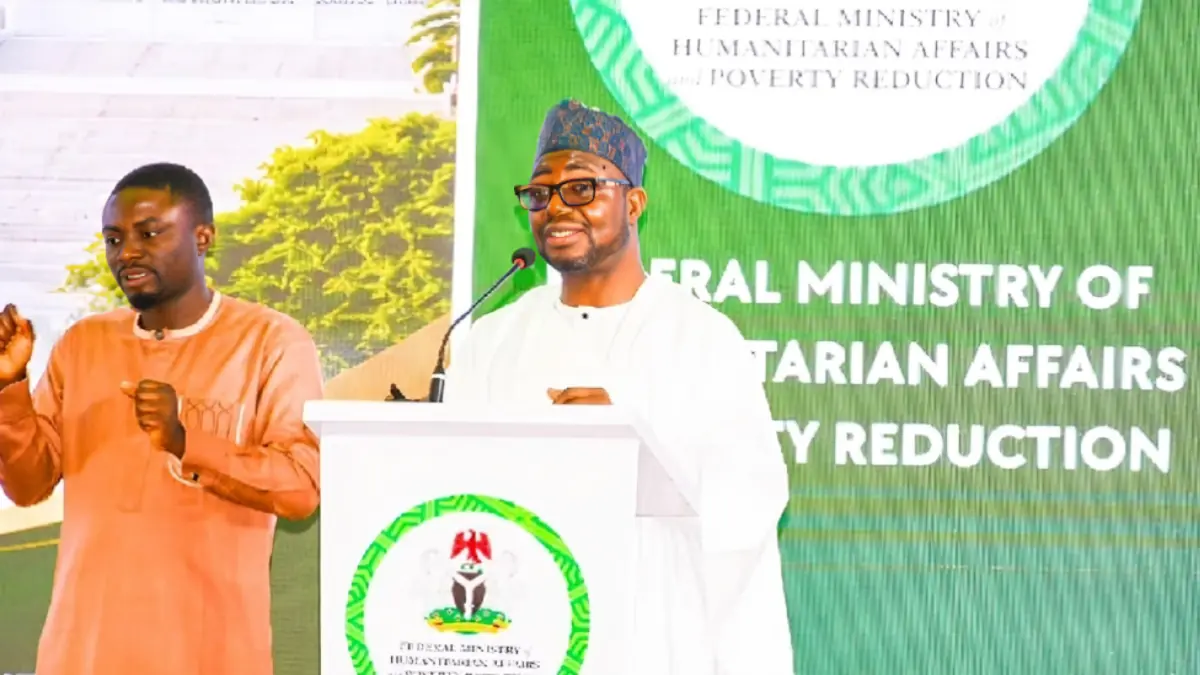
Doro later disclosed that the Federal Government had disbursed more than ₦600 billion in cash transfers to vulnerable Nigerians over the past three years.
Speaking on Channels Television’s Politics Today programme hours after the launch, he said the interventions had reached slightly more than 10 million households.
“We’ve done over ₦600 billion in cash transfers to be able to support vulnerable Nigerians within three years. We have reached slightly over 10 million households”, he said.
$1tr Economy Must Reach Grassroots
The Minister of Budget and Economic Planning, Senator Atiku Bagudu, said effective social protection required a whole-of-government approach involving the federal, state and local governments as well as development partners and other stakeholders.
Bagudu said the administration’s ambition to build a $1 trillion economy by 2030 must be matched by deliberate efforts to ensure that economic opportunities and the benefits of growth reach Nigerians at the grassroots.
He cited the administration’s ward development initiative covering 8,809 wards across the country, saying it was intended to identify the drivers of poverty and exclusion at community level and transform the wards into centres of prosperity and inclusion.
The minister said the government was also increasing budgetary attention to peace, security and critical elements of social protection to prevent Nigerians from falling into poverty because of domestic and global economic shocks.
He noted that international developments, including the Russia-Ukraine war and instability in the Middle East, had consequences for households and economies globally, underscoring the importance of effective social safety nets.
Bagudu said Nigeria already had substantial resources and programmes dedicated to social protection and poverty eradication, including a World Bank portfolio of about $6 billion.
He, however, stressed that improved coordination was necessary to maximise the impact of the resources and programmes available at the federal, state and local levels.
READ ALSO:
Zulum Links Poverty To Insecurity
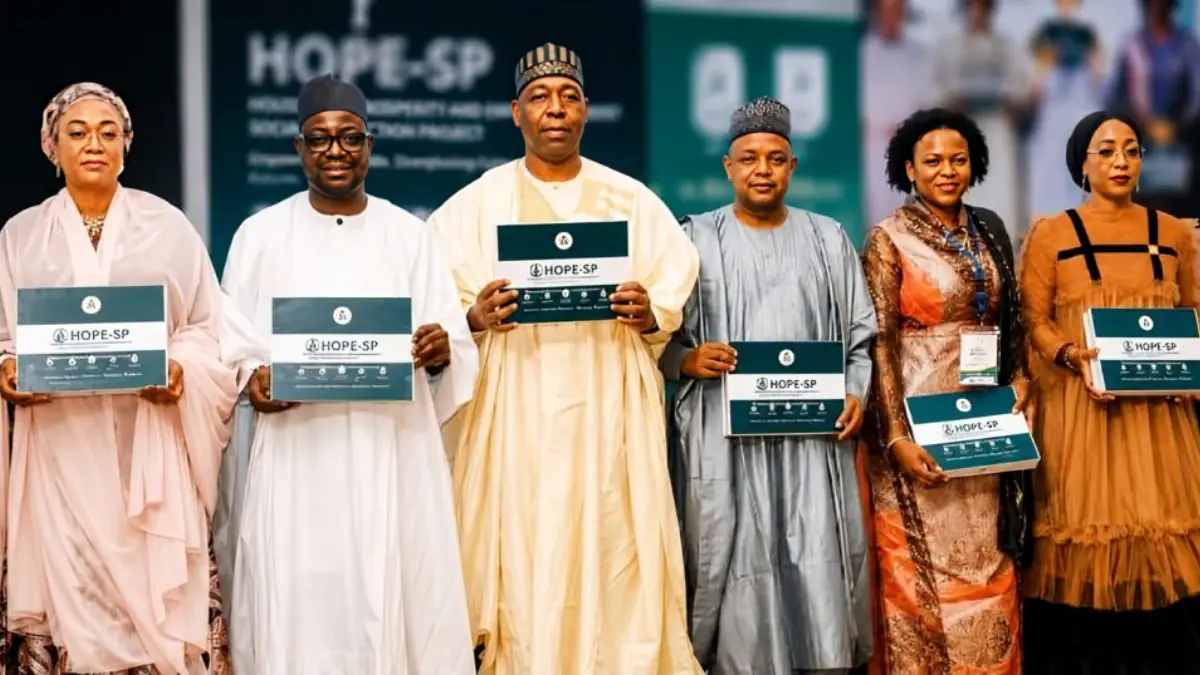
Borno State Governor, Prof. Babagana Zulum, welcomed the initiative, saying it could help address some of the underlying social and economic conditions contributing to insecurity in the country.
Zulum, whose state has endured prolonged humanitarian challenges arising from insurgency, identified poverty, illiteracy and social inequality among the factors that could fuel insurgency and other crises. He argued that military action alone could not permanently resolve the country’s security challenges without addressing their social and economic dimensions.
“The kinetic measures alone will never end the insurgency. Addressing the social, economic, and political dimensions of the crisis is synchronous with addressing insecurity challenges in Nigeria”, he said.
The governor stressed the importance of sustainable interventions that go beyond immediate humanitarian assistance to address the conditions that leave individuals and communities vulnerable to recruitment by criminal and extremist groups.
He also called for continued research into issues surrounding identity and national security, while commending the Federal Government and the Ministry of Humanitarian Affairs and Poverty Reduction for the new initiatives.
Background
Nigeria has, over the years, implemented several social intervention and cash-transfer programmes aimed at cushioning vulnerable households against economic hardship. However, concerns over fragmented databases, duplication of beneficiaries, weak targeting and the sustainability of palliative-based interventions have remained central to debates around the country’s poverty-reduction strategy.
The Tinubu administration has continued to defend its economic reforms, particularly the removal of the petrol subsidy and foreign-exchange reforms, as necessary measures to restore macroeconomic stability and create the foundation for long-term economic growth.
The reforms have also generated significant short-term pressures for households through higher living costs, increasing the importance of targeted social protection measures.
The new $1 billion framework is therefore being positioned by the government as a shift from distributing temporary relief to building a system that identifies vulnerable households, provides immediate support during shocks and then connects beneficiaries to opportunities capable of taking them out of poverty.

Felix Ifijeh is a journalist with years of professional reporting experience. Known for his keen news sense, compelling storytelling and commitment to accurate, impactful reporting, he has built a reputation for turning leads into clear, engaging, and well-structured reports that resonate with readers. His work reflects deep newsroom experience and a commitment to accurate, impactful journalism.