
-
Deputy President of the Nigerian Senate and First Deputy Speaker of the ECOWAS Parliament, Senator Barau Jibrin, has urged West African lawmakers to draw lessons from Nigeria’s prolonged farmer-herder conflicts, warning that competition over land and water can trigger wider insecurity, displacement, banditry and terrorism.
-
Barau disclosed that more than three million Nigerians remain internally displaced, despite years of government and humanitarian interventions.
-
The lawmaker called for greater investment in ranching, livestock feeding and breeding, as well as stronger early-warning systems, conflict-prevention mechanisms and climate adaptation measures to reduce pressure on land and water resources.
-
Barau urged parliamentarians to strengthen legislation protecting displaced persons, regulate land and livestock management and intensify oversight of government spending on displacement, security, agriculture, livestock and reconstruction.
September 24, (THEWILL) – The Deputy President of the Nigerian Senate and First Deputy Speaker of the Parliament of the Economic Community of West African States (ECOWAS), Senator Barau Jibrin, has urged the regional body to learn from Nigeria’s experience with farmer-herder conflicts and the humanitarian crisis they have generated.
Barau gave the warning as the ECOWAS Parliament continued its Second Extraordinary Session and Seminar in Accra, Ghana, where lawmakers are examining regional challenges, including internal displacement, conflict and humanitarian crises.
In a presentation titled “Strategies for Addressing Internal Displacement and Farmer-Herder Conflicts in Nigeria”, presented on his behalf by Senator Sadiq Umar, Barau said Nigeria’s experience offered important lessons for West Africa and the wider African continent.

He said the persistent conflicts had demonstrated the dangers of allowing pressure on natural resources, particularly land and water, to fester without effective conflict-prevention and management mechanisms.
According to him, Nigeria is endowed with extensive agricultural and pastoral economies, with a large proportion of its population depending on farming and livestock production for survival.
However, increasing pressure on land and water resources has contributed to conflicts which, in some areas, have become intertwined with banditry, terrorism and other forms of insecurity.
The consequences, he said, had gone beyond loss of lives and destruction of property to include mass displacement, disruption of livelihoods and deepening humanitarian needs.
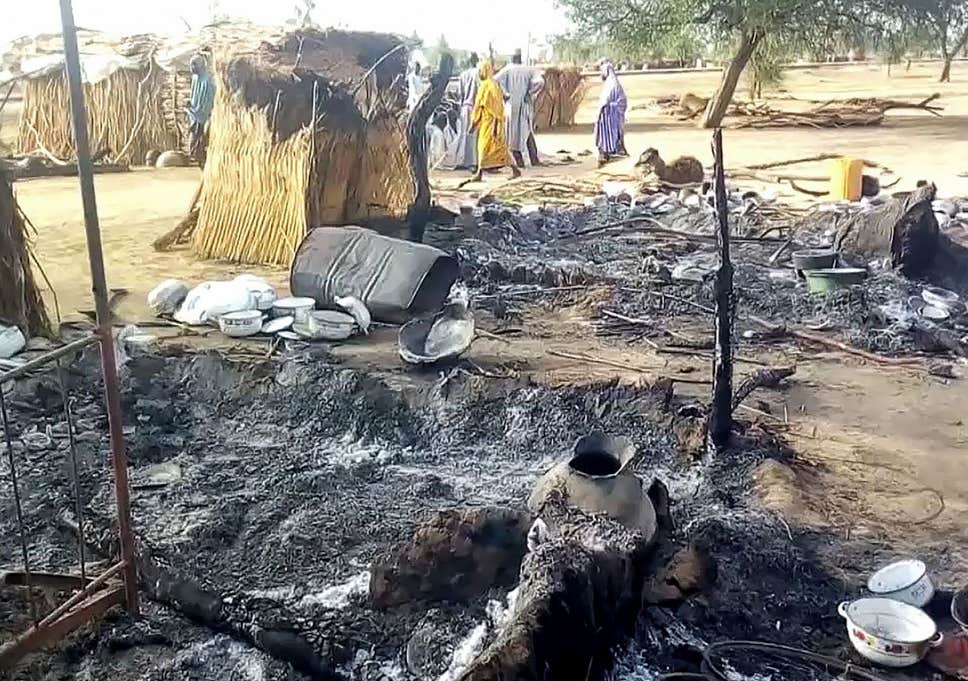
Over 3m Nigerians Displaced
Barau expressed concern that despite several interventions, the problem had continued to defy efforts to resolve it, leaving more than three million Nigerians displaced.
He said the scale of internal displacement demonstrated that the crisis could not be addressed through emergency relief alone.
The lawmaker stressed the need for a coordinated national and regional approach that addresses the causes of displacement while creating conditions for affected communities to return home safely or rebuild their lives elsewhere.
He said internal displacement should not be regarded as the exclusive responsibility of humanitarian agencies, arguing that it required the involvement of relevant Ministries, Departments and Agencies (MDAs), as well as traditional institutions and other stakeholders.
“Nigeria’s approach is increasingly consistent with the international shift from short-term humanitarian response towards government-led development-oriented solutions”, he said.
Barau noted that Nigeria was among the countries selected under the United Nations Secretary-General’s Action Agenda on Internal Displacement and Focused National Pathways towards Durable Solutions.
He also highlighted Nigeria’s engagement with the African Union Convention for the Protection and Assistance of Internally Displaced Persons in Africa, commonly known as the Kampala Convention, as part of efforts to strengthen the protection of internally displaced persons.
READ ALSO:
Early Warning, Climate Adaptation Crucial
The senator said governments across the region must strengthen early-warning systems and conflict-prevention mechanisms instead of waiting until disputes had escalated into violence before taking action.
He also identified climate adaptation as an important component of conflict prevention, particularly as changing environmental conditions can intensify competition for land, water and grazing resources.
Barau said governments must anticipate emerging pressures and put mechanisms in place to prevent disputes between farming and pastoral communities from degenerating into violent confrontations
He argued that effective prevention would be less costly, both economically and humanely, than responding to full-blown conflicts and their consequences.
Ranching, Livestock Investment
The senator also called for a fundamental rethink of the treatment of livestock production in Nigeria and across the region. According to him, livestock should not be viewed merely through the prism of security, but as an important economic sector requiring investment and proper regulation.
“Livestock should be treated, not simply as a security concern but as an important economic sector”, he noted.
Barau advocated investment in ranching, animal feeding and breeding, saying such measures could reduce pressures associated with uncontrolled livestock movement and competition over agricultural land and water resources.
He also stressed that effective implementation of policies was critical to ensuring that farmers and herders could pursue lawful and productive livelihoods without unnecessary conflict.

Barau Tasks Parliamentarians On Legislation
Beyond executive action, Barau charged parliamentarians with developing appropriate legislative frameworks to protect displaced persons and regulate land and livestock management. He said lawmakers must ensure that legislation was backed by effective implementation and rigorous oversight.
“Parliamentary committees should conduct evidence-based oversight of government programmes and expenditure relating to displacement, security, agriculture, livestock and reconstruction”, he added.
He maintained that parliamentarians had a critical role in ensuring that public funds allocated to addressing displacement and insecurity produced tangible results.
Barau also called for inclusive dialogue involving affected communities and relevant stakeholders, stressing that sustainable solutions would require cooperation rather than isolated interventions.
Nigeria’s Experience:, A Regional Warning
The senator said Nigeria’s experience had demonstrated that farmer-herder conflicts and internal displacement were complex challenges that could not be resolved through a single intervention.
He said the issues cut across security, agriculture, climate change, land management, livestock production, humanitarian response and economic development.
For ECOWAS, he said, the lesson was the need to act before similar challenges became entrenched across other member states.
Barau’s presentation was, therefore, not limited to Nigeria’s internal security challenges but sought to draw broader lessons for preventing similar crises in the region.
He said West African countries needed to focus more on prevention and resilience rather than waiting for conflicts to occur before deploying security and humanitarian responses.
“For Africa, the challenge extends beyond responding to crises after they occur; it requires building resilient institutions, economies and communities capable of preventing conflicts and protracted displacement”, he said.
He urged lawmakers to use their legislative powers to strengthen institutions, promote dialogue and ensure accountability in the deployment of public resources.
“As parliamentarians, we have a responsibility to support appropriate legislation, strengthen oversight, promote inclusive dialogue and ensure that public resources are directed towards sustainable solutions”, he added.
Background
Farmer-herder conflicts have remained a major security and humanitarian challenge in parts of Nigeria, particularly where competition over land, water and grazing resources intersects with population growth, climate pressures, insecurity and weak conflict-resolution mechanisms.
The conflicts have repeatedly disrupted farming and pastoral activities, destroyed property and forced communities from their homes. In some affected areas, the resulting insecurity has also complicated agricultural production and contributed to wider humanitarian and food-security pressures.
The challenge extends beyond Nigeria because pastoralist movements and livestock trade frequently cross national boundaries within West Africa. Consequently, instability linked to land, water and livestock management in one country can have implications for neighbouring states.

Felix Ifijeh is a journalist with years of professional reporting experience. Known for his keen news sense, compelling storytelling and commitment to accurate, impactful reporting, he has built a reputation for turning leads into clear, engaging, and well-structured reports that resonate with readers. His work reflects deep newsroom experience and a commitment to accurate, impactful journalism.