
-
ECOWAS is turning to carbon trading to tackle a $294bn climate finance shortfall threatening West Africa’s development.
-
About 32 million people could be forced into internal displacement as rising temperatures intensify climate pressures across the region.
-
The bloc wants to monetise West Africa’s forests, farms, mangroves and degraded lands by building a unified regional carbon market.
August 13, (THEWILL) — The Economic Community of West African States (ECOWAS) is developing a regional carbon market platform to help mobilise funding for climate action and address an estimated $294 billion financing gap across West Africa.
The regional bloc said the initiative had become increasingly urgent as rising temperatures, environmental degradation and extreme weather events threaten economies, livelihoods and food security across member states.
ECOWAS Commissioner for Economic Affairs and Agriculture, Dr Kalilou Sylla, disclosed this at a regional workshop in Abuja convened to validate the framework for a West African carbon market platform.

Sylla, who was represented by ECOWAS Director for Environment and Natural Resources, Christophe Deguénon, said temperatures across West Africa were projected to rise by between 1.5 and 3 degrees Celsius by 2050.
He warned that the consequences could be severe, with climate impacts potentially forcing about 32 million people in the region to become internally displaced.
ECOWAS seeks bigger share of carbon market
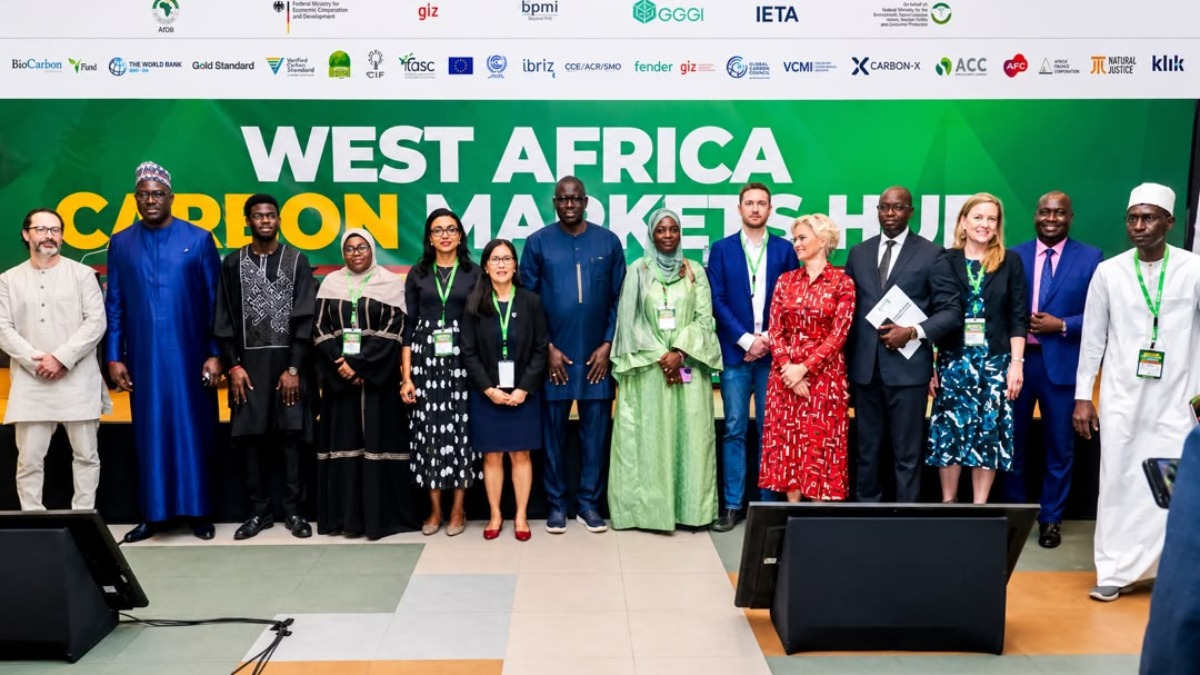
According to Sylla, the proposed platform is to address West Africa’s limited participation in international carbon markets despite the region’s substantial potential to generate environmental and social carbon credits.
He said the region has more than 350 million hectares of agricultural land, alongside extensive forests, mangroves and degraded landscapes that could be restored and used to generate high-integrity carbon credits.
“West Africa has the assets. It has over 350 million hectares of agricultural land, vast forests and mangroves, and huge potential to restore degraded landscapes. We can generate high-integrity carbon credits”, he said.
However, he noted that inadequate regulation, limited technical capacity and gaps in monitoring and certification had continued to restrict the region’s participation in international carbon markets.
Sylla said the ECOWAS Regional Strategy for Access to and Mobilisation of Climate Finance, adopted in 2022, estimated the region’s climate financing needs at $294 billion.
He added that the financing challenge had become even greater following the submission of the latest Nationally Determined Contributions, known as NDCs 3.0, as member states increased their climate ambitions.
“The regional strategy also identified the need to establish a regional framework for the operationalisation of Article 6 to help bridge the financing gap,” he said.
Article 6 of the Paris Agreement provides mechanisms through which countries can cooperate to reduce greenhouse gas emissions, including through internationally transferred mitigation outcomes and carbon crediting arrangements.
Regional framework takes shape
Sylla said ECOWAS began developing the regional carbon market framework in 2024 as part of efforts aligned with ECOWAS Vision 2050 and the African Union’s Agenda 2063.
The proposed framework is expected to create a more harmonised approach to carbon market development across West African countries while helping member states attract climate finance and improve their participation in international carbon markets.
For the region, the initiative could also provide an avenue for turning environmental assets into new sources of financing for climate adaptation, conservation and sustainable development.
Nigeria backs collective climate action
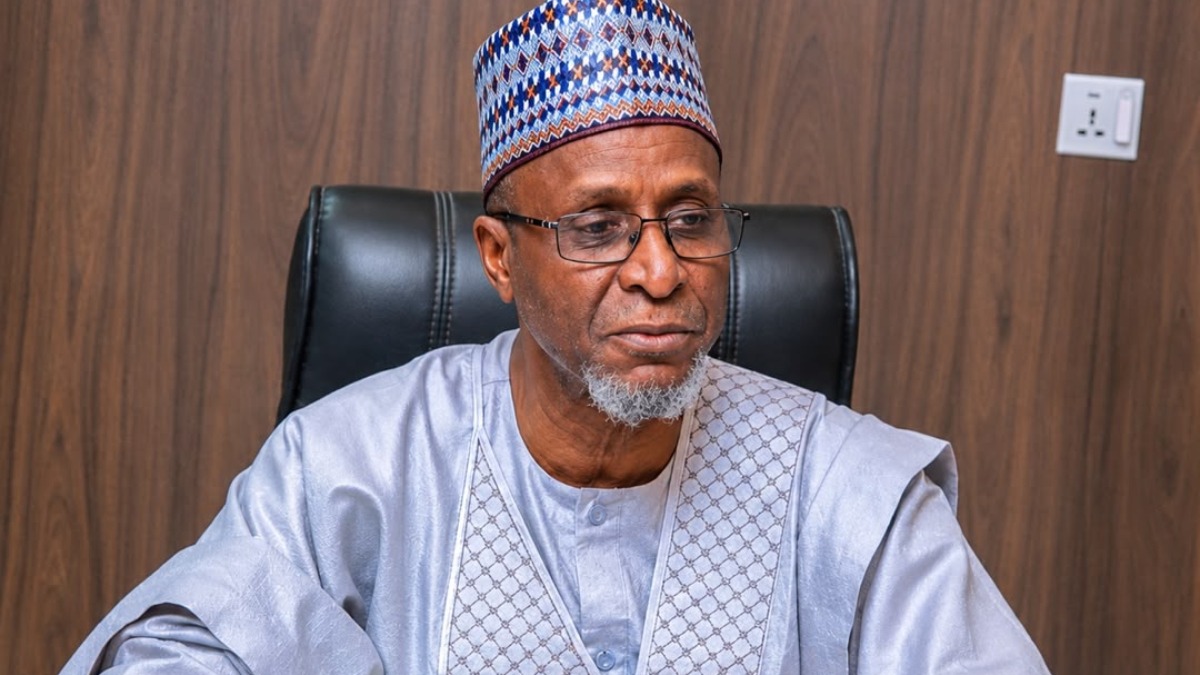
Nigeria’s Minister of Environment, Balarabe Lawal, said West African countries were bearing a disproportionate share of climate change impacts despite contributing relatively little to global emissions.
Lawal, whose remarks were delivered by a director from his ministry, said climate change was already threatening economies, ecosystems, food security and livelihoods across the region.
“Climate change continues to pose significant threats to our economies, ecosystems, food security, livelihoods and the well-being of our people. These shared challenges demand collective solutions,” he said.
Nigeria has also been positioning itself to take advantage of the growing carbon market.
In January, President Bola Tinubu approved the implementation and operationalisation of Nigeria’s carbon market framework, with the Federal Government projecting that the market could generate at least $3 billion annually by 2030.
The Director-General of the National Council on Climate Change, Tenioye Majekodunmi, said the framework would enable Nigeria to participate more actively in carbon trading and facilitate emissions allowance transactions across sectors.
The move comes amid rapid global growth in carbon pricing. The World Bank reported in May that revenues from global carbon pricing mechanisms exceeded $107 billion in 2025.
READ ALSO: ECOWAS Lawmakers Push Tougher Measures to Break Cross-Border Trade Barriers
ECOWAS seeks climate finance beyond traditional funding
The push for a regional carbon market comes as ECOWAS and its institutions continue to finance infrastructure and environmental projects across the region.
In April, the ECOWAS Bank for Investment and Development approved $266.7 million for strategic projects across West Africa, including $100 million for the Lagos-Calabar Coastal Highway in Nigeria.
The bank also approved $50 million for waste management facilities in Lagos, targeting increased recycling capacity, job creation and reduced environmental and public health risks.
However, the scale of the region’s climate financing needs means that traditional development financing alone may not be sufficient.
By creating a common carbon market framework, ECOWAS hopes to improve regulatory coordination, strengthen the credibility of carbon credits generated in the region and attract a larger share of the rapidly expanding global carbon finance market.
For West Africa, the challenge is therefore not simply reducing emissions, but finding ways to convert its vast natural and environmental resources into credible financing to support communities facing the growing costs of climate change.

Ogochukwu Onwaeze is a writer specializing in business and economic journalism. At THEWILL News Media, she translates market trends, financial developments, and policy shifts into clear and engaging stories.