
-
Nigerian lawmakers, Senators Ali Ndume and Awaji N. Abiante, have called for stronger legislative powers for the ECOWAS Parliament, arguing that its largely advisory status limits its ability to influence implementation and hold regional institutions accountable.
-
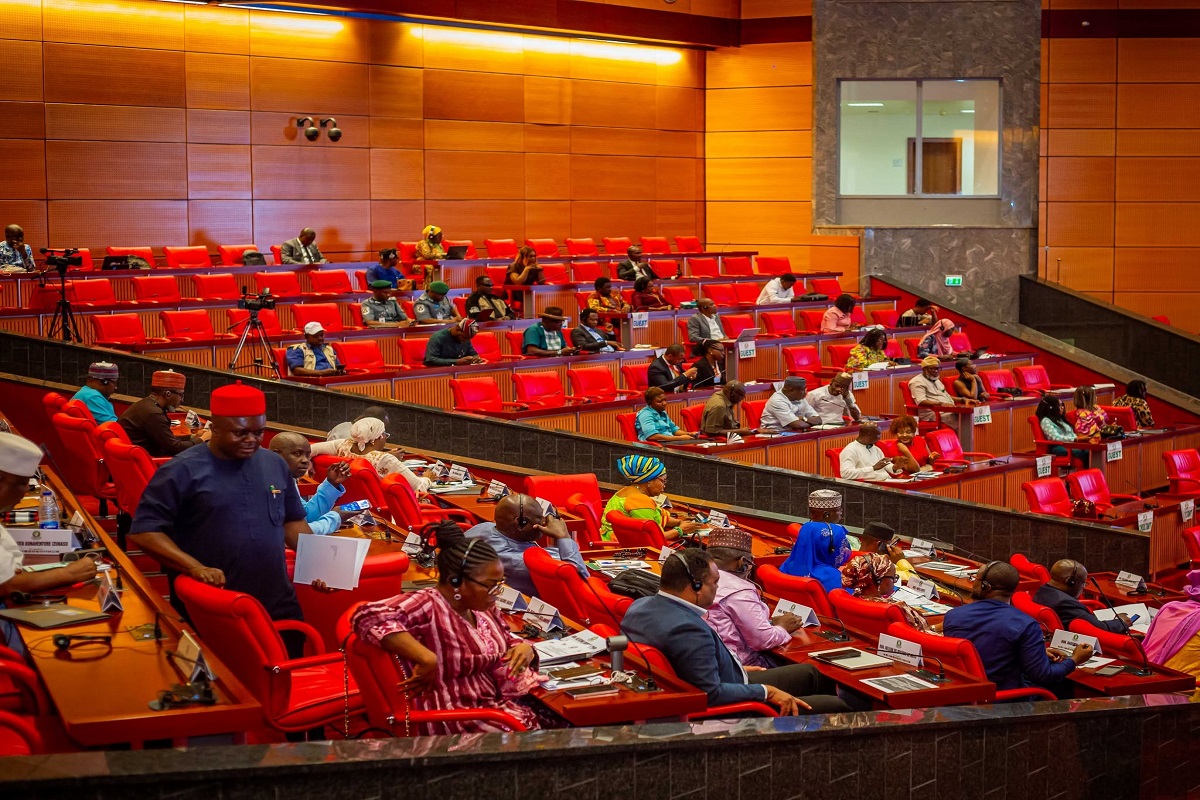
The lawmakers made the demand in Accra, Ghana, on the sidelines of the 2026 Second Extraordinary Session and Seminar of the ECOWAS Parliament, where the impact of climate change on migration, food security, pastoralism, land use and regional security came under scrutiny.
-
Ndume linked environmental degradation and the movement of pastoral communities from climate-stressed areas to growing farmer-herder tensions, particularly in Nigeria.
-
The lawmakers said the ECOWAS legal framework should be amended to give the Parliament and regional judiciary greater authority.
September 25, (THEWILL) – Nigerian lawmakers, Senators Ali Ndume and Awaji N. Abiante, have called for stronger legislative powers for the Parliament of the Economic Community of West African States (ECOWAS), warning that its largely advisory status limits its capacity to influence implementation and hold regional institutions accountable.
The lawmakers made the demand in Accra, Ghana, on the sidelines of the ongoing 2026 Second Extraordinary Session and Seminar of the ECOWAS Parliament.
Their intervention came as lawmakers examined the growing impact of climate change on environmental degradation, population displacement, migration, food security, pastoralism and security across West Africa.

The discussions brought into focus the institutional limitations of the regional parliament, particularly its inability in many areas to turn its resolutions and recommendations directly into binding Community legislation.
Ndume and Abiante argued that the situation had become increasingly problematic as West African countries confront challenges that transcend national borders and require coordinated regional responses.
“The issue is how the power of the regional parliament can be increased so that they don’t just advise or make recommendations but be able to compel implementation of recommendations”, the lawmakers said.
They also called for amendments to the relevant ECOWAS legal framework to strengthen the powers of both the Parliament and the ECOWAS judiciary.
READ ALSO:
Climate Change, Migration, Insecurity
The week-long seminar has focused on the relationship between climate change and the region’s growing social, economic and security pressures.
Discussions examined how environmental degradation and changing climatic conditions could contribute to population displacement, alter patterns of pastoral movement and intensify competition over land and other natural resources.
The lawmakers also considered the implications of increased population movement across national borders for host communities and governments.
For Ndume, the consequences are already evident in conflicts involving farmers and pastoralists, particularly where environmental pressures push communities and livestock into areas with competing demands for land and water.
He linked the movement of pastoral communities from environmentally stressed areas to farmer-herder tensions, saying the problem had also been compounded by inadequate government engagement with affected communities.
The senator recalled previous attempts to establish ranching programmes and argued that insufficient political will to implement necessary measures had contributed to the persistence of the problem.
He maintained that the absence of effective laws and enforcement mechanisms would continue to create conditions for conflict.
Ndume called for clearer legal frameworks governing livestock movement, land use and resource management.
According to him, the challenge illustrates the broader need for regional institutions to have sufficient authority to transform policy discussions into coordinated action.
Ndume also questioned the practical impact of an institution whose recommendations may depend on decisions by other ECOWAS organs before they can be implemented.
“Do we have powers outside of advisory? And how many of the pieces of advice rendered have honestly been considered?” he asked.
He described climate change as a governance test, arguing that the regional response would depend not only on identifying problems but also on having institutions with the authority to act on agreed solutions.
The senator said strengthening the Parliament would give regional lawmakers greater responsibility while also creating a clearer basis for holding them accountable for the issues they debate and the positions they take.

ECOWAS Parliament’s Legislative Limitations
The ECOWAS Parliament forms part of the regional bloc’s institutional structure for promoting integration and providing a parliamentary dimension to the Community’s activities.
Its legal framework gives it responsibilities in areas including regional integration, peace and security and other matters affecting the Community. However, its powers have remained substantially different from those exercised by national legislatures.
The 2016 Supplementary Act relating to the enhancement of the powers of the Parliament provides for parliamentary opinions and mandatory assent in specified areas. Nevertheless, the distinction between having parliamentary functions and possessing full legislative authority remains significant.
An earlier ECOWAS institutional framework envisaged the Parliament gradually moving from an advisory role towards co-decision and, ultimately, a law-making role in areas defined by the regional Authority.
That transition, however, has not resulted in the Parliament becoming a full law-making legislature comparable to national parliaments.
The Parliament can adopt resolutions and exercise oversight, but some of its resolutions must pass through other ECOWAS institutions before becoming Community legal texts for implementation.
The Parliament has previously explained that its resolutions are transmitted to the Council of Ministers, which may recommend them to the Authority of Heads of State and Government for adoption as Community legal texts.
It is this institutional pathway that has raised concerns among some lawmakers, who argue that responsibility and accountability should correspond with authority.
Ndume argued that granting the Parliament greater powers would also strengthen accountability among regional lawmakers.
“Until you give a man responsibilities, you cannot question him on what he has done. So, a stronger Parliament will make regional lawmakers more directly accountable for the issues they debate. That is the essence of being a member of parliament: to represent your people, advocate, speak to issues and if possible, hold institutions to account,” he said.
The lawmakers maintained that the growing intersection of climate change, displacement, food insecurity, pastoralism and insecurity had exposed the need for stronger regional institutions. They argued that problems whose causes and consequences extend across national borders could not always be effectively addressed through national measures or non-binding recommendations alone.

Felix Ifijeh is a journalist with years of professional reporting experience. Known for his keen news sense, compelling storytelling and commitment to accurate, impactful reporting, he has built a reputation for turning leads into clear, engaging, and well-structured reports that resonate with readers. His work reflects deep newsroom experience and a commitment to accurate, impactful journalism.