
-
Anthropic is launching invisible text watermarks inside its Claude AI models to make machine-written text detectable.
-
The hidden signals are designed to help teachers, editors, and bosses instantly spot work generated by AI.
-
Students and casual users can still bypass the system by heavily editing text or switching to unwatermarked tools.
-
Experts say single-company watermarking won’t solve AI cheating unless every major tech giant adopts the same standard.
August 12, (THEWILL) — If you’ve been relying on Claude to draft your school essays, cover letters, or blog posts without getting caught, your free pass may soon disappear.
Anthropic, the San Francisco tech company behind the Claude AI chatbot, has introduced a built-in feature designed to leave a digital trail. The company is embedding invisible watermarks directly into the text generated by its AI models.
While you won’t see any logos or stamped icons on your screen, the software leaves behind a microscopic pattern of word choices. To human eyes, the writing looks completely normal. But to a computer scanner, it acts as a clear digital signal.

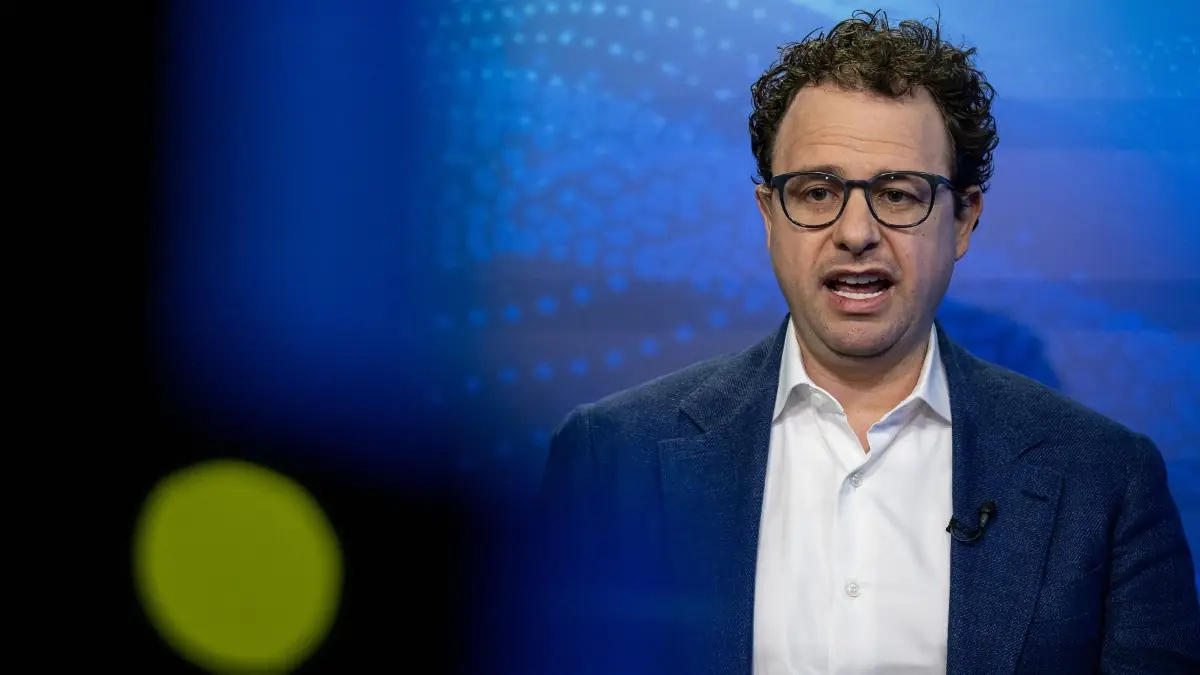
“This is specialised code that is going to be interwoven into any AI output from an Anthropic model. This is not necessarily something that you or I could see with our human eyes; this is rather like a little red flag for computers to look at”, technology reporter Michael Dobuski said during a broadcast with news anchor Kyra Phillips.
READ ALSO: China Plans Curbs On Overseas Access To Advanced AI Models
Why Spotting Fake Text Is So Hard
For the past few years, schools and publishing houses have struggled to manage the sudden explosion of AI writing. Teachers have spent countless hours running student papers through online detectors, often getting mixed or flat-out wrong results.
Anthropic hopes its embedded watermark will change that by offering a quick, reliable check. The feature applies automatically to new models, while older versions will be updated over time.
However, the technology isn’t foolproof. The watermark only stays intact if the text remains largely untouched. If a user makes heavy edits, rephrases paragraphs, or runs the draft through a rewriting app, the tracking code breaks down.
During the broadcast, Phillips pointed out that kids are already one step ahead of the curve:
“My kids do tell me that their teachers can figure out if they are using AI, and then my kids tell me there are ways to take things that you get from AI and you put it into another program that changes it up so it doesn’t look like AI.”
Dobuski confirmed that Anthropic admits this is a major loophole, noting that enough manual editing eventually causes the watermark to fade away entirely.
READ ALSO: US Partners Nigeria On Application Of Artificial Intelligence In Military Operations
The Big Loophole: Jumping to Other Apps
The bigger problem isn’t just editing; it’s competition.
Anthropic is currently moving ahead with this tracking feature on its own, driven partly by European transparency rules. But rival platforms aren’t bound by the same setup. If a student or worker wants to generate text without leaving a digital mark, nothing stops them from using another app.
“If I’m a student and I want to use an AI tool to write my essay for me, now I might not want to use Claude,” Dobuski explained. “What’s stopping me from jumping over to OpenAI’s tools or Google’s tools, which are just as open and available and don’t have this sort of watermark baked into them?”
Until every major AI maker adopts the exact same tracking rules, single-company watermarks will simply push users toward whatever platform lets them write without leaving a trace.

Joy Onuorah is a business journalist and brand communications specialist covering financial markets, artificial intelligence, digital economy, and the ideas reshaping business across Africa and the global market. Beyond her reporting for TheWill, Joy uses brand strategy, storytelling, copywriting, and high-value SEO to help brands build lasting market authority.