
-
Heirs Energies paid $496 million for Maurel & Prom’s 20.07% stake in Seplat Energy in December 2025, buying 120.4 million shares at 305 pence each.
-
At 744 pence on September 8, the same stake was worth about £896.9 million, a 144% increase in market value before dividends, taxes, financing costs and currency movements.
-
The investment came shortly after Seplat completed its $1.28 billion acquisition of ExxonMobil’s Nigerian operations.
-
The deal was supported by Afreximbank and Africa Finance Corporation, highlighting how large investments can combine an investor’s capital with institutional financing.
-
Beyond the share-price gain, the Seplat deal offers a practical framework for building wealth through productive assets, cash flow, reinvestment, and disciplined risk-taking.
September 10, (THEWILL) – On December 30, 2025, Elumelu’s Heirs Energies bought Maurel & Prom’s 20.07% stake in Seplat Energy for $496 million, acquiring 120.4 million shares at 305 pence each.
By September 8, Seplat was trading at 744 pence in London. At that price, the stake was worth about £896.9 million, compared with roughly £367.2 million at purchase, a 144% increase before dividends, taxes, financing costs and currency movements. On the NGX, the same shares were worth approximately ₦1.63 trillion at ₦13,552.60 each.
It is unrealised wealth, not cash profit.

Still, the transaction offers a remarkably clear look at how wealth can be built, protected and multiplied.
1. Stop Asking What Will Go Up, Ask What Will Produce.
Heirs bought Seplat after the company had completed its $1.28 billion acquisition of ExxonMobil’s Nigerian operations.
The enlarged business subsequently generated $1.17 billion in operating cash flow in 2025, while revenue reached $2.73 billion and adjusted EBITDA hit $1.28 billion.
The lesson is not “buy oil stocks.”
It is to favour assets that can produce something. A business can generate profits. A rental property can generate rent. A farm can generate crops. A digital product can generate recurring revenue.
Before putting money into an asset, write down exactly how it can put money back into your hands. If the only answer is “someone may pay more for it later,” you are betting on price, not owning a productive asset.
READ ALSO:
2. Make Your Money Bring Friends
Heirs did not simply fund the Seplat acquisition with $496 million of its own cash. Afreximbank and Africa Finance Corporation supported the transaction, according to Heirs.
Large fortunes often grow by combining equity, debt, partnerships and institutional capital.
For an individual, this does not mean rushing to borrow money to invest. It means understanding that capital can be structured.
A profitable business can attract a partner. A strong track record can attract investors. An asset can sometimes finance its own expansion.
When you find an opportunity that is bigger than your available cash, do not immediately ask, “How do I find all the money?” Ask, “What would make someone credible enough to finance, partner with, or invest alongside me?”
3. Build Things That Throw Off Cash
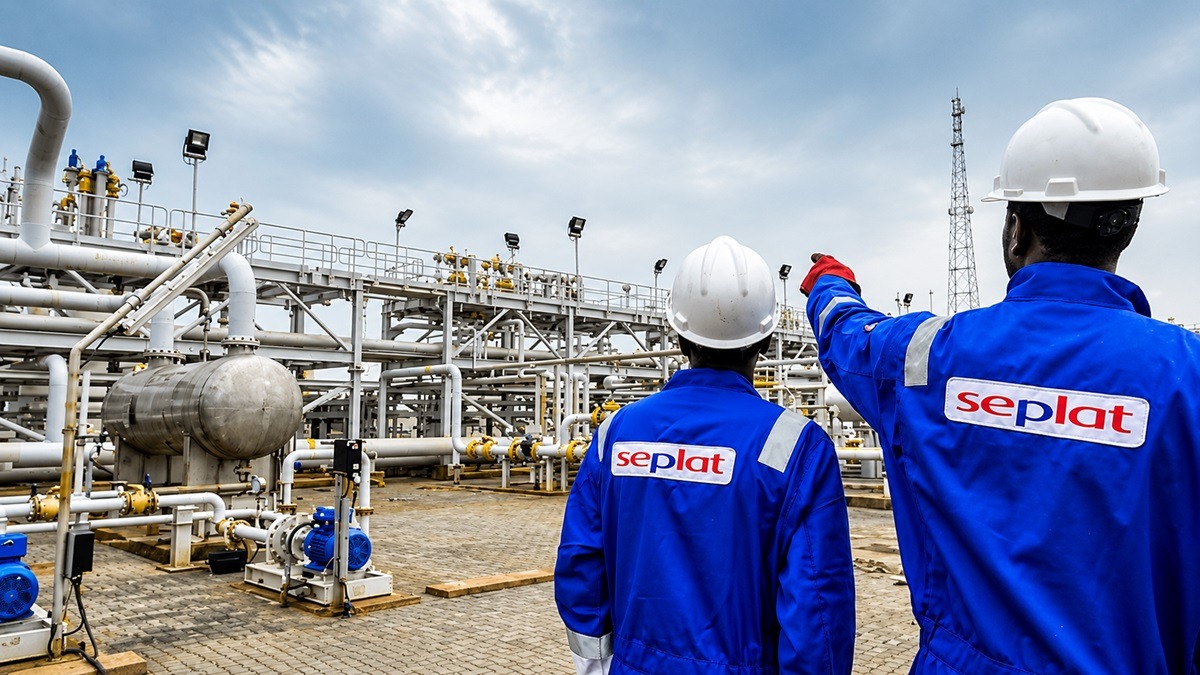
Seplat’s share price is what makes the headline exciting. Its cash flow is what makes the ownership valuable.
In H1 2026, Seplat generated $985.9 million in operating cash flow and $526 million in free cash flow. Net debt fell 45% from year-end 2025 to $370.7 million.
Cash can pay down debt, fund expansion, create reserves, or return money to owners.
Divide your personal assets into two lists. One should contain things that can generate cash. The other should contain things that mainly consume cash or depend on appreciation. Increase the first list before aggressively expanding the second.
4. Reinvest Before You Upgrade Your Lifestyle
Seplat’s plan is not simply to take today’s cash and distribute it. Its 2026–2030 strategy calls for roughly $2.5–3 billion in working-interest capital expenditure and aims to grow production toward 200,000 boepd.
Successful wealth behaves similarly.
More money creates an opportunity to increase consumption. It can also increase productive capacity.
Every time your income rises, automatically direct a predetermined share of the increase into something capable of producing more income. Make lifestyle inflation compete with asset-building instead of allowing it to happen automatically.
5. Protect Enough Capital To Play Again
Seplat’s performance has had help from a favourable oil market.
Its realised oil price reached $94.13 per barrel in H1 2026, compared with $72.58 a year earlier but that tailwind can disappear.
Wealth compounds only if enough of it survives the inevitable bad investments, market cycles, and unexpected shocks.
Decide in advance how much capital you are willing to lose on any single investment. Keep emergency liquidity outside speculative investments, and never use money needed for your basic life to chase an attractive return.
Wealth grows when surplus money is repeatedly converted into productive assets, those assets generate cash, the cash is reinvested intelligently, and enough capital is protected to do it all again.

Joy Onuorah is a business journalist and brand communications specialist covering financial markets, artificial intelligence, digital economy, and the ideas reshaping business across Africa and the global market. Beyond her reporting for TheWill, Joy uses brand strategy, storytelling, copywriting, and high-value SEO to help brands build lasting market authority.