
-
Former Head of State, General Abdulsalami Abubakar, has undergone total knee-replacement surgery at Krishna Shalby Hospital in Ahmedabad, India.
-
The development has triggered a fresh debate over Nigeria’s long-running medical-tourism problem, with some Nigerians questioning why prominent citizens seek healthcare
-
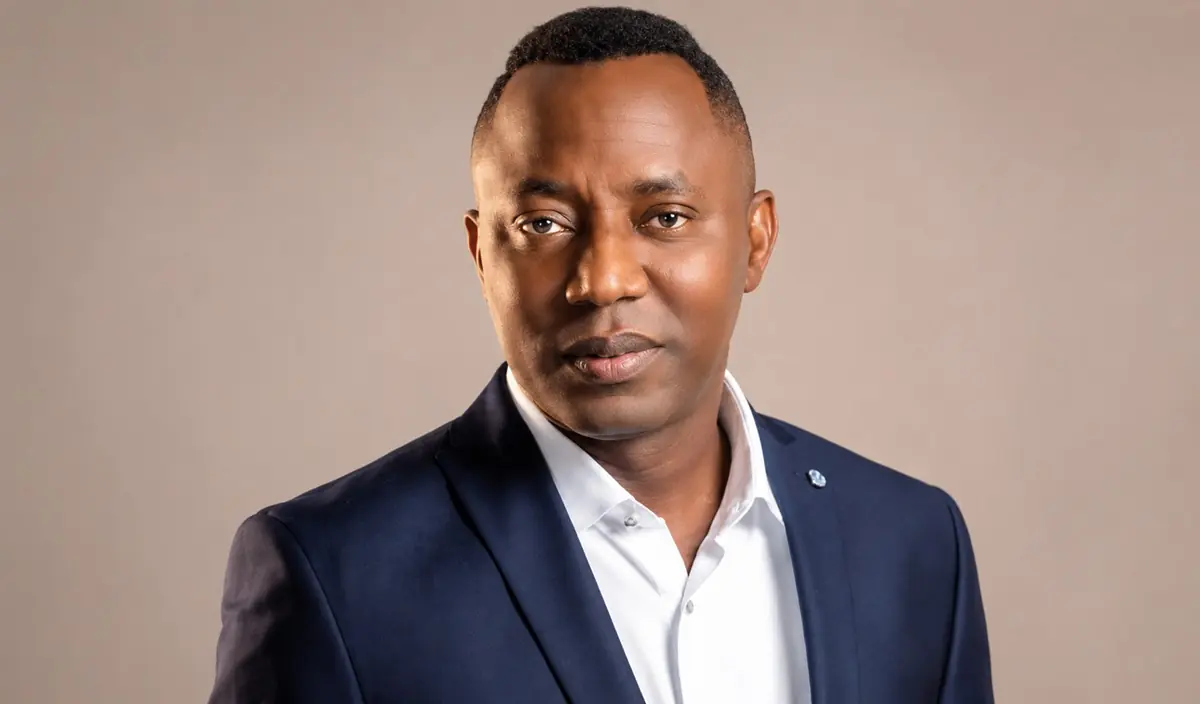
The controversy intensified after African Action Congress (AAC) presidential candidate, Omoyele Sowore, criticised the development.
-
While the debate has placed renewed scrutiny on Nigeria’s political leadership and healthcare investment, commentators also cautioned against holding Abubakar solely responsible for the country’s healthcare challenges.
September 30, (THEWILL) – The overseas medical treatment of former Head of State, General Abdulsalami Abubakar, has sparked a fresh debate over Nigeria’s healthcare system, medical tourism and the ability of the country to provide specialised treatment for its citizens.
Abubakar underwent total knee-replacement surgery at Krishna Shalby Hospital in Ahmedabad, India, according to the hospital, which has publicly highlighted his treatment in its communications on specialised orthopaedic care and international patients.
The development attracted widespread attention after African Action Congress presidential candidate, Omoyele Sowore, shared a post on X claiming that Abubakar was being used in a hospital advertisement following his surgery.

Sowore wrote that Abubakar was one of the “experienced leaders” who had opportunities while in power to build first-class healthcare facilities in Nigeria, yet now travelled abroad for medical care.
He described the development as a “tragic indictment” of what he characterised as decades of failed leadership and neglect of Nigeria’s healthcare system.
Sowore also suggested that, at the rate Nigerian leaders seek medical care abroad, a hospital in France could one day use President Bola Tinubu in its promotional material.
His post triggered a wave of contrasting reactions, with some Nigerians backing his criticism of successive governments, while others argued that the availability of treatment in Nigeria does not remove an individual’s right to seek care elsewhere.
Hospital Publicises Abubakar’s Treatment
Krishna Shalby Hospital has publicly confirmed that Abubakar received total knee-replacement surgery at the facility and has highlighted his treatment as part of its international-patient and orthopaedic services.
The hospital said it was honoured to have treated the former Nigerian leader and presented his case as an example of its capabilities in advanced orthopaedic care.
READ ALSO:
Sowore’s Criticism Sparks Debate
Sowore’s intervention turned what could have remained a report about the medical treatment of an elderly former leader into a wider debate about Nigeria’s healthcare system.
In his X post, the AAC presidential candidate questioned the irony of former leaders seeking medical care abroad after years in positions of authority and argued that such leaders should have helped build a healthcare system capable of providing comparable specialised treatment domestically.
His position received support from some commentators.
An X user identified as R. Moore argued that the issue was not necessarily whether Abubakar could afford surgery anywhere in the world, but whether the episode reflected a lack of confidence in the healthcare system associated with Nigeria’s political leadership.
R. Moore described the situation as unfortunate for a former leader of a country with Nigeria’s resources and questioned where the wisdom lay in relying on foreign healthcare after decades of political leadership.
Another contributor, Dr. Bak, endorsed Sowore’s argument, attributing the situation to what the commentator described as decades of inadequate investment and neglect across critical sectors.
Dr. Bak described the development as an embarrassment for the ruling class and argued that the country continued to repeat mistakes that had contributed to its developmental problems.
An X user identified as Banilion similarly broadened the debate beyond Abubakar, arguing that Nigeria continued to repeat the mistakes that had kept it backward.
The user called for greater accountability and urged Nigerians to consider the consequences of present-day decisions for future generations.
Not all reactions, however, supported Sowore’s criticism. An X user identified as Biodun Adeyanju challenged the suggestion that Nigerians have to travel abroad to undergo knee-replacement surgery.
Adeyanju argued that such procedures are available in Nigeria and are already being performed at tertiary healthcare institutions.
He maintained that Nigerians with the financial capacity to travel should have the freedom to choose where they receive medical treatment.
“Everything is not about opposition politics and criticism,” Adeyanju wrote, urging Nigerians to seek information and knowledge before reaching conclusions about the capabilities of the country’s medical institutions.
His intervention shifted the debate towards an important question: whether the problem is the absence of medical expertise in Nigeria or the confidence of patients in the quality, accessibility and reliability of the available services.
Joint-replacement procedures are performed in Nigerian tertiary hospitals, although access to specialist services, equipment, costs, waiting times and the availability of particular procedures vary across institutions.
Abubakar’s Short Tenure
Another strand of the online debate focused on the extent to which Abubakar should personally be held responsible for Nigeria’s healthcare challenges.
Abubakar became Head of State in June 1998 following the death of General Sani Abacha and handed over power to an elected civilian government in May 1999. His administration therefore lasted less than 12 months.
An X user identified as Akan Mpah urged caution, pointing out that Abubakar headed a transitional military government for about one year before handing power to an elected civilian administration in 1999.
The commentator argued that if Abubakar chose to undergo the procedure abroad and paid for it personally, the more contentious issue was not necessarily his decision to seek treatment outside Nigeria but the alleged use of his treatment in foreign hospital advertising.
Abubakar’s Previous Treatment Abroad
THEWILL recalls that the latest development is not the first documented instance of Abubakar receiving medical care outside Nigeria.
Reports in 2022 indicated that the former Head of State had travelled to London for medical treatment.
In July 2025, Abubakar also confirmed that he had been admitted to the same London hospital where former President Muhammadu Buhari was receiving treatment shortly before Buhari’s death.
His history of receiving medical care abroad has therefore added another layer to the present debate over the choices available to Nigeria’s political elite and the state of domestic healthcare.
But the controversy ultimately extends beyond one former Head of State and one knee operation.
Nigeria has produced generations of doctors, surgeons, nurses and other healthcare professionals, while successive governments have invested in hospitals and announced programmes aimed at upgrading medical infrastructure.
Yet, Nigerians with the financial capacity to do so continue to travel to countries such as India, the United Kingdom and others for specialised treatment.
For critics, Abubakar’s case captures the contradiction of a political class with the resources and influence to shape public policy relying on foreign healthcare facilities while millions of Nigerians depend on an overstretched domestic system.
For others, however, the argument that a former leader should necessarily receive treatment in Nigeria overlooks the right of any patient to choose where to obtain medical care, particularly where the individual can afford the cost.
The central question raised by the episode is therefore not simply whether Abubakar was entitled to travel to India.
It is whether Nigeria can build a healthcare system in which its citizens, including those who have occupied the highest offices in the land, have sufficient confidence in domestic institutions to seek advanced medical treatment at home.
For now, Abubakar’s surgery has become another flashpoint in Nigeria’s unresolved debate over healthcare, leadership and medical tourism, with Nigerians sharply divided over whether the episode represents a personal medical choice, a failure of confidence in Nigeria’s healthcare system, or both.
Felix Ifijeh is a journalist with years of professional reporting experience. Known for his keen news sense, compelling storytelling and commitment to accurate, impactful reporting, he has built a reputation for turning leads into clear, engaging, and well-structured reports that resonate with readers. His work reflects deep newsroom experience and a commitment to accurate, impactful journalism.