
-
Nigeria’s Debt Management Office projects that debt servicing could consume 71.7% of federal revenue by 2030, exceeding its 50% benchmark.
-
Public debt relative to GDP is projected to decline from 53.7% in 2024 to 27.3% in 2030.
-
An adverse economic scenario could push the debt-service burden to approximately 97% of federal revenue.
-
The report identifies weak revenue mobilisation, borrowing costs and exchange-rate exposure as major risks to debt sustainability.
November 10, (THEWILL) – Nigeria could enter 2030 with a considerably smaller debt burden relative to the size of its economy and far less room in its revenue to meet other government obligations.
Both outcomes appear in the Debt Management Office‘s (DMO) 2024 Debt Sustainability Analysis, released on Monday, November 9, 2026.
According to the report, Nigeria’s public debt could decline from 53.7% of gross domestic product (GDP) in 2024 to 27.3% by 2030. Over the same period, the proportion of Federal Government revenue required to service debt is projected to rise from 60.6% to 71.7%.

A government could therefore report substantial improvement in one widely used measure of debt sustainability while facing greater difficulty paying for public services from the revenue it collects.
Under the DMO’s baseline scenario, debt servicing would take approximately 72 kobo of every naira in federal revenue by 2030, leaving about 28 kobo before accounting for other expenditure. Government borrowing and other financing arrangements could support additional spending, but the projection illustrates how much of its internally available fiscal capacity debt obligations could absorb.
The outlook exceeds the DMO’s 50% debt-service-to-revenue benchmark, which serves as a risk indicator rather than a legal borrowing ceiling.
Its warning concerns the relationship between the country’s capacity to generate revenue and the cost of meeting existing and future borrowing obligations.
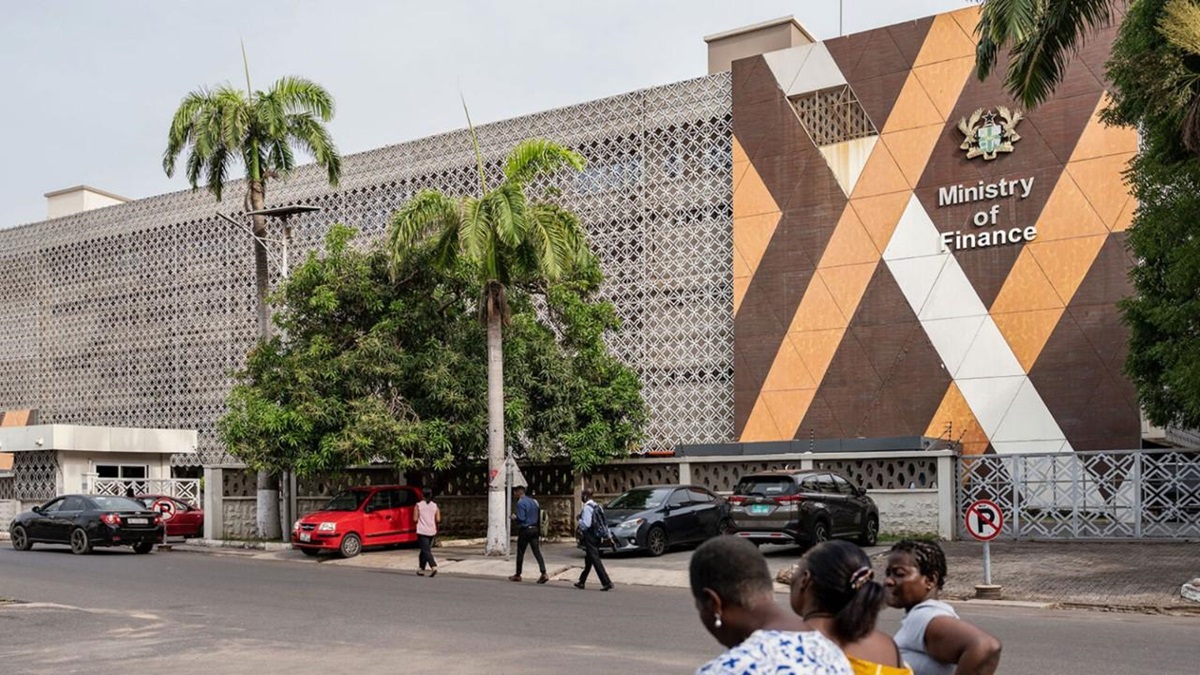
A Smaller Debt Ratio Doesn’t Mean Smaller Debt Payments
Nigeria’s total public debt stood at approximately ₦166.79 trillion at the end of June 2026, according to the DMO’s latest quarterly figures.
Domestic obligations accounted for ₦91.59 trillion, while external debt represented ₦75.20 trillion. The figures cover the Federal Government, 36 states and the Federal Capital Territory.
A country’s debt-to-GDP ratio compares outstanding public debt with the value of goods and services produced by its economy. It can decline when economic output grows faster than debt, even if the actual amount owed continues to increase.
Debt servicing presents a different calculation. It measures obligations falling due against the revenue available to meet them.
Nigeria’s difficulty becomes clearer when the two measures are examined together.
Under the DMO’s baseline projections, the debt-service-to-revenue ratio falls to 44.9% in 2025 before climbing to 51% in 2026 and 57.1% in 2027. It rises further to 67.3% in 2029 and reaches 71.7% by 2030.
These figures describe a projected path from a model anchored in 2024. The DMO published the analysis nearly two years after its starting date, meaning the estimates should not be confused with actual budget outcomes for 2025 or 2026.
Nigeria’s Ministry of Finance, for instance, currently estimates debt servicing at approximately ₦15.8 trillion against projected federal revenue of ₦36.87 trillion for 2026, equivalent to about 42.9%.
That differs from the 51% ratio in the DMO’s 2024-based scenario. Different revenue forecasts, borrowing assumptions and reporting frameworks can produce different estimates, and the two figures should not be presented as interchangeable.
The DMO’s longer-term warning remains significant because a decline in debt relative to GDP cannot, by itself, establish that federal finances are becoming more comfortable.
The government cannot pay creditors with the entire value of economic activity. It must obtain the money through taxes, royalties, fees, dividends from public enterprises and other revenue sources.
Consequently, a growing economy offers limited fiscal relief if public revenue increases more slowly than the cost of servicing debt.
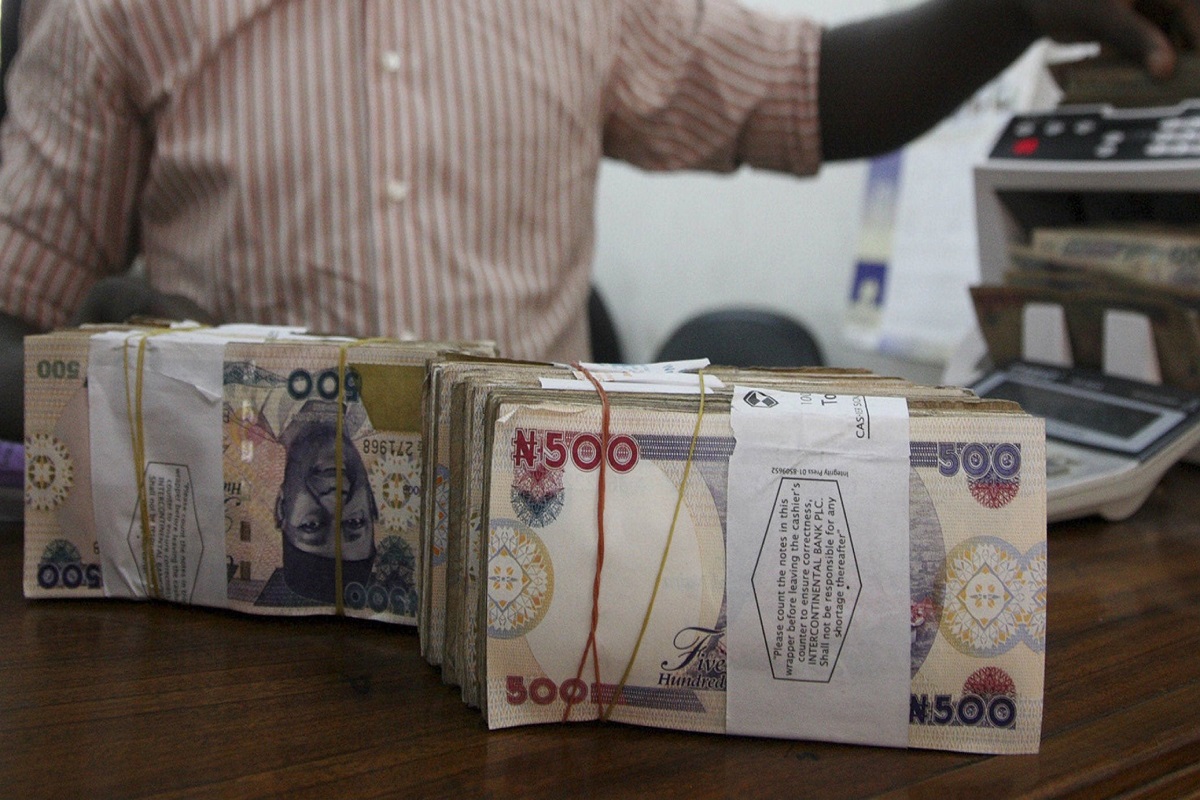
What Happens When the Naira Weakens?
Exchange-rate movements represent another vulnerability in Nigeria’s borrowing position.
Approximately 45% of the country’s public debt stock was external as of June 2026, exposing the naira value of those obligations to changes in the exchange rate.
When the naira depreciates against the dollar, servicing a fixed foreign-currency obligation generally requires more naira, even if the amount due in dollars remains unchanged.
The DMO examined that risk through an adverse economic scenario involving a 30% depreciation of the naira, weaker economic growth and reduced government revenue.
Under those conditions, its debt-service-to-revenue projections rise considerably faster than in the baseline.
The adverse scenario places debt servicing at approximately 71% of federal revenue by 2027, increasing to around 90% in 2029 and roughly 97% by 2030.
Such an outcome would leave very little revenue after debt-service obligations, although it does not represent the DMO’s central forecast.
The baseline assumptions include an exchange rate of ₦1,500 to the dollar, 4.8% real GDP growth and a primary balance equivalent to 3.8% of GDP.
Those assumptions matter because currency movements, economic growth and fiscal performance determine how closely actual conditions follow the projections.
A stronger-than-expected revenue performance could improve the debt-service ratio. Weaker collections, higher financing costs or adverse exchange-rate movements could worsen it.
Nigeria also faces refinancing risks when existing obligations mature and the government needs to replace them with new borrowing.
If prevailing interest rates exceed those attached to maturing debt, refinancing can increase future servicing costs even without a comparable rise in the amount borrowed.
The DMO identified financing, refinancing and foreign-exchange risks among the major vulnerabilities in its debt portfolio.
Its analysis also placed the average Nigerian Eurobond spread at 975.58 basis points during the final quarter of 2024, above the 600-basis-point risk threshold used in the assessment.
That historical spread indicates the elevated premium investors demanded for holding Nigerian sovereign debt at the time. It should not be mistaken for the country’s current Eurobond pricing.
READ ALSO:
Why Revenue Matters More Than the Headline Debt Figure
Nigeria’s public-finance problem cannot be evaluated solely through the amount it borrows.
A government with substantial revenue may support a larger debt stock more comfortably than one with a smaller debt burden but limited income.
This helps explain why Nigeria’s debt-to-GDP position can appear manageable under international benchmarks while its debt-service-to-revenue ratio remains a concern.
The DMO projects public debt below the 60% debt-to-GDP benchmark in Nigeria’s medium-term debt strategy and below the 70% threshold used in the IMF-World Bank framework for market-access countries.
It nevertheless assesses debt sustainability as moderate and vulnerable to revenue weakness, currency depreciation and external economic shocks.
The International Monetary Fund reached a broadly similar conclusion in its May 2026 assessment, identifying moderate sovereign-debt risks while recognising Nigeria’s relatively low debt-to-GDP ratio and improvements in macroeconomic conditions.
Both assessments leave revenue mobilisation central to the country’s fiscal outlook.
Petroleum earnings remain exposed to global crude prices, domestic production and the amount of export revenue that reaches public accounts.
Non-oil collections depend on the performance of businesses, household incomes, tax compliance and the effectiveness of revenue administration.
Higher nominal collections can improve government finances, but their value must also be considered against inflation, exchange-rate movements and the growth of existing expenditure obligations.
Improved tax collection could therefore strengthen debt sustainability without requiring the government to reduce the debt stock immediately.
The question is how much additional revenue becomes available after meeting existing obligations and how effectively public authorities use the remaining resources.
Less Revenue Available for Development
Debt servicing competes with other government spending, although the budgetary consequences are more complicated than subtracting debt payments from total revenue.
Federal budgets also rely on new borrowing and other financing sources. Some debt obligations involve principal repayments that governments may refinance rather than fund entirely from current revenue.
Nevertheless, sustained debt-service pressure restricts fiscal choices.
A government devoting a large proportion of its revenue to existing creditors has less flexibility to expand healthcare, education, infrastructure and security spending without raising additional funds, changing expenditure priorities or borrowing more.
Such pressure can also weaken its ability to respond to emergencies, compensate for revenue shortfalls or finance projects that generate future economic activity.
The DMO recommends stronger revenue mobilisation through tax reforms, improved compliance and expansion of the tax base.
It also urges greater expenditure efficiency, reduced reliance on expensive borrowing and increased use of concessional financing where available.
Concessional loans generally carry more favourable interest rates or repayment terms than commercial borrowing, potentially reducing future servicing costs.
Privatisation, public-private partnerships and the sale of selected government assets also feature in the agency’s recommendations.
Those options require careful implementation. Selling public assets may provide immediate financing, but the government must weigh the proceeds against future income and public value. Private-sector participation in infrastructure can reduce direct borrowing requirements, although contractual guarantees and contingent liabilities may still create obligations for the state.
Sustained improvements in public finances would therefore require more than replacing one source of funding with another.
Nigeria needs revenue growth that can keep pace with debt obligations, borrowing terms that do not impose unnecessary costs and expenditure decisions that improve the economy’s capacity to generate future income.
The newly released DMO analysis provides two measures of progress that policymakers should examine together.
One concerns the amount Nigeria owes relative to the size of its economy. The other concerns how much of the money the government actually collects must go towards servicing those obligations.
By 2030, the first could improve substantially while the second deteriorates.
A lower debt-to-GDP ratio would be welcome, but the more practical measure of fiscal improvement will be how much revenue remains available after the government meets its borrowing obligations and how effectively it uses those resources.

Joy Onuorah is a business journalist and brand communications specialist covering financial markets, artificial intelligence, digital economy, and the ideas reshaping business across Africa and the global market. Beyond her reporting for TheWill, Joy uses brand strategy, storytelling, copywriting, and high-value SEO to help brands build lasting market authority.