
September 06, (THEWILL) — The Chairman of the Alliance for Economic Research and Ethics LTD/GTE, Dele Oye, has said reforms by the Bola Ahmed Tinubu-led administration over the past three years have improved the country’s macroeconomic stability and resilience, urging the government to now take further steps to turn these recent macroeconomic gains into lower food prices, productive jobs and improved living standards for Nigerians.
Oye, in a statement titled “The Economy Is Stabilising. Now Let the People Feel It”, said the administration deserved recognition for taking politically difficult decisions, including petrol subsidy removal, foreign exchange reforms, the abandonment of monetary financing of fiscal deficits, the rebuilding of external reserves and tighter monetary policy.
According to him, these measures have helped address distortions that had weakened the foundations of the Nigerian economy, stressing that macroeconomic stability was only the beginning of the work, and that the success of the reforms must ultimately be measured by their impact on ordinary citizens.

He cited Nigeria’s foreign exchange reserves, which it said reached a 17-year high of $53.11 billion as of August 24, 2026, as evidence of stronger external buffers and referenced the National Bureau of Statistics’ report that the economy grew by 4.43 per cent year-on-year in the second quarter of 2026, up from 3.89 per cent in the previous quarter, with both oil and non-oil sectors recording stronger growth.
He noted that the figures suggested that the economy was moving from holding steady to building momentum, adding that stronger reserves and rising gross domestic product would not automatically translate into improved welfare.
Oye also cited the International Monetary Fund’s June 2026 assessment, which estimated poverty at 63 per cent at the national poverty line and 27 million Nigerians facing food insecurity in autumn 2025, noting that the figures demonstrated the gap between national economic performance and the daily experiences of households.
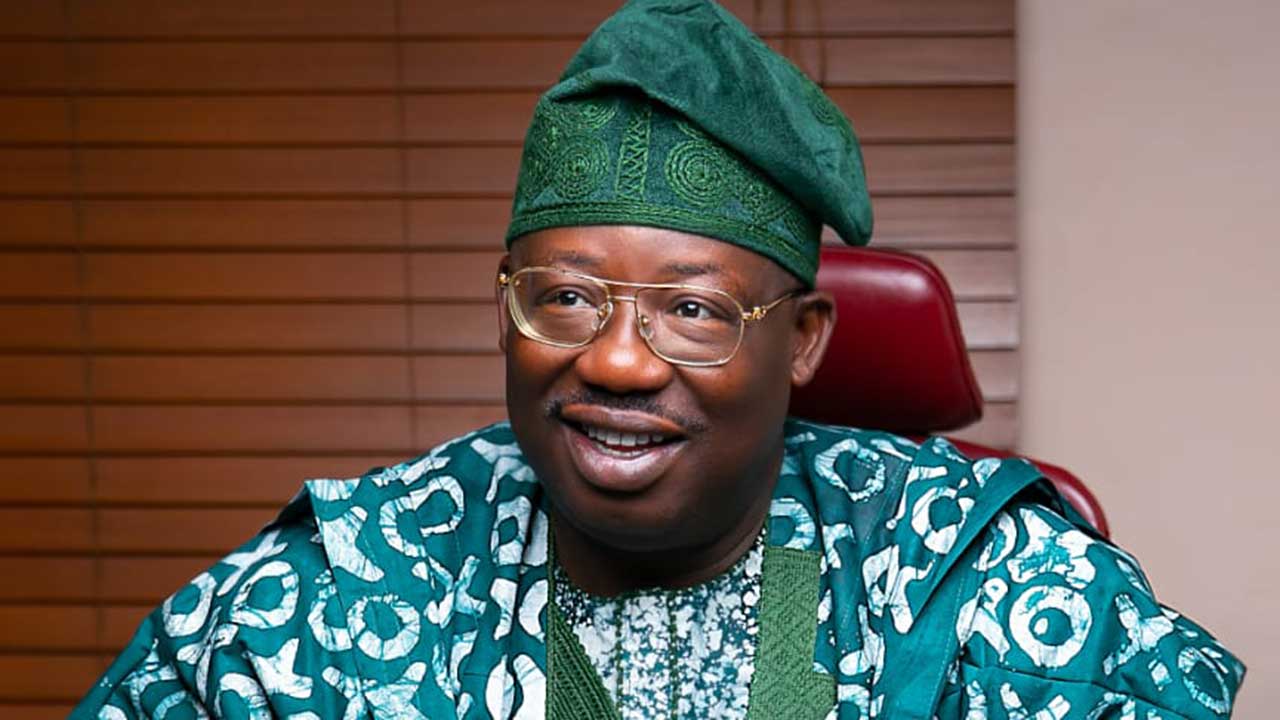
According to him, “Nigerians should be honest enough to acknowledge progress when progress has been made and courageous enough to say when progress has not yet become prosperity.
“The Tinubu administration deserves credit for taking decisions that many Nigerian governments postponed for years. The removal of the petrol subsidy, the movement toward a more market-based foreign-exchange regime, the abandonment of monetary financing of fiscal deficits, the rebuilding of external reserves, and the tightening of monetary policy were politically costly measures. They imposed pain, but they also confronted distortions that had been quietly weakening the foundations of the Nigerian economy.
“This is not a small achievement. Reform is easy to announce and difficult to sustain. In Nigeria, every attempt to correct an entrenched distortion is immediately tested by politics, public anger, vested interests, institutional weakness, and the daily pressure of survival. The Tinubu administration has nevertheless stayed the course on several of the most consequential elements of the macroeconomic reset.”
He listed some of the achievements to include a clearer macroeconomic direction, a more credible foreign-exchange framework and the rebuilding of external buffers, noting that “the IMF reported that Nigeria’s gross international reserves, on the CBN definition, rose from US$40 billion at the end of 2024 to US$46 billion at the end of 2025, while net reserves rose from US$23 billion to US$35 billion. Nigeria’s FX reserves hit a 17-year high of $53.11 billion as of August 24, 2026.”
He also acknowledged Nigeria’s broader-based growth, adding that “Nigeria’s growth rate climbed to 4.43% year-on-year in the second quarter of 2026, up from 3.89% in the previous quarter, the National Bureau of Statistics reported on Monday, August 31, 2026. Growth strengthened in both oil and non-oil sectors.
READ ALSO:
“The IMF estimated 4.0% growth for 2025 and is forecasting 4.1% for 2026, with services and non-oil activity doing much of the heavy lifting. The World Bank also noted 3.9% year-on-year growth in the first half of 2025, backed by services, non-oil industries, better oil production, and agriculture.”
“President Tinubu’s administration has done something important: it has begun to move Nigeria away from denial. It has acknowledged that subsidies, opaque foreign-exchange regimes, deficit monetisation, weak revenue mobilisation, and fragile financial institutions cannot deliver national prosperity. For that courage, the government deserves recognition”, Oye stated.
“But courage at the beginning of reform must become competence at the point of delivery. The administration now has to convert stabilisation into lived security. It must make the Nigerian economy not only investable, but inhabitable; not only credible to markets, but useful to families; not only resilient on paper, but humane in practice.
“The street is not an enemy of economic reform. The street is its final court. The trader, farmer, teacher, apprentice, nurse, transport worker, student, and small manufacturer are not impatient spectators waiting for theory to mature. They are the economy. Their daily experience is the most honest national statistic.
“The measure of the Tinubu economic project will therefore not be whether Nigeria can recite its reserves, growth rate, debt ratio, or reform catalogue. The measure will be whether a young Nigerian can work hard without being crushed by disorder; whether a family can eat without choosing between food and medicine; whether an honest business can compete without bribery; and whether public revenue can be seen in public good.”
“Nigeria has begun to stabilise. Now it must begin to heal. That is the passage from policy to people and from insight to impact”, he added.