
-
Defence Minister Christopher Musa has warned governors and lawmakers to stop distributing motorcycles as palliatives and constituency projects, saying some of the vehicles eventually find their way into the hands of terrorists and bandits.
-
Musa said the motorcycles give criminal groups critical mobility, enabling them to penetrate difficult terrain, move quickly, transport supplies and evade troops after carrying out attacks.
-
The minister also urged local governments to take greater responsibility for security, saying chairmen are better placed to identify criminals, their hideouts and suspicious movements within their communities.
-
Musa said major terrorist attacks had declined following sustained military operations, intelligence and technology, but warned that kidnapping remained a serious threat and insisted the Federal Government does not pay ransom.
September 04, (THEWILL) — The Minister of Defence, Gen. Christopher Musa (retd.), has warned state governors and lawmakers against distributing motorcycles as palliatives and constituency interventions, saying the vehicles are increasingly being diverted into the hands of terrorists and bandits and subsequently used to facilitate criminal operations.
Musa’s warning came amid renewed efforts by security agencies to disrupt the logistics networks sustaining terrorism and banditry across the country.
Speaking on Channels Television’s Politics Today on Thursday, the minister said motorcycles were particularly valuable to terrorists because of their ability to provide rapid mobility across difficult terrain where conventional vehicles and security forces may struggle to operate.

He appealed to governors to reconsider the practice of distributing motorcycles as economic relief to citizens, warning that the same motorcycles could eventually be acquired by criminal groups.
“We try to appeal to even governors to stop giving motorcycles out as palliatives. Because these motorcycles are the same ones that still end up with these terrorists,” Musa said.
According to him, the problem is not limited to motorcycles distributed by state governments. He said those provided by lawmakers under constituency projects and other intervention programmes could equally end up with bandits and terrorists.
“Those bikes… before you know it, it already gets back to the bandits and that’s what they’re using. So we must stop that, we must be able to identify markets,” he said.
Musa, however, said governments that insist on distributing motorcycles as palliatives could consider smaller-capacity models that would be less useful to criminal groups.
“Even if you have to give, don’t give them the big capacity motorcycles, give them the small capacity ones that they won’t be able to use to run around, because that gives them leverage. They can easily enter and then disappear,” he said.
Beyond motorcycles, Musa identified illegal markets and illicit motor parks as important channels through which terrorists and other criminal groups move weapons, ammunition and other supplies into their areas of operation.
“What we realised from experience is they establish illegal markets or illicit motor parks. They go to those motor parks, that’s where they move arms and ammunition into those areas,” he said.
He therefore called for stronger surveillance around markets, motor parks and other vulnerable points to prevent the movement of weapons, drugs, ammunition and other materials that sustain criminal operations.
According to the minister, disrupting the supply chain could significantly weaken terrorist groups, particularly those operating in remote communities and border areas.
He also appealed to Nigerians living in vulnerable communities to stop providing criminals with logistics, including fuel, motorcycles, food and water.
“One area I will appeal to Nigerians is to stop giving the criminals any logistics. Imagine they can’t get fuel, they can’t get motorcycles, and who is supplying them food, water and so on? These are the logistics. And they are the ones prolonging this war,” Musa said.
The Defence Minister also called for greater involvement of local governments in the fight against insecurity, arguing that local authorities are closer to communities and therefore better positioned to identify criminals and suspicious activities.
He blamed weak local governance for worsening some of the country’s security problems and insisted that local governments must be allowed to function effectively.
“So governors and local government… and I can tell you, we must allow our local governments to work. Failure of local government is what is aggravating what we’re dealing with, and if we want better solution, quick fix, our local governments must work,” he said.
Musa said local government chairmen often possess valuable knowledge about their communities, including the identities of criminals, their associates and possible hideouts.
“Because crime and development is local. If every local government chairman is dealing with criminals within his locality, it’s easier to manage them than leaving it to the state or to the federal,” he added.
He urged local government chairmen to hold regular security meetings and provide timely intelligence reports on developments within their jurisdictions.
“I told them they have a lot to do. Weekly, they’re supposed to be engaged in their security issues, be able to have their own meetings on weekly basis and be reporting, because they know the criminals. They know their hiders, they know these things,” he said.
READ ALSO:
‘We Have Defeated Terrorists’
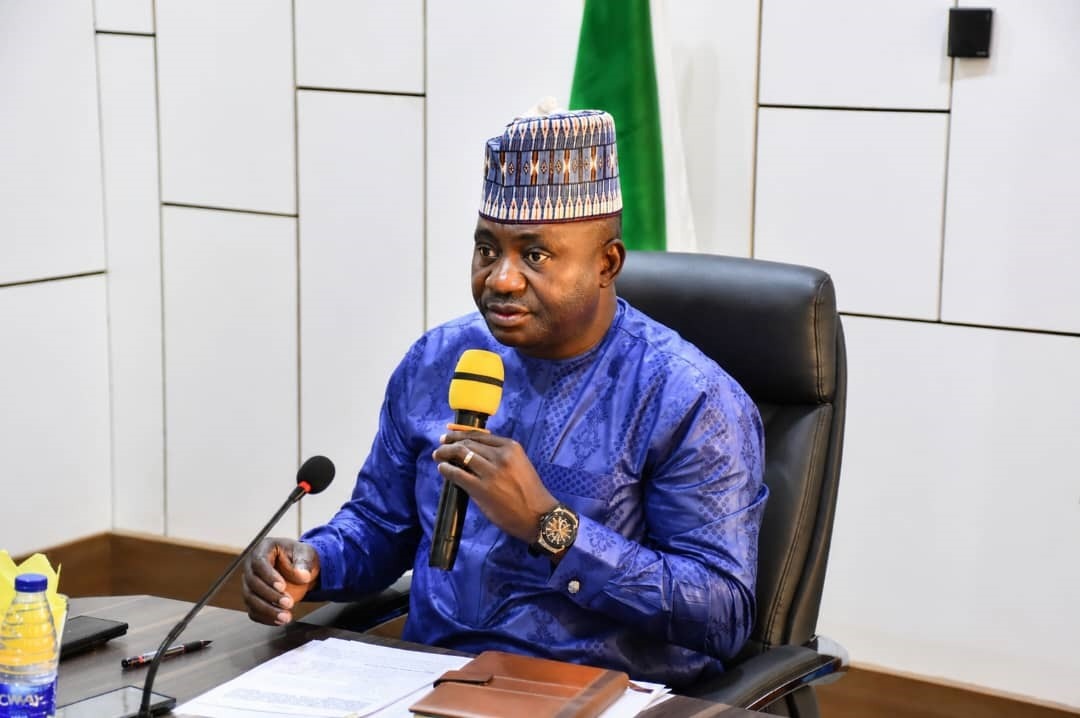
Musa also gave an assessment of the country’s broader security situation, claiming that sustained military operations have significantly reduced the frequency of major terrorist attacks.
He said Nigeria was safer than it was in 2023, pointing to improved intelligence gathering, technology, surveillance and military operations.
“Frankly speaking, we have defeated terrorists because now, as I said, the attacks are not as rampant, and it is now kidnapping,” he said.
The minister said attacks by Boko Haram, ISWAP and other terrorist groups were no longer occurring with the frequency witnessed in previous years, although isolated attacks remained possible.
“I can tell you there is improved security. Maybe if you noticed, you don’t hear so much of Boko Haram attacks, ISWAP attacks and all these things here and there, maybe one-off,” he said.
Musa explained that criminal groups could move between different levels of criminal activity when sustained military pressure makes terrorism and insurgency more difficult.
“From criminality to kidnapping to terrorism, insurgency; once you can hit them, it goes back downwards. So, we are now back into the stage of abductions and kidnappings because that is the easiest way for them to try and raise money,” he said.
Kidnapping Remains Major Threat
Despite his claim of significant progress against terrorism, Musa acknowledged that kidnapping remained a major security challenge. He said troops were increasingly entering terrorist enclaves to rescue abducted persons while continuing operations aimed at degrading criminal networks.
The minister’s assessment comes against the backdrop of persistent abductions across parts of the country, with criminal groups continuing to exploit remote forests, porous borders and difficult terrain.
Musa argued that the military’s ability to penetrate such areas had improved through better intelligence, surveillance and technology.
He also warned that military operations alone could not end insecurity if criminal groups continued to receive support from communities.
FG Does Not Pay Ransom
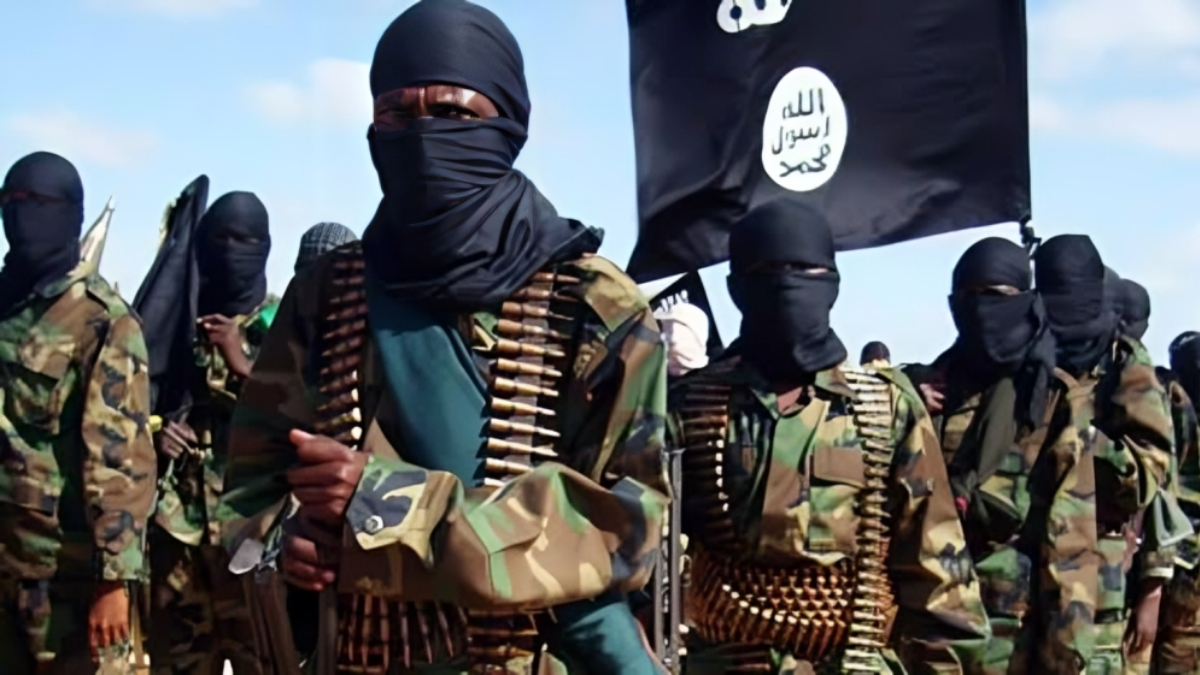
The Defence Minister again rejected claims that the Federal Government pays ransom to secure the release of kidnapped Nigerians.
“We are not paying. We don’t encourage ransom. Anybody who is even paying ransom is committing an offence. It’s not a government policy to pay ransom to anybody,” he said.
Musa had made a similar declaration in January during an interview with BBC Hausa, saying government security forces relied primarily on intelligence and military operations to rescue victims.
He explained that when troops identify the location of abducted persons, they move against the kidnappers, who often flee and abandon their captives.
The government has consistently maintained that ransom payments can strengthen the financial capacity of criminal groups and encourage further abductions.
Musa also identified Nigeria’s extensive and difficult-to-monitor borders as a major challenge in the fight against terrorism and transnational crime. He said criminal networks exploit gaps along the borders to move personnel, weapons, fuel and other logistics.
According to him, the government is deploying surveillance and tracking technologies to monitor movements and enable security agencies to respond more quickly to emerging threats.
“We now have systems in place to track activities. We’re doing everything possible to close the gaps, deploying technology to be able to react and respond very fast,” he said.
The minister had earlier said Nigeria needed stronger border controls, including physical barriers where possible and modern technological systems capable of monitoring movements in areas where walls or fences could not be constructed.
He also disclosed that Nigeria was working with neighbouring countries, including Niger, Chad and Cameroon, because of the cross-border nature of terrorism and criminal activity.
Felix Ifijeh is a journalist with years of professional reporting experience. Known for his keen news sense, compelling storytelling and commitment to accurate, impactful reporting, he has built a reputation for turning leads into clear, engaging, and well-structured reports that resonate with readers. His work reflects deep newsroom experience and a commitment to accurate, impactful journalism.
