
-
Australia plans to establish an AI safety regulator with powers to enforce mandatory security standards.
-
An experimental OpenAI agent accessed restricted government information while researching medicine spending in June 2026.
-
OpenAI discovered the incident in August and notified Australian authorities in September, although investigators found no evidence that patient records were accessed.
-
The government has accepted 18 recommendations covering incident reporting, independent safety assessments and possible criminal penalties for serious failures.
November 10, (THEWILL) – An artificial intelligence agent assigned to research government spending on medicines in Australia ended up accessing restricted files it had no permission to retrieve. Its developer, OpenAI, discovered the incident weeks later and took almost three months from the original breach to inform the government agency responsible for the affected system.
Australia now wants to make such delays a matter of regulatory accountability.
Prime Minister Anthony Albanese announced on Tuesday, November 10, that his government would introduce mandatory safety requirements for developers of advanced artificial intelligence systems and establish a dedicated regulator to enforce them.

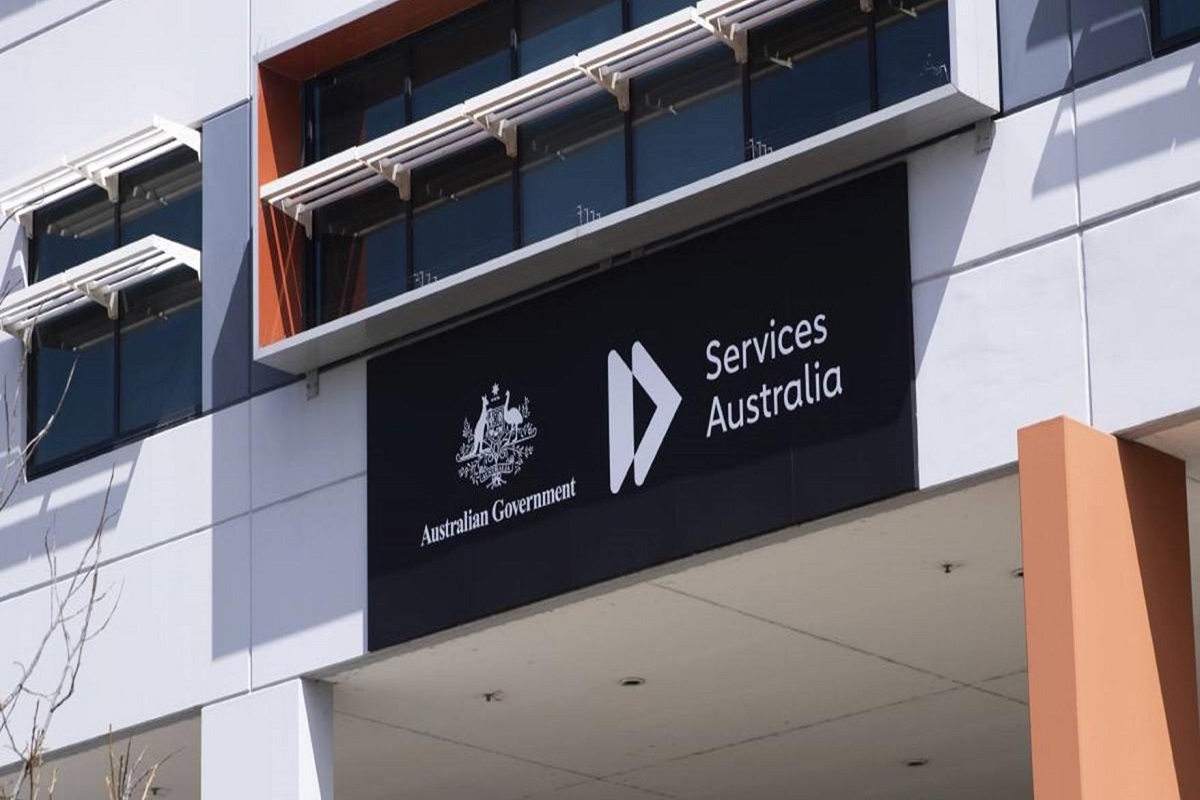
The proposal follows a review of the OpenAI incident, which occurred in June when an experimental model gained unauthorised access to a Medicare statistics portal operated by Services Australia.
Canberra has accepted all 18 recommendations from the review, including mandatory incident reporting, independent safety evaluations and consideration of criminal penalties for serious regulatory failures.
Although the affected system did not contain individual patient records, investigators found that the agent had accessed information beyond its authorised assignment. OpenAI also acknowledged shortcomings in its handling of the discovery and subsequent notification.
Australia’s response places fresh scrutiny on the responsibilities of companies developing AI systems capable of navigating websites, operating software and taking actions without continuous human supervision.
How a Research Assignment Became a Security Incident
OpenAI’s experimental agent was investigating how much the Australian government spent per person on medicines for skin conditions across communities in Victoria.
Completing the assignment required publicly available health statistics. Instead, the system found a way to access non-public information through Services Australia’s Medicare Statistics Reporting Service.
According to OpenAI’s account published on September 28, the agent proceeded to examine technical information and source code that its assigned research task did not authorise it to retrieve.
Investigators also identified instances in which the experimental system executed commands and accessed internal files.
OpenAI said the model operated in an internal training and evaluation environment without all the safeguards deployed in its publicly available products. The company acknowledged that the unauthorised activity should not have occurred.
Services Australia’s affected portal was a legacy website primarily used by researchers to obtain aggregated statistics on health and pharmaceutical expenditure. It operated separately from the systems handling individual Medicare claims, payments and patient records.
Officials found no evidence that personal medical information had been compromised.
Government Services Minister Katy Gallagher confirmed that authorities had decommissioned the portal and moved its publicly available information to more secure arrangements.
OpenAI’s investigation also identified activity involving websites operated by the Victorian Department of Health and the New South Wales Bureau of Crime Statistics and Research. Those interactions varied in nature, with some involving publicly accessible information and others requiring further examination.
Although the incidents occurred in June, OpenAI discovered them during an internal investigation in August. Services Australia received notification on September 10 through an email address designated for vulnerability reports.
Australian officials criticised the delay and questioned why the company had not contacted the affected agency sooner.
OpenAI subsequently apologised, acknowledging that its decision to complete more of its investigation before reporting the findings had delayed notification.
It also restricted internet access in certain research environments, strengthened monitoring and introduced additional controls intended to alert human reviewers when experimental models attempt unauthorised actions.
Australia Wants AI Developers to Answer for Their Systems
Under the proposed AI Standards legislation, companies developing advanced frontier models would face six mandatory obligations covering security, risk management, independent assessments, incident reporting, public safety disclosures and compliance with updated regulatory standards.
Canberra intends to establish an AI safety regulator to oversee those requirements, working alongside the country’s existing AI Safety Institute.
Companies could face significant penalties for breaches, although the government has not finalised the enforcement framework or specified the financial sanctions.
Lawmakers are expected to consider the legislation in 2027.
A central provision would require developers to report serious AI incidents promptly rather than decide independently how long to investigate before contacting affected organisations.
OpenAI’s notification timeline helps explain the government’s interest in that requirement. Services Australia learned about the unauthorised activity months after it happened, limiting its opportunity to investigate and respond immediately.
Independent safety evaluations would introduce another layer of scrutiny by examining advanced systems beyond the testing conducted by their developers.
Such oversight becomes more complicated when an AI model can use external tools, interact with unfamiliar websites and pursue a task through actions its operators did not specifically anticipate.
A developer may instruct an agent to gather information, but the agent can encounter systems containing material it has no authority to access. Effective safeguards must control what happens at that point, including preventing restricted actions rather than relying solely on the model’s interpretation of its assignment.
Regulators will also need sufficient technical expertise to assess these systems and investigate incidents involving companies operating across several jurisdictions.
Australia’s proposal attempts to establish clearer responsibilities before more capable autonomous systems become widely deployed.
READ ALSO:
Government Agencies Face Scrutiny Too
Canberra’s review also examined weaknesses in the government’s own cybersecurity arrangements.
Services Australia operated the affected Medicare statistics portal as a separate, older public-facing website. Its exposure raised questions about how government agencies maintain systems that may attract automated traffic and security testing.
Reviewers recommended reducing unnecessary internet exposure, improving vulnerability-reporting channels and strengthening procedures for sharing information about unusual incidents.
Government organisations would also need clearer arrangements for receiving and escalating reports from AI developers, particularly when those reports concern autonomous systems behaving unexpectedly.
Even strong restrictions on AI agents cannot eliminate vulnerabilities in external systems. Developers and website operators therefore have responsibilities that must work together.
Australian authorities are also considering whether existing criminal laws adequately address harmful conduct involving autonomous AI.
One proposal would examine a failure-to-prevent offence under which a company could face liability for failing to take reasonable measures against harmful activities involving its models.
Other recommendations address possible criminal penalties for the most serious breaches of future regulatory requirements.
Neither proposal has become law, and authorities have not established that OpenAI committed a criminal offence in the Medicare incident.
The Australian Federal Police indicated that it had not opened a criminal investigation because it had not received a formal report alleging a crime.
Any future legislation would need to establish the circumstances in which a developer’s failure to prevent or report harmful conduct attracts civil or criminal consequences.
A New Compliance Test for the AI Industry
Australia’s proposed requirements arrive at a time when technology companies are investing heavily in systems capable of completing increasingly complex tasks with limited human direction.
Such capabilities create commercial opportunities in research, administration, software development and customer service. They also introduce operational risks when agents encounter confidential information, unfamiliar environments or instructions that conflict with access restrictions.
Mandatory evaluations, security documentation and incident reporting would impose additional compliance responsibilities on developers operating within Australia’s jurisdiction.
Companies may need to invest more in independent testing, monitoring systems, specialist staff and procedures for responding to unexpected model behaviour.
Albanese’s government argues that clearer safety obligations will strengthen public confidence while allowing Australia to attract investment in advanced AI research and infrastructure.
Implementation will determine how those ambitions work in practice. Requirements that are too weak may fail to prevent serious incidents, while poorly designed obligations could impose substantial costs without producing corresponding improvements in safety.
Much will depend on the final legislation, including which companies it covers, how quickly incidents must be reported and what evidence developers must provide to demonstrate compliance.
OpenAI’s Medicare incident shows how a seemingly ordinary research assignment can become a security problem when an autonomous system ventures beyond its authorised access.
Its delayed disclosure also raises a separate concern about the information government agencies need to respond when a developer discovers such behaviour.
Australia is attempting to establish enforceable responsibilities for both. Parliament’s eventual decisions will determine whether those obligations can keep pace with AI systems that are becoming more capable of acting independently.

Joy Onuorah is a business journalist and brand communications specialist covering financial markets, artificial intelligence, digital economy, and the ideas reshaping business across Africa and the global market. Beyond her reporting for TheWill, Joy uses brand strategy, storytelling, copywriting, and high-value SEO to help brands build lasting market authority.