
-
Nigeria Revenue Service Chairman Zacch Adedeji has identified fuel subsidy, an opaque foreign exchange market, an underperforming oil sector and a narrow tax base as four major economic distortions inherited by the Tinubu administration.
-
Adedeji said the problems contributed to weak government revenue, negative FAAC inflows, a trade deficit and Ways and Means obligations of about ₦23tn, leaving the government with limited fiscal space.
-
He defended the administration’s reforms, particularly the removal of the petrol subsidy, arguing that without the changes, subsidy costs could have risen to more than ₦50tn and placed additional pressure on public finances.
August 10, (THEWILL) — The Chairman of the Nigeria Revenue Service (NRS), Zacch Adedeji, has identified four major economic distortions he said the President Bola Tinubu-led administration inherited in 2023.
Adedeji listed the distortions as an unsustainable fuel subsidy regime, an opaque foreign exchange market, an underperforming oil sector and a narrow tax base.
He disclosed during an appearance on Channels Television’s Sunday Politics, where he defended the Federal Government’s economic reforms and argued that Nigeria’s fiscal position was improving.

According to him, the four challenges reinforced one another and placed significant pressure on government finances.
Adedeji said the inherited conditions contributed to a trade deficit, negative inflows into the Federation Account Allocation Committee and Ways and Means obligations of about ₦23tn.
He said the subsidy system was particularly damaging because the government was effectively borrowing to finance the difference between the cost of petrol and the price at which it was sold to consumers.
READ ALSO: Naira Remains Stable as CBN’s Hawkish Stance, Stronger Oil Output Support FX Market
“Subsidy is not an income. It is like you are using your borrowing money to buy a product and that product is 10 naira, and you are selling it at 3 naira,” he said.
He also argued that the foreign exchange system discouraged investment, while weak oil-sector performance limited earnings from one of Nigeria’s most important sources of government revenue and foreign exchange.
On taxation, Adedeji said Nigeria’s tax base remained too small relative to the size of the economy, limiting the government’s ability to generate sufficient domestic revenue.
READ ALSO: No New Vehicle Tax, Says NRS, Flags Viral Infographic as Scam
Why subsidy became a major issue
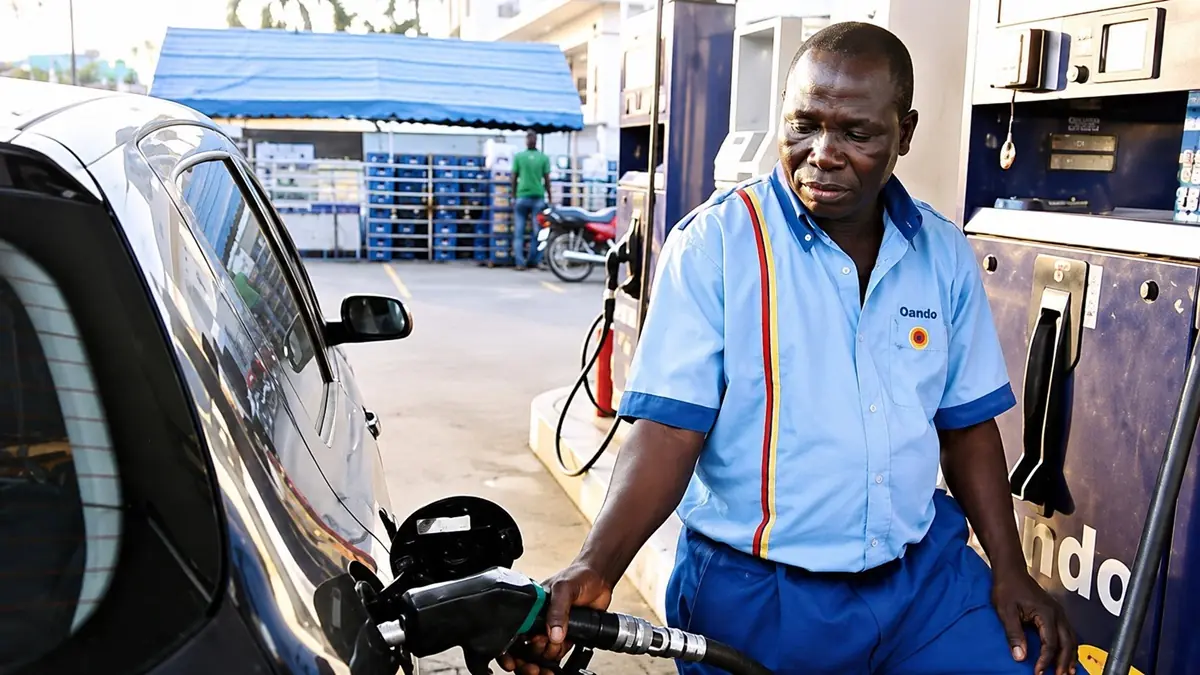
Adedeji said the Federal Government would have faced an even greater fiscal burden if it had retained the petrol subsidy.
He argued that developments in Iran and the wider global economy could have pushed subsidy expenditure to about ₦53tn in 2026 if the policy had remained in place.
He said maintaining the subsidy would have meant continuing to finance petrol purchases with borrowed funds and selling the product to consumers below its actual cost.
The NRS chairman rejected the argument that the government should have built a financial buffer before removing the subsidy, saying such an approach would not have solved the underlying problem because the subsidy itself was fiscally unsustainable.
Adedeji said President Tinubu should therefore be commended for proceeding with the removal despite the political difficulties associated with the decision.
READ ALSO: NRS: We’re Taxing Prosperity, Not Poverty — Adedeji
What the reforms have changed
Adedeji maintained that the reforms had begun to improve Nigeria’s fiscal position, although they initially created significant economic pressure on households and businesses.
He argued that removing the subsidy reduced one of the largest drains on government finances, while reforms in the foreign exchange market were intended to improve transparency and restore investor confidence.
He also pointed to efforts to increase oil production and expand the tax base as part of the administration’s broader strategy to strengthen government revenue.
The NRS chairman said a stronger fiscal position would ultimately create greater capacity for government to invest in infrastructure and other areas capable of improving living standards.
His comments come as the Tinubu administration continues to defend the reforms introduced since 2023, including the petrol subsidy removal, foreign exchange reforms and changes to the tax system.
While the government has maintained that the measures are necessary to correct longstanding structural weaknesses, the reforms have also triggered higher living and operating costs, keeping the debate over their short-term impact and long-term benefits at the centre of Nigeria’s economic discussion.

Ogochukwu Onwaeze is a writer specializing in business and economic journalism. At THEWILL News Media, she translates market trends, financial developments, and policy shifts into clear and engaging stories.