
-
Nigeria Revenue Service Chairman Zacch Adedeji says the government’s tax reforms are designed to increase economic prosperity rather than extract more money from households and businesses.
-
Adedeji said the NRS has a direct interest in businesses succeeding because stronger earnings would naturally translate into higher tax receipts for the government.
-
His comments come as Nigeria’s new tax regime takes effect, with exemptions for low-income earners and small businesses alongside wider compliance requirements for higher earners and larger companies.
August 10, (THEWILL) — The Chairman of the Nigeria Revenue Service (NRS), Zacch Adedeji, has said the government’s tax reforms are not designed primarily to extract more money from Nigerians, but to create an environment where businesses and individuals can grow and prosper.
Adedeji said the revenue service’s focus was to “tax prosperity” rather than poverty, arguing that stronger economic activity would ultimately generate more revenue for the government.
He spoke in an exclusive interview on Channels Television’s Sunday Politics programme, responding to concerns about the state of the economy, including weak household incomes and high levels of poverty.

According to him, the government does not benefit from taxing people who are struggling to generate income. “Our focus is not revenue. If you remember, Mr President’s cliché is that I am to tax prosperity. I don’t want to tax poverty. I’m to tax the fruit, not the seed, and I’m to tax the return, not investment.”
Why NRS wants businesses to grow

Adedeji said the interests of the NRS are closely tied to the performance of Nigerian businesses and individuals because higher earnings would generate higher tax receipts.
He illustrated the point using a simple example, saying that if a business makes ₦100, the government could take ₦30, while earnings of ₦200 would generate ₦60 at the same rate.
He therefore argued that the revenue service has an incentive to support an environment in which businesses can increase their earnings.
“If I want to make more, I must work for you to make more”, he said.
Adedeji linked this approach to the Federal Government’s broader economic reforms, including efforts to address challenges in the power sector and increase allocations to state governments.
He also pointed to the Nigerian Education Loan Fund (NELFUND) as part of government interventions intended to improve access to opportunities that could strengthen people’s economic prospects.
READ ALSO: Interview: ‘The Success of the Tax Reforms Will be Measured by their Tangible Impact on Nigerians’
States have a role in reducing poverty

The NRS chairman said state governments also have an important role to play in reducing poverty because of their proximity to citizens.
He particularly highlighted education, including primary and secondary education, as areas where states could have a direct impact on living standards and economic opportunities.
Adedeji maintained that the objective of the tax system should ultimately be linked to a more productive economy rather than simply higher collections.
“For us in Nigeria Revenue Service, it’s not about extracting. It’s about making the country prosperous”, he said.
Revenue generation is separate from spending
Adedeji also rejected suggestions that higher government revenue should automatically translate into a corresponding increase in capital expenditure.
Responding to criticism over budget implementation and project carryover, he said revenue generation and government expenditure operate through different processes.
He described the budgeting system and expenditure framework as separate issues and urged critics not to conflate revenue collection with the pace of government spending.
He cited major infrastructure projects, including the Lagos-Calabar Coastal Highway and the Sokoto-Badagry Superhighway, as examples of projects being pursued by the administration.
He also stressed that revenue collected by the NRS should not be viewed entirely as funds available to the Federal Government, noting that a significant portion of federation revenue is shared among the federal, state and local governments.
READ ALSO: Nigeria’s Tax Revenue More Than Doubles to N27.1tn as Reforms Reshape Economy
New tax regime widens compliance framework
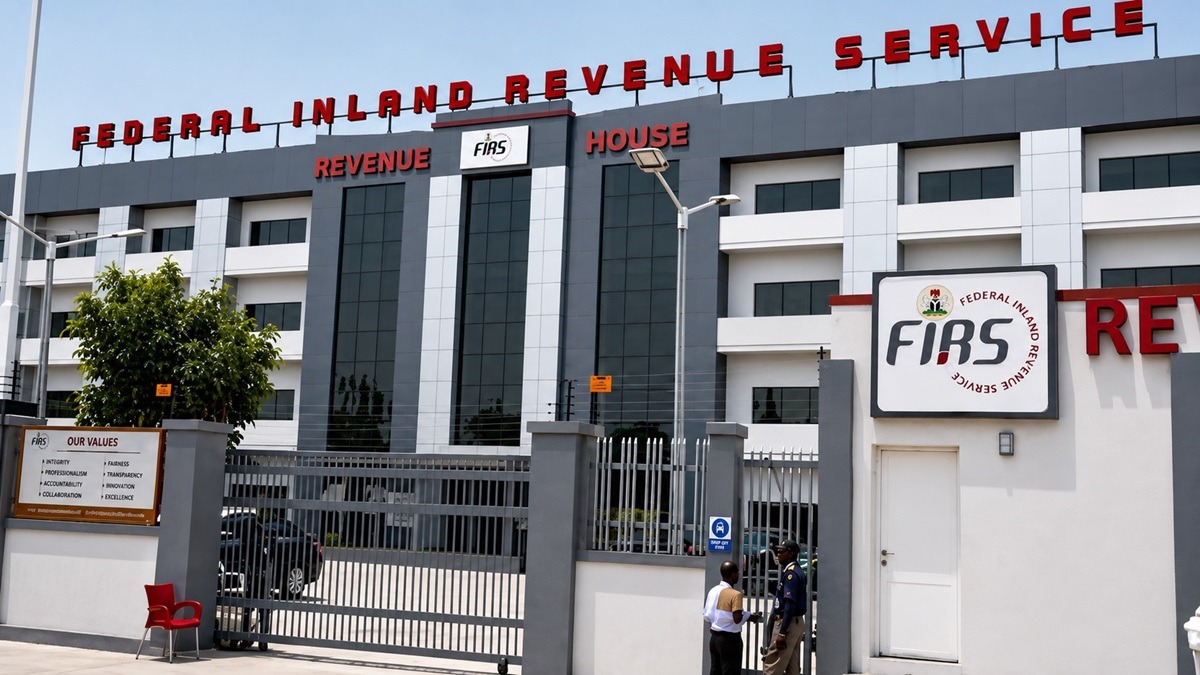
Adedeji’s comments come against the backdrop of Nigeria’s new tax regime, which took effect on January 1, 2026.
The reforms replaced several existing tax laws with four principal pieces of legislation covering taxation, tax administration, revenue collection and taxpayer disputes.
Under the new framework, individuals earning up to ₦800,000 annually are exempt from personal income tax, while higher earners face progressive rates of up to 25 percent. Eligible workers can also claim limited rent relief.
Small companies with annual turnover below ₦100m are exempt from Companies Income Tax, while larger companies generally face a 30 percent CIT rate alongside a 4 percent development levy.
Large multinational companies are also subject to a 15 percent minimum effective tax rate.
The Value Added Tax rate remains 7.5 percent, while essential goods and services including basic food items, medicines, healthcare and education receive zero-rating under the new framework.
The reforms also broaden capital gains taxation to cover assets such as cryptocurrencies and other digital assets and introduce tighter compliance measures, including the use of the National Identification Number as a Tax Identification Number.
The NRS’s position therefore rests on a straightforward proposition: if businesses and individuals become more profitable, government revenue should rise without relying primarily on heavier taxation of people and businesses that are already struggling.

Ogochukwu Onwaeze is a writer specializing in business and economic journalism. At THEWILL News Media, she translates market trends, financial developments, and policy shifts into clear and engaging stories.