
-
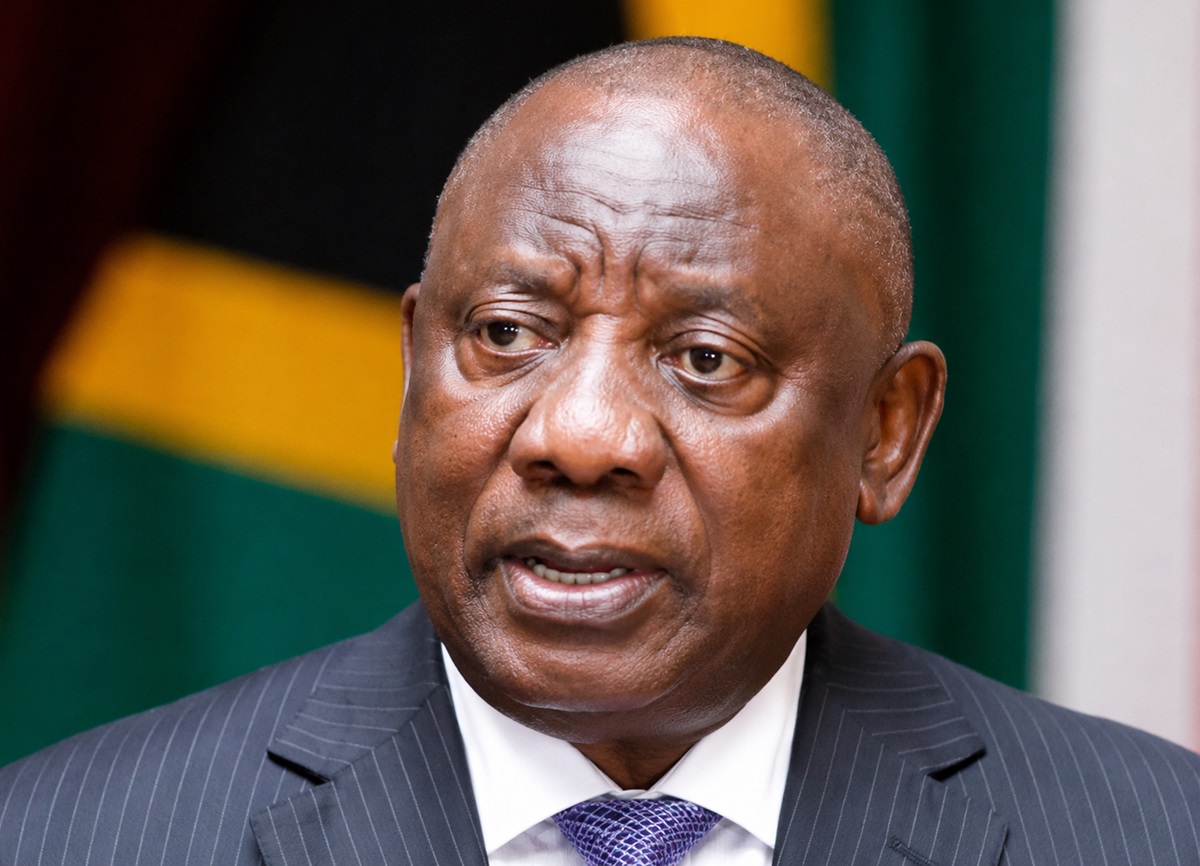
Elon Musk has accused South Africa of being “super racist against Whites and Asians” after President Cyril Ramaphosa appealed to him to remember his roots and give back to his country of birth.
-
Ramaphosa faulted Musk’s description of South Africa’s Black economic empowerment policies as “Apartheid 2.0”, citing the educational inequalities that favoured White South Africans during apartheid.
-
The dispute has intensified over the licensing of Musk’s satellite internet company, Starlink, which has been unable to secure regulatory approval under South Africa’s telecommunications ownership requirements.
-
South Africa maintains that its empowerment laws apply to all telecommunications operators, while Musk insists that the requirements discriminate against him because he is not Black.
November 17, (THEWILL) – Elon Musk, the world’s richest man and South African-born billionaire, has accused his country of birth of being “super racist against Whites and Asians” after President Cyril Ramaphosa challenged him to recognise South Africa’s contribution to his success and give back to the country.
Musk made the remark on Tuesday, November 17, in a post on his social media platform, X, responding to a video of Ramaphosa discussing the billionaire during an interview in California, United States.
The exchange has renewed the disagreement between the technology entrepreneur and the South African government over the country’s racial empowerment policies, particularly the Broad-Based Black Economic Empowerment (B-BBEE) framework, which Musk has repeatedly criticised as discriminatory.
Ramaphosa made the appeal during an interview in Silicon Valley on November 14, while leading a South African delegation to California for engagements focused on artificial intelligence, technology investment and international partnerships.
The president said he had met Musk previously and was impressed by his intellectual abilities but believed the billionaire should also demonstrate loyalty to the country where he was born and received his early education.
“I have met Elon Musk in the past, and I’ve been awed by his brilliance. But I’d also like to chat to him about remembering his country and being loyal to his home country”, Ramaphosa said.

The president’s comments came amid Musk’s repeated criticism of South Africa’s empowerment policies, which the billionaire has described as “Apartheid 2.0”.
Rejecting the comparison, Ramaphosa argued that Musk had failed to appreciate the historical inequalities created by apartheid, particularly the deliberate exclusion of Black South Africans from quality education and economic opportunities.
He said the apartheid government systematically privileged White South Africans, providing them with significantly better educational resources while denying the Black majority equal opportunities.
To illustrate the disparity, Ramaphosa compared government spending on Musk’s education with the resources allocated to his own education during apartheid.
“He doesn’t understand the harm of apartheid policies and how the apartheid policies chose White people only for advancement, and the education he received was much better than what I received. Where the apartheid government spent R12 on his education, it spent R1 on my education. So if one does not understand that, one will never be able to understand precisely what needs to be done to remedy the harm that was done”, he stated.
Ramaphosa maintained that the education and knowledge available to Musk in South Africa contributed to the foundation of his subsequent success, despite the billionaire’s personal achievements and entrepreneurial efforts.
Recalling Musk’s early interest in computer games and technology, Ramaphosa said the billionaire should recognise that his upbringing and educational background helped shape the person he eventually became.
“I would say to Elon, what you’ve become today is by dint of your own origin. You started dabbling with the game machines. It is because of the knowledge and the education that was made available to you. And it is this endowment that you now have that was formed in South Africa. And he should be one of those who would say, I would like to contribute to the development of South Africa and give back to this country that made me who I am today”, he said.
Musk, however, rejected the president’s appeal, responding to the interview clip with an accusation against the South African government.
“South Africa is now super racist against Whites and Asians”, he wrote on X.
The billionaire’s response reflects his longstanding opposition to the country’s affirmative action and economic empowerment framework, which seeks to address racial inequalities in ownership, employment, management and access to business opportunities.
Starlink Licensing Dispute Fuels Disagreement
At the centre of the disagreement is South Africa’s Broad-Based Black Economic Empowerment policy and its application to telecommunications companies seeking operating licences.
The framework was introduced to address the economic inequalities entrenched under apartheid, which ended in 1994, and to broaden participation by historically disadvantaged South Africans in the country’s economy.
In the telecommunications sector, companies seeking relevant operating licences are required to meet a 30 percent ownership threshold for historically disadvantaged groups.
The requirement has become a major obstacle to the proposed entry of Musk’s satellite internet company, Starlink, into the South African market.
Musk has repeatedly alleged that Starlink was denied an operating licence because he is not Black. The South African government has rejected the allegation, maintaining that the requirements are established by law and apply to all telecommunications operators.
South Africa’s Independent Communications Authority (ICASA) is responsible for regulating the country’s telecommunications industry, including the licensing of service providers.
Starlink has sought an alternative arrangement through an Equity Equivalent Investment Programme (EEIP), which would allow the company to meet empowerment obligations through investments in areas such as education, infrastructure and skills development rather than direct equity transfers.
The company has proposed investing R500 million to provide free high-speed internet access to 5,000 rural schools, potentially benefiting more than 2.4 million learners annually.
However, the proposal has raised regulatory and legislative questions over whether the existing telecommunications framework permits such an arrangement.
In May 2026, South Africa’s Parliament maintained that the existing law requires telecommunications licensees to comply with the 30 per cent ownership provision and that accommodating alternative equity-equivalent arrangements would require legislative amendments.
The controversy has also attracted the attention of other telecommunications operators, with Telkom raising concerns in November 2026 about the rigidity of the ownership requirements and calling for consideration of alternative empowerment mechanisms.
READ ALSO:
Ramaphosa Defends South Africa’s Regulatory Framework
Ramaphosa has maintained that South Africa has the right to determine the conditions under which foreign companies operate in the country, insisting that Musk’s disagreement with the empowerment requirements does not amount to discrimination against him personally.
The president argued that foreign investors must comply with the laws and regulatory conditions of countries in which they seek to do business. He also expressed regret that he could not meet Musk during his California visit, indicating that their schedules did not align.
Musk, born in Pretoria, South Africa, on June 28, 1971, attended school in the country before moving to Canada in 1989 at the age of 17.
He subsequently studied at Queen’s University in Canada and the University of Pennsylvania in the United States before building his business career in North America.
Musk became one of the world’s most influential technology entrepreneurs through his involvement in electric vehicle manufacturer Tesla and aerospace company SpaceX, which operates the Starlink satellite internet network. He also acquired the social media platform X, formerly Twitter, in 2022.
His disagreements with the South African government have repeatedly centred on racial empowerment requirements, which he argues disadvantage White-owned businesses and investors.
Ramaphosa’s latest appeal came as he led a delegation of government officials, business representatives, academics and technology experts to Silicon Valley to explore opportunities for investment and cooperation in artificial intelligence, robotics, data infrastructure and technological innovation.
The president has been seeking to position South Africa as a destination for international technology investment, while the unresolved Starlink licensing dispute continues to complicate relations between the government and the billionaire entrepreneur.
Felix Ifijeh is a journalist with years of professional reporting experience. Known for his keen news sense, compelling storytelling and commitment to accurate, impactful reporting, he has built a reputation for turning leads into clear, engaging, and well-structured reports that resonate with readers. His work reflects deep newsroom experience and a commitment to accurate, impactful journalism.