
-
Peter Obi pledges to extend the governance model he implemented in Anambra State to the national level if elected President in 2027.
-
The NDC presidential candidate says his administration’s record demonstrates that effective planning, responsible management and accountable institutions can deliver development.
-
He identifies institutional reforms, economic planning and balanced investment in critical sectors as pillars of the model.
-
Obi says his administration rebuilt key government institutions, including the legislature, judiciary and civil service infrastructure.
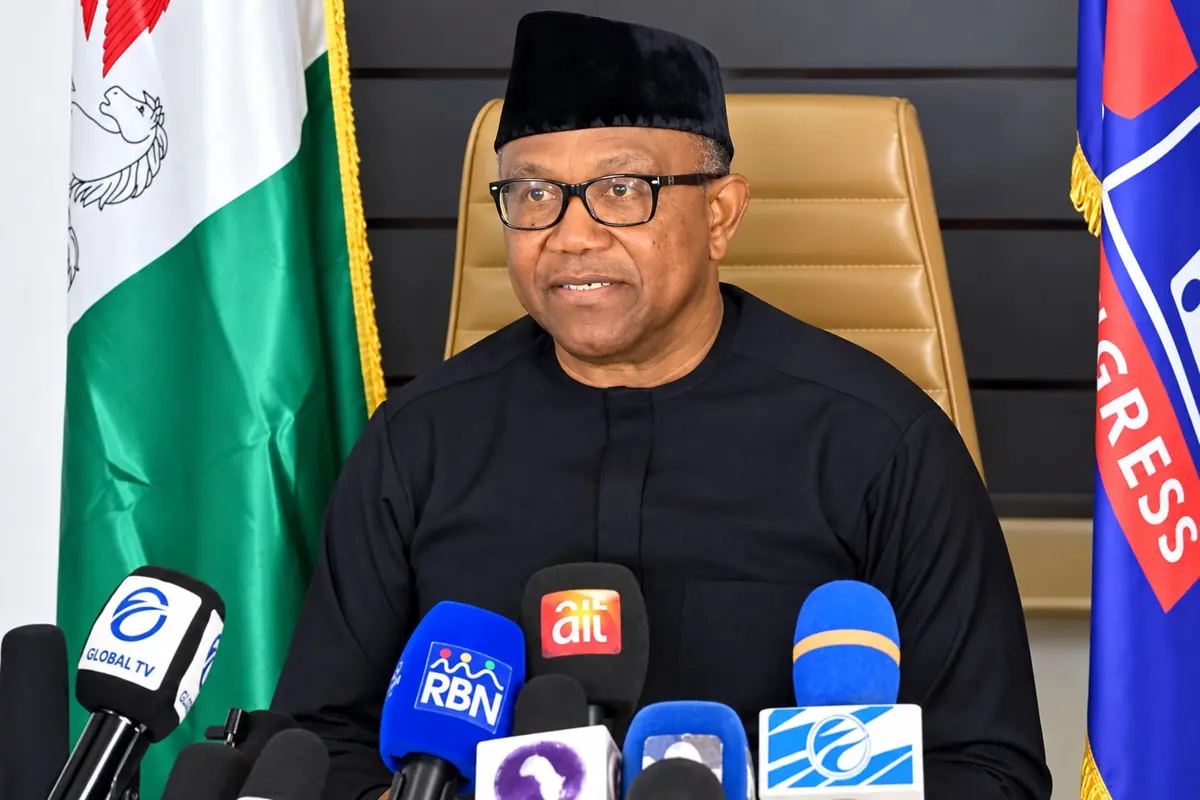
November 17, (THEWILL) – Former Anambra State Governor and presidential candidate of the Nigeria Democratic Congress (NDC), Peter Obi, has pledged to replicate the governance and development model implemented during his tenure in Anambra State across Nigeria if elected President in 2027.
Obi said the achievements recorded under his administration were neither a one-time occurrence nor an experiment that could not be reproduced, insisting that the principles which guided his eight-year tenure could be extended to the national level.
The former governor made the commitment in the second instalment of his series, Nigerians, Go and Verify, titled Building the Institutions of the State, in which he outlined efforts by his administration to rebuild government structures and strengthen public institutions.
He said Nigeria could achieve similar development outcomes through capable leadership, effective planning, responsible management and institutions that remained accountable to the public.
“What we accomplished in Anambra can also be accomplished in Nigeria. With capable leadership, effective planning, responsible management and accountable institutions, Nigeria, too, can work for all its citizens”, Obi said.
He explained that his administration adopted the Anambra Integrated Development Strategy (ANIDS) as an overarching framework for coordinated development, guided by four principles: character, competence, capacity and compassion.

According to him, the government recognised that development in education, healthcare, infrastructure, security and agriculture could not be achieved sustainably without first restoring the institutions responsible for delivering public services.
Obi said his administration therefore embarked on rebuilding the executive, legislature, judiciary, civil service and local government system to improve the machinery of governance.
He cited the reconstruction, re-equipment and furnishing of Government House in Awka, which had been vandalised and burnt in 2004, alongside the rehabilitation of the Governor’s Lodge in Amawbia and construction of another in Onitsha.
He also listed the rehabilitation of the Anambra State House of Assembly complex and provision of official vehicles to legislators, High Court judges and magistrates as part of efforts to strengthen the legislature and judiciary.
READ ALSO:
On the civil service, Obi said his administration constructed the two-phase Chief Jerome Udoji State Secretariat Complex, comprising Blocks 1 and 2, to centralise ministries, departments and agencies that previously operated from scattered rented apartments.
He said the project improved administrative coordination and provided civil servants with a more suitable working environment.
The secretariat was named after Chief Jerome Udoji, the first indigenous Chief Secretary of the Eastern Region during the First Republic, in recognition of his contribution to public administration.
The latest instalment follows the first part of Obi’s series, in which he explained how his administration established the Ministry of Economic Planning and introduced ANIDS to guide resource allocation and ensure balanced development across sectors.
The former governor said the strategy translated the Millennium Development Goals into practical state policies and programmes, rather than treating them as distant international targets.
Obi, who governed Anambra from 2006 to 2014, is using the 10-day series, tagged Record of Service, to document his administration’s policies and achievements as he makes his case for the 2027 presidential election.
