
-
Premier League referees are set to take a tougher approach to holding, pushing and grappling during corners and attacking set-pieces this season.
-
Arsenal and Manchester United were among the league’s most productive teams from set-pieces last season, making dead-ball situations an important part of their attacking approach.
-
The new refereeing emphasis could force clubs to adjust their corner routines, while officials face the challenge of reducing excessive holding without removing the physical side of the game.
August 21, (THEWILL) — The Premier League is introducing a stricter approach to the physical battles that take place inside the penalty area during corners and other attacking set-pieces, a move that could affect some of the division’s most successful teams in front of goal.
Pablo of West Ham United fouls David Raya of Arsenal resulting in a late equalising goal for West Ham being disallowed by VAR during the Premier League match between West Ham United and Arsenal at London Stadium on May 10, 2026 in London, England. (Photo by Marc Atkins/Getty Images)
Referees have been instructed to pay closer attention to players who deliberately hold, push, grab or restrict opponents rather than attempting to play the ball.

The focus comes after holding and grappling became increasingly common during corners last season, with penalty areas often turning into crowded battles before the ball was even delivered.
The Premier League has not changed the fundamental laws of the game. Instead, officials have been told to enforce existing rules more consistently, particularly when physical contact has no genuine connection to competing for the ball.
Arsenal and Manchester United among those who could feel the impact
The new approach is particularly significant because set-pieces have become one of the most effective ways for teams to score in the Premier League.
Arsenal were the league’s leading set-piece scorers last season, finding the net 25 times from dead-ball situations.
Manchester United were also highly productive, scoring 21 set-piece goals, while Tottenham Hotspur managed 19.
Arsenal’s success from corners has been especially notable, with Mikel Arteta’s side developing a series of carefully rehearsed routines designed to create space and attacking opportunities inside the box.
The Gunners’ set-piece threat has involved movement, positioning and physical battles between attackers and defenders as players attempt to reach dangerous areas.
Manchester United have similarly benefited from their ability to make corners and other set-piece situations count.
However, the new interpretation does not specifically target either club. Instead, it applies to every Premier League team and could change the way sides approach crowded penalty-area situations.
What are referees looking for?
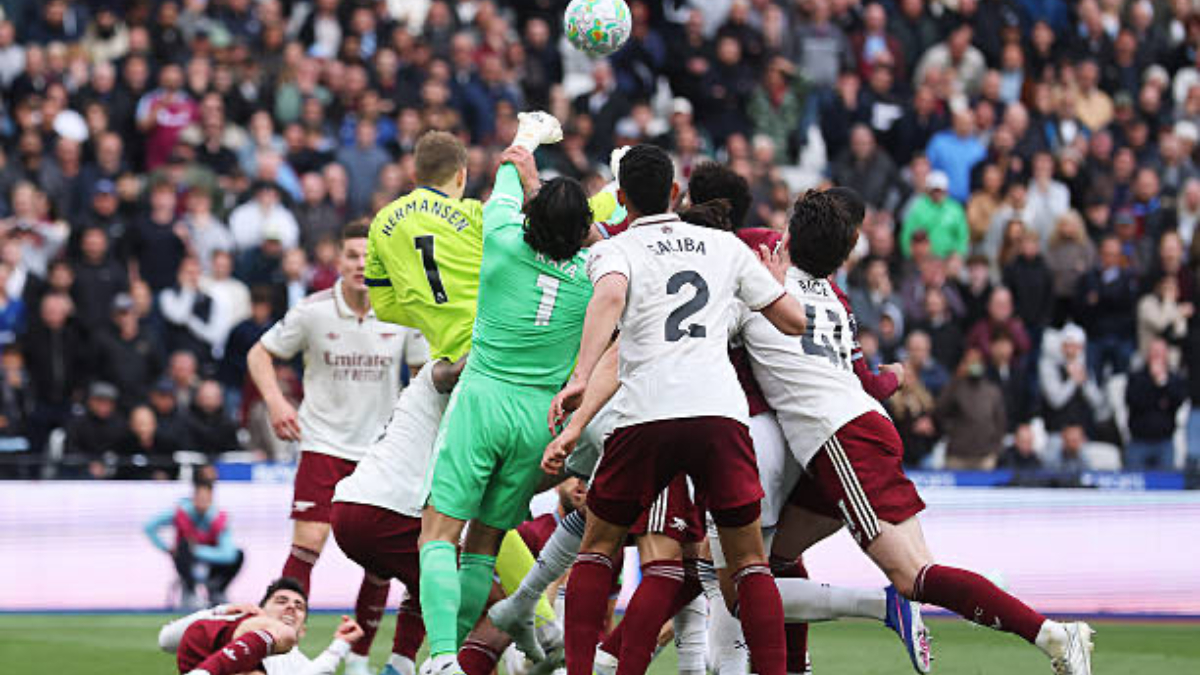
Officials will now place greater emphasis on what has been described as “non-footballing holding actions”.
Players could be penalised when they are:
Concentrating solely on stopping an opponent rather than playing the ball.
Making no attempt to challenge for the delivery.
Holding an opponent with both arms.
Pulling an opponent’s shirt.
Using sustained or significant contact to prevent an opponent from moving.
Howard Webb, the Premier League’s refereeing chief, has encouraged officials to be more confident when making those decisions.
“We’re trying to get the officials to be as confident as they can be to penalise what they see,” Webb said.
The objective is not simply to increase the number of fouls being awarded. Instead, authorities want players to change their behaviour once they realise that deliberate holding will consistently be punished.
Why has the Premier League acted?
The issue became a major talking point last season.
During Everton’s meeting with Manchester United in February, players from both sides became involved in a series of physical battles around corners, prompting Everton manager David Moyes to criticise the lack of intervention from referees.
The controversy continued in May when West Ham had a goal against Arsenal ruled out following a VAR review after several potential fouls occurred during the same set-piece.
Those incidents helped trigger discussions involving referees, players, coaches and other stakeholders during the summer.
The Premier League has now decided that officials need to be more proactive in dealing with the problem.
Set-pieces are now a major source of goals
The importance of the issue is reflected in the statistics.
There were 269 goals from set-pieces in the Premier League last season, excluding penalties and direct free-kicks.
Those goals represented 25.7% of all Premier League goals, the highest proportion among Europe’s major leagues.
That means any change in how corners are officiated could have a noticeable impact on attacking strategies throughout the division.
Arsenal’s 25 goals from set-pieces highlighted their effectiveness, while Manchester United’s 21 showed that they were also among the teams capable of turning dead-ball situations into a consistent source of goals.
At the other end, Liverpool conceded a league-high 19 goals from set-pieces, with Chelsea and Newcastle each conceding 17.
The new approach could therefore affect both attacking teams looking to exploit corners and defensive sides trying to prevent them.
READ ALSO:
Goalkeepers will still be protected
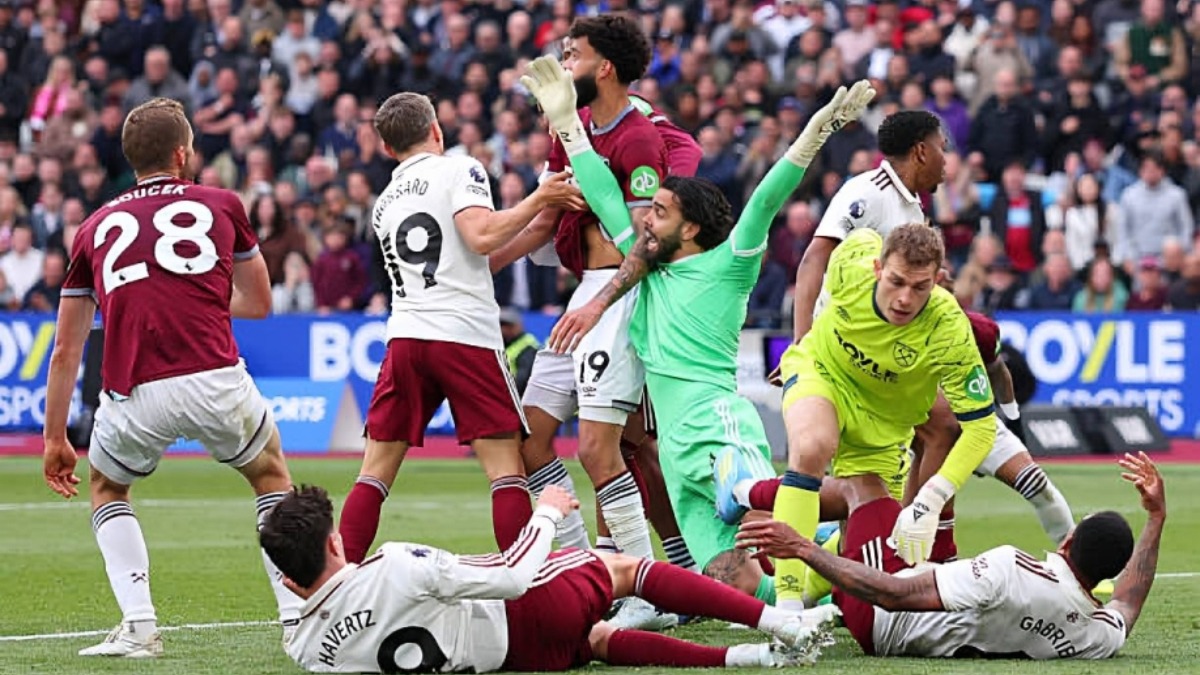
The Premier League will also continue to protect goalkeepers from clear attempts to prevent them from playing the ball.
However, referees are not expected to penalise every piece of contact between a goalkeeper and an opposing player.
Normal physical contact will remain part of the game, with officials maintaining a relatively high threshold for fouls.
A goalkeeper whose movement is deliberately restricted, particularly where an opponent prevents them from using an arm or reaching the ball, is still likely to be penalised.
Clubs may have to rethink their corner routines
For Arsenal, Manchester United and other teams that have built successful set-piece strategies, the changes could mean making tactical adjustments rather than abandoning their routines altogether.
Coaches may need to put greater emphasis on timing, movement and delivery while reducing actions that could be interpreted as deliberate holding.
The same applies defensively, as teams will have to find ways of protecting dangerous areas without resorting to tactics that could result in penalties.
The challenge for referees will be consistency.
Premier League officials have previously been accused of taking a strict approach early in a season before standards gradually loosen.
This time, the authorities want the crackdown to produce a lasting change in player behaviour.
With set-pieces responsible for more than a quarter of all Premier League goals last season, the consequences could be significant.
The new rules are not designed to take physicality out of football, but to draw a clearer line between legitimate competition for the ball and deliberate attempts to stop an opponent from playing it.
As the new Premier League season gets underway, Arsenal, Manchester United and the rest of the division will discover whether the tighter approach changes one of football’s increasingly influential weapons: the corner kick.

Olumide Atiba is a sports journalist with THEWILL, known for his keen news sense and compelling storytelling. He has built a reputation for turning leads into clear, well-structured reports that resonate with readers, with a strong focus on football coverage