
-
FIFA president Gianni Infantino faces renewed scrutiny after US tax filings reportedly revealed a $1.76 million (£1.3 million) payment from the company organising the 2026 World Cup.
-
The reported payment was not included in FIFA’s published compensation figures for 2024, raising questions about the disclosure of the president’s total remuneration.
-
Former FIFA governance committee chairman Miguel Maduro has called for an independent investigation into the arrangement.
-
FIFA denies wrongdoing, maintaining that its compensation arrangements and financial disclosures comply with applicable rules.
October 13, (THEWILL) – FIFA president, Gianni Infantino, is facing renewed pressure over his leadership following reports that he received an additional $1.76 million (£1.3 million) from the company established to organise the 2026 World Cup, a payment that was not reflected in the football governing body’s published compensation figures for 2024.
The payment was disclosed in US tax filings submitted by FWC2026 US Inc, the entity set up to manage the tournament in the United States, according to an investigation by The Times. The newspaper reported that the company paid Infantino the sum in 2024, in addition to the remuneration recorded in FIFA’s annual report.
FIFA’s 2024 annual report listed Infantino’s compensation at 4.274 million Swiss francs, equivalent to approximately £3.88 million. The additional payment raises questions about how remuneration from entities connected to FIFA is disclosed and whether the organisation’s public reporting fully reflects the president’s earnings.

The revelation has prompted renewed calls for scrutiny of FIFA’s financial governance, with Miguel Maduro, the former chairman of its governance committee, arguing that payments from related entities should be covered by the organisation’s transparency obligations.
FIFA, however, has rejected allegations of wrongdoing, saying the president’s compensation and contractual benefits are determined through its established procedures and that the relevant payments are reported to US authorities in line with applicable requirements.
Questions Over Infantino’s Reported Payment
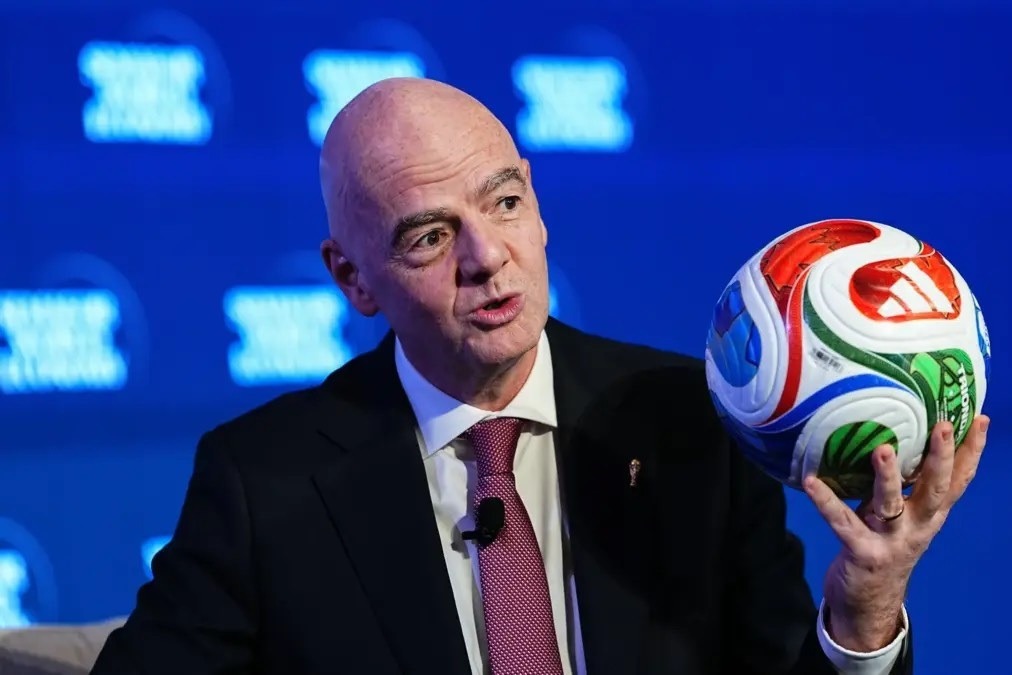
The central issue is not simply the size of the payment, but why it was not included in FIFA’s published compensation figures.
FIFA’s statutes require the individual compensation of the president, members of the FIFA Council and the secretary general to be made public. The reported payment has therefore raised questions about whether remuneration received through a separate company established to deliver a FIFA tournament should also appear in the organisation’s annual disclosures.
According to The Times, the US filing included $626,229 classified as other reportable compensation, alongside other payments to Infantino. The filing provides a basis for questioning the treatment of the money, although the precise contractual arrangements and how the payment relates to FIFA’s own compensation disclosures require further clarification.
Maduro has called for an independent investigation, arguing that compensation paid by companies connected to FIFA should not fall outside the transparency requirements governing its senior officials.
His criticism places the focus on whether FIFA’s disclosure framework adequately captures payments made through related entities, rather than solely on the amount Infantino received.
The reported discrepancy does not, on its own, establish that the payment was unlawful or that Infantino deliberately concealed it. Resolving the issue would require a fuller examination of the contracts, the relationship between FIFA and FWC2026 US Inc, and the rules governing the disclosure of executive remuneration.
FIFA Rejects Allegations Of Concealment
FIFA has denied that Infantino received an improper second salary or that the organisation breached its statutes.
In its response to the reports, the governing body said the president’s annual compensation and contractual benefits were determined by its compensation sub-committee. It also maintained that contributions towards social charges, pension funds and other employee benefits were reported to US authorities in accordance with applicable requirements.
The organisation’s position contrasts with the concerns raised by Maduro over the public disclosure of payments made by a FIFA-related company.
The distinction is important: the existence of a payment recorded in US tax filings and the question of whether FIFA’s own annual report adequately disclosed it are related, but separate issues. FIFA’s denial does not remove the need to clarify the payment’s contractual basis and its treatment under the organisation’s transparency rules.
A detailed public explanation of those matters could help establish whether the difference reflects the structure of the compensation arrangements, a disclosure shortcoming or a potential breach of FIFA’s rules.
READ ALSO:
Fresh Scrutiny Ahead Of FIFA’s 2027 Election
The controversy comes as Infantino faces scrutiny over other governance decisions and prepares for the next FIFA presidential election, scheduled for March 2027.
Infantino succeeded Sepp Blatter in 2016 and has since won two subsequent elections unopposed. He has indicated that he intends to seek another term.
His leadership had already attracted criticism following reports of a proposal to allow private investors to acquire stakes in FIFA tournaments through a separate commercial structure. That plan was later abandoned after opposition from figures within European football, according to reports.
The latest payment revelation adds another issue for FIFA officials and member associations to consider as the election approaches. However, calls for Infantino to resign do not automatically initiate his removal, and any change in leadership would have to follow the organisation’s established governance procedures.
Former Switzerland international Ramon Vega has also indicated an intention to challenge Infantino in the presidential election. His candidacy, like that of any other prospective challenger, would depend on meeting FIFA’s nomination requirements.
What FIFA Must Clarify
The immediate questions concern the purpose of the payment, the contractual arrangements behind it, and why it was absent from the compensation figures published in FIFA’s 2024 annual report.
The issue also has implications beyond Infantino’s individual remuneration. FIFA oversees major international competitions and substantial commercial revenues, making public confidence in its financial reporting and governance an important part of its relationship with member associations, sponsors and supporters.
An independent review, as proposed by Maduro, could help establish whether the payment was handled in accordance with FIFA’s rules and whether changes to its disclosure practices are necessary.
Until the arrangement is explained more fully, the reported $1.76 million payment is likely to remain a source of scrutiny for Infantino and the governing body. FIFA’s key test will be whether it can clearly account for the payment and show that its public compensation disclosures meet the transparency standards set out in its own statutes.

Olumide Atiba is a sports journalist with THEWILL, known for his keen news sense and compelling storytelling. He has built a reputation for turning leads into clear, well-structured reports that resonate with readers, with a strong focus on football coverage
