
-
English football will introduce a series of new laws for the 2026-27 season aimed at reducing time-wasting and increasing the amount of time the ball is in play.
-
Players will have just 10 seconds to leave the pitch when substituted, while delayed departures can leave their team with 10 players.
-
Goalkeepers who deliberately delay goal-kicks could see opponents awarded a corner, while delayed throw-ins can result in possession being handed over.
-
VAR will gain new powers to review second yellow cards, certain attacking fouls before set-pieces and cases of mistaken identity.
August 14, (THEWILL) — English football is entering the 2026-27 season with a major overhaul of the laws of the game, as authorities introduce new measures targeting time-wasting, tactical delays and several controversial situations.
The changes, which were initially trialled at the 2026 World Cup, will apply across English football from the EFL and Community Shield through to the Premier League and lower levels of the game.
The main objective is to keep the ball in play for longer and reduce the increasingly common tactics used by teams to slow matches down when protecting a result.

At the 2026 World Cup, the ball was in play for an average of 58 minutes and 16 seconds, representing 60.43% of total match time. That was achieved despite significantly less added time than was seen at the 2022 World Cup.
One of the biggest changes concerns goal kicks and throw-ins.
Referees can now introduce a five-second countdown when they believe a player is deliberately delaying a restart. The countdown will begin after the referee blows the whistle and signals it with an arm movement.
If a player fails to take a throw-in before the countdown expires, possession will be awarded to the opposition.
Goalkeepers face an even greater risk. A goalkeeper who deliberately takes too long to restart from a goal-kick can now see the opposition awarded a corner.
Substitutions will also become more strictly controlled.
Players being replaced will have 10 seconds to leave the field at the nearest point. If they take longer, their replacement will be prevented from entering for at least one minute, potentially leaving the team temporarily with only 10 players.
The rule has already been tested in the Carabao Cup, with Middlesbrough forward Will Lankshear becoming the first player to be punished after taking too long to leave the pitch.
Injuries have also been targeted.
Players who require treatment and cause the referee to stop play will generally have to leave the pitch for one minute before returning. The rule is designed partly to prevent players from using apparent injuries to interrupt an opponent’s momentum.
Goalkeepers are subject to another significant change.
If a goalkeeper receives treatment after going down without being challenged, an outfield player from his team must leave the pitch for one minute. The coach must nominate the player within 10 seconds; otherwise, the captain will have to make the decision.
The measure is designed to prevent what has become known as the “goalkeeper tactical timeout”, where a goalkeeper’s apparent injury gives coaches an opportunity to gather their players and issue tactical instructions.
READ ALSO: Not Every Goal Will Be Reviewed; FIFA Approves Major New VAR Change
UEFA Referees’ Chief Calls For Major VAR Change
Premier League Club Paying Manager £15m A Year, Here’s How The Rest Compare
There is also a clarification surrounding goal kicks.
From the new season, once a goalkeeper or defender kicks the ball, the goal kick will be considered to have been taken. If a defender subsequently handles the ball inside the penalty area, a penalty can be awarded. If the goalkeeper handles it, an indirect free-kick can be given for a backpass offence.
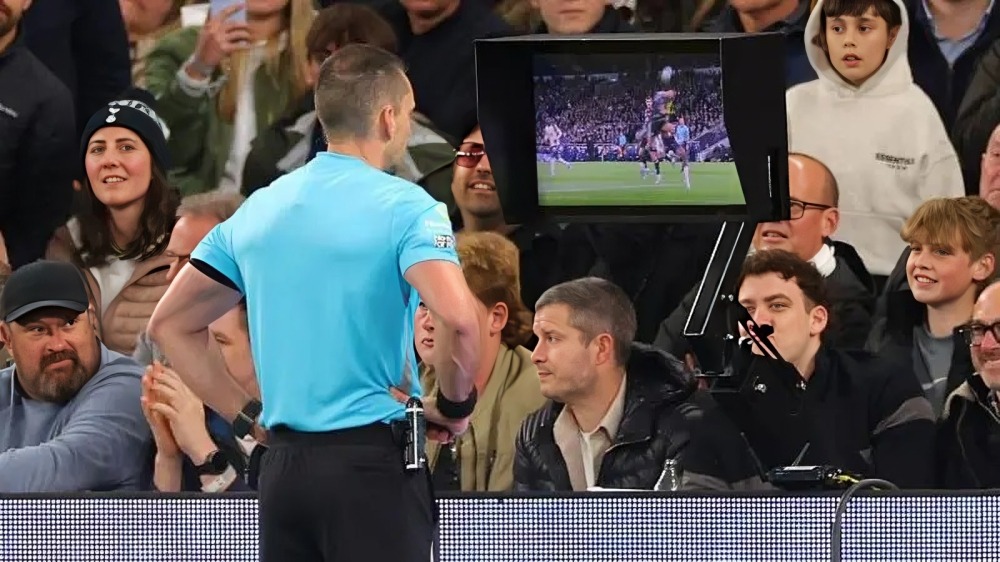
VAR will also have an expanded role.
Video officials will be permitted to review a second yellow card when it results in a player’s dismissal. However, VAR cannot intervene simply because it disagrees with a referee’s decision to issue a first yellow card.
Another trial will allow VAR to examine attacking fouls committed before a set-piece if the incident directly leads to a goal, penalty or disciplinary action.
The restart in such a situation would be a retake of the corner, because a free-kick cannot technically be awarded for an offence committed before the ball is back in play.
VAR will also be able to intervene in cases of mistaken identity, such as when a referee penalises one team for an offence actually committed by an opponent.
However, not every World Cup VAR experiment will be adopted in England.
There will be no VAR intervention for incorrect corners, while players who cover their mouths during confrontational incidents will not automatically become subject to VAR review.
The new laws represent one of the most significant attempts in recent years to change player behaviour and improve the flow of football.
For supporters, the central aim is simple: less time wasted and more football played.
For teams that have relied heavily on delaying restarts and slowing the game down to protect leads, however, the new season could require a major tactical adjustment.

Olumide Atiba is a sports journalist with THEWILL, known for his keen news sense and compelling storytelling. He has built a reputation for turning leads into clear, well-structured reports that resonate with readers, with a strong focus on football coverage
