
November 07, (THEWILL) – “Who no go love Akwa Ibom, our Dubai in Nigeria? Chai!”
That enthusiastic remark by Prof. Sandra Mgbeke, a Nigerian-American university don, captured the excitement and pride that greeted President Bola Ahmed Tinubu’s visit to Akwa Ibom State on November 6, 2026.
Beyond the colourful reception and political significance of the visit, however, was a bigger story: Akwa Ibom’s ambition to transform its natural beauty, infrastructure and cultural heritage into economic opportunities through tourism, aviation, maritime development and private investment.

Under Governor Umo Eno’s ARISE development agenda, the state is positioning itself as a destination for investors, tourists and businesses. Tinubu’s visit, particularly his approval of the proposed Ibom Deep Sea Port and international flight operations at Victor Attah International Airport, has given fresh impetus to that ambition.
Ibom Deep Sea Port: The Big Economic Prize
Perhaps the most significant announcement of the visit was Tinubu’s approval of the proposed Ibom Deep Sea Port, following a request by Governor Eno at the All Progressives Congress rally.
The approval represents a major boost to the state’s long-standing aspiration to become a maritime and commercial hub in the Gulf of Guinea.
If fully realised, the port could attract shipping, manufacturing and logistics companies, stimulate industrial development, create employment and open new markets for businesses in Akwa Ibom and neighbouring states.
Governor Eno expressed appreciation to the President, reaffirming his administration’s determination to actualise the project. Senate President Godswill Akpabio also commended Tinubu for the decision, describing him as a promise keeper.
For a state seeking to diversify its economy and expand its revenue base, the deep seaport could become one of its most transformative investments.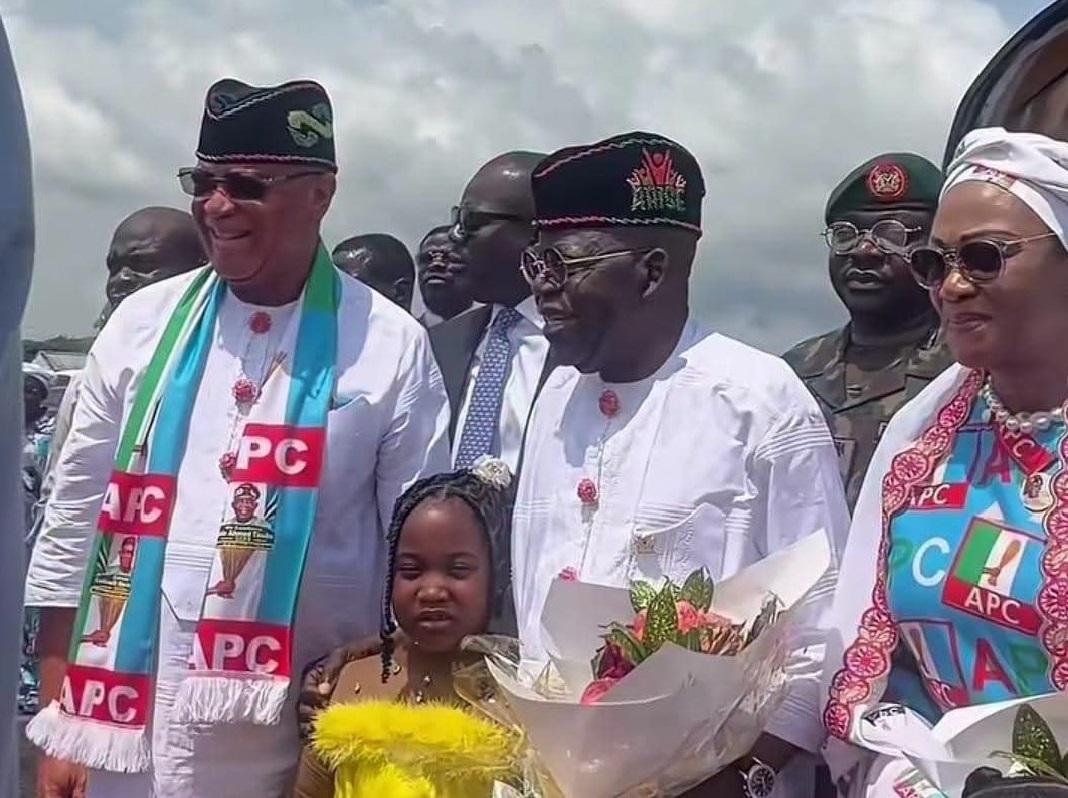
Aviation And Tourism: Opening Akwa Ibom To The World
The commissioning of the new international terminal building at Victor Attah International Airport was another defining moment of the presidential visit.
Tinubu, who recalled his earlier professional engagement in Akwa Ibom as an auditor with Mobil, described his visit as a homecoming. He also disclosed that he had approved Eno’s request for international flight operations after reviewing the relevant memorandum.
The approval could significantly improve the state’s accessibility to international tourists, investors and business travellers, while creating opportunities for hotels, transport operators, restaurants and other service providers.
The airport, alongside the International Airport Medical Centre and Ibom Aviation Village, forms part of the infrastructure being developed to strengthen the state’s aviation and tourism sectors.
Akwa Ibom is also endowed with hospitality and recreational facilities, including Ibom International Convention Centre, Ibom Tropicana Resort, Ibom Icon Hotel and Golf Resort, Ibom Golf and Country Club and the ARISE Palm Resort.
Combined with its beaches, rich cultural heritage, cuisine, festivals and natural attractions, these facilities provide a strong foundation for conference, leisure, cultural and sports tourism.
But infrastructure alone cannot make a tourism destination. Consistent promotion, international-standard services, effective management and private-sector partnerships will be crucial to turning these investments into sustainable businesses.
Infrastructure As A Catalyst For Growth
Tinubu also inaugurated the Bola Tinubu Ring Road III Extension, linking Idoro Road to Ikot Ekpene Road through Uyo and Ibiono Ibom.
Beyond easing transportation, the road is expected to open up adjoining communities, improve connectivity and stimulate commercial activities along its corridor.
Another project that attracted the President’s attention was the reclamation of a 73-hectare gully erosion site. Tinubu praised the transformation of the formerly degraded area, describing it as evidence of purposeful development and continuity in governance.
The AkwaGIS Office Complex and the CP Waheed Ayilara Command and Control Centre were also among the projects inaugurated during the visit.
Together, these projects reflect an administration seeking to connect infrastructure development with economic expansion, public safety and improved service delivery.
READ ALSO:
The People And The Akwa Ibom Dream
The enthusiasm surrounding the presidential visit was not limited to government officials and political leaders.
Prof. Mgbeke, impressed by the peaceful reception and the state’s development strides, expressed admiration for Akwa Ibom’s beauty and hospitality, while acknowledging the political influence of Senate President Akpabio.
Chief Solomon Jimmy, from Abak Local Government Area, described the presidential visit as an indication of confidence in the state’s security environment. He also drew comparisons between Eno’s governance approach and that of Akpabio.
For Emmanuel Ekong, Chairman of the Akwa Ibom State Youth Council, Tinubu’s policies and the administration’s commitment to continuity could help create a more enabling environment for young entrepreneurs and business owners.
Hon. Umo Isaiah, Supervisor for Humanitarian Affairs in Uyo Local Government Area, commended Eno for promoting women’s participation in governance, citing the appointment of Deputy Governor Senator Akon Eyakenyi and the inclusion of women in local government administration.
These reactions reflect the expectations of residents who want development projects to translate into better living conditions, business opportunities and a more prosperous future.
Arise 2.0: From Projects To Prosperity
Beyond the projects inaugurated, Eno used the visit to appreciate Tinubu for federal support for the Federal University of Technology, Ikot Abasi; the Federal University of Agriculture, Obio Akpa; international flight operations at Victor Attah International Airport; the Lagos-Calabar Coastal Highway and the Nigerian Education Loan Fund initiative.
The projects and policy decisions underscore the importance of cooperation between the federal and state governments in advancing infrastructure, education and economic development.
As Akwa Ibom transitions from ARISE Agenda 1.0 to ARISE Agenda 2.0, the challenge is to ensure that the infrastructure being provided generates measurable economic returns.
The proposed deep seaport must move beyond approval to implementation. International flight operations must translate into increased visitor traffic and business activities. Tourism facilities must attract private investment, create jobs and contribute meaningfully to the state’s economy.
This is where the real test of the administration’s vision lies: not merely in the number of projects completed or inaugurated, but in the opportunities they create for ordinary people.
Akwa Ibom has the natural beauty, cultural identity, hospitality and emerging infrastructure to aspire to the status of a leading tourism and investment destination in Nigeria.
Perhaps the description of the state as Nigeria’s Dubai is an ambitious compliment. But the ambition must be matched by strategic planning, sustained investment, efficient management and an economy that works for its people.
Ultimately, the dream is not simply to make Akwa Ibom a place that visitors admire, but a destination where investors find opportunities, businesses thrive, young people find jobs and residents enjoy the dividends of development.
That is the true measure of the Dubai ambition.
The author, Ekaette Okon-Joseph is the Special Assistant to the Governor of Akwa Ibom State on Media.

