
-
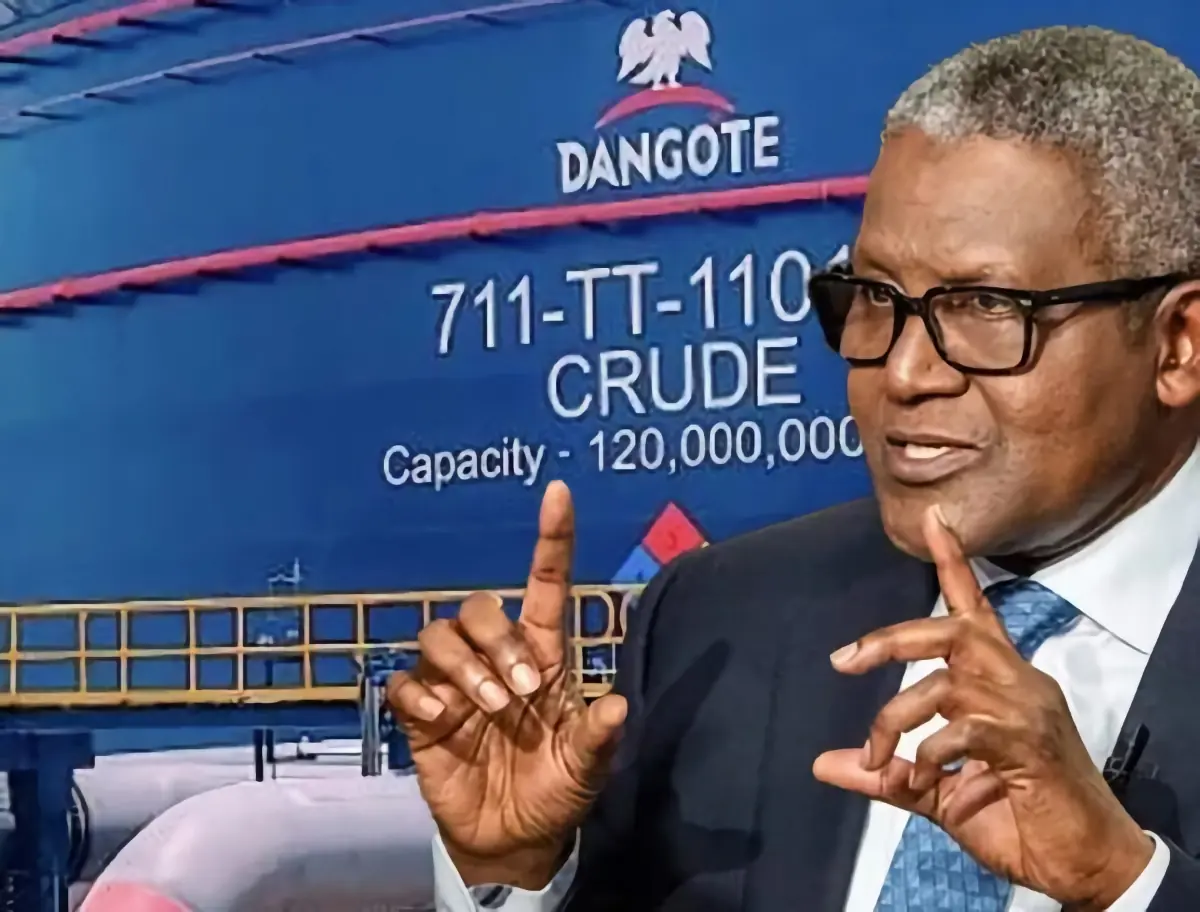
Dangote Refinery raised its petrol gantry price by N85 to N1,350 per litre from September 12, but Aliko Dangote says the product remains substantially cheaper than in neighbouring countries.
-
Dangote estimates petrol sells 20–50 percent higher across some neighbouring markets, creating a potentially lucrative price gap for traders willing to move fuel across Nigeria’s borders.
-
The price differential highlights the difficulty of stopping fuel diversion in a market where domestic pump prices remain below those in several neighbouring countries.
September 16, (THEWILL) – Nigeria’s latest petrol price increase has not eliminated one of the strongest incentives for cross-border fuel diversion: a substantial price gap between Nigeria and neighbouring countries.
Dangote Petroleum Refinery increased its gantry price of petrol from N1,265 to N1,350 per litre on September 12, an N85 or 6.7 percent increase.
Yet Aliko Dangote, President and Chief Executive Officer of Dangote Industries Limited, says petrol remains significantly cheaper in Nigeria than in neighbouring markets, making cross-border arbitrage attractive.

Speaking to Arise Television on Tuesday, Dangote said petrol prices in neighbouring countries could be 30–50 percent higher than in Nigeria.
He gave Niger as an example, saying its petrol price was still about 20–25 percent higher than Nigeria’s N1,350 per litre.
At a 25 percent differential, N1,350 worth of petrol in Nigeria would correspond to about N1,688 per litre in the neighbouring market, implying a price gap of roughly N338 per litre before transportation, border and other costs.
That gap, Dangote argued, provides an incentive for traders to move petrol out of Nigeria.
The arbitrage problem
The economics are straightforward: where the same commodity commands materially different prices across a border, traders can potentially make money by buying in the cheaper market and selling in the more expensive one.
Dangote said this was happening despite higher petrol prices in Nigeria.
“So what business are you going to do that will make you have an instant 25 percent return?” he asked, arguing that the price difference could encourage traders to take the risk of moving petrol across the border.
READ ALSO:
He said some traders could declare destinations within Nigeria while ultimately diverting the product across the border.
The argument comes as Nigeria’s domestic fuel market has undergone a fundamental change.
For decades, petrol prices were heavily influenced by government subsidies, creating a large gap between the regulated domestic price and market prices in neighbouring countries.
The removal of the petrol subsidy in 2023 substantially increased Nigerian pump prices and reduced, but did not necessarily eliminate, the incentive for cross-border diversion.
The emergence of large-scale domestic refining has also changed the supply side.
Dangote Refinery, with a nameplate capacity of 650,000 barrels per day, has become a major supplier to the domestic market while also seeking export opportunities.
Yet crude oil prices, refining costs, distribution expenses, and international product prices continue to influence domestic petrol pricing.
Why cheaper petrol remains a problem
The cross-border price gap creates a policy dilemma.
If Nigerian petrol remains significantly cheaper than in neighbouring markets, attempts to increase domestic supply can also increase the quantity of fuel available for diversion if border controls are ineffective.
On the other hand, eliminating the price differential would require Nigerian consumers to face prices closer to regional or international market levels, with potentially significant implications for transport costs and household spending.
Dangote’s comments therefore point to a problem that cannot be solved simply by increasing refining capacity.
More locally refined petrol can reduce Nigeria’s dependence on imports, but the domestic market still has to contend with regional price differences, distribution costs and incentives created by those differences.
The latest N85 increase at Dangote Refinery also shows that domestic petrol pricing remains sensitive to market conditions even with substantial local refining capacity.
For consumers, the key issue is ultimately the pump price.
For the Nigerian market, however, the bigger question is whether the price gap with neighbouring countries can be narrowed enough to reduce the incentive for fuel diversion without transferring the full adjustment to domestic consumers.

Ogochukwu Onwaeze is a writer specializing in business and economic journalism. At THEWILL News Media, she translates market trends, financial developments, and policy shifts into clear and engaging stories.
