
August 30, (THEWILL) — Edo and Ondo states are off-cycle for the governorship only. But the Houses of Assembly flow with the regular four -year pattern. So, when the Speakers of both Houses of Assembly were put on the impeachment slab last week, pundits knew the game was staged to look like members of both assemblies were exercising their constitutional and legitimate rights. But political considerations involving the upcoming 2027 general election were part of the calculations, sources told this newspaper.
The leadership crisis rocking the Edo State House of Assembly escalated on Monday as lawmakers formally impeached the suspended Speaker, Blessing Agbebaku, in a dramatic rejection of his initial claim that he had resigned from the office. The Assembly, now led by Speaker Yekini Idaiye, maintained that Agbebaku did not voluntarily relinquish his position, but he was removed through an impeachment process initiated and supported by members of the House.

Agbebaku, who represents Owan West Constituency I, on Monday, August 17, 2026, resigned as the Speaker after his suspension from the leadership of the Assembly. Following the development, Idaiye, representing Akoko-Edo I Constituency, was elected as a replacement.

But eight days after the controversy erupted, the Assembly formally converted Agbebaku’s indefinite suspension into impeachment, saying his purported resignation was not officially presented and documented before the House.
Details emerge later to show that trouble started when Agbebaku who was Speaker during former Governor Godwin Obaseki’s tenure showed reluctance in supporting the amendment to Edo State Judiciary Financial Law and the House of Assembly Fund Management Law, passed under the past government.
The laws granted total financial independence to both the judiciary and the legislature. Immediately, he assumed office, Speaker Idaiye presided over the amendments, effectively shifting the control of capital projects to the executive arm. Not surprisingly, Governor Monday Okpebholo quickly signed the amendments into lawUnder the new law, the Assembly and Judiciary only retain control over recurrent expenditures.
Expectedly, the members of the Judiciary Staff Union of Nigeria, JUSUN and the umbrella union, the Nigeria Labour Congress, NLC and the parliamentary Staff Association of Nigeria reacted in protest with JUSIN locking out Assembly workers. They argued that the new Speaker’s action amounted to eroding the autonomy of the judiciary and legislature, the separation of powers which is the cornerstone of representative government. Idaiye responded that the autonomy of both bodies was still intact except that they had to submit to institutional checks and balances in matters of project execution.
Addressing lawmakers during plenary, Idaiye disclosed that 17 members of the Assembly signed the impeachment notice against Agbebaku. He said the notice was formally presented by the Majority Leader during the previous Monday’s plenary, paving the way for the House to proceed with the former Speaker’s removal.
According to Idaiye, the decision to impeach Agbebaku followed the failure to present and document his resignation notice formally after his suspension. The Speaker consequently dismissed any suggestion that Agbebaku had simply stepped down from office. He stressed that the House impeached the former Speaker.
READ ALSO:
“This is to let the public know that the Edo State House of Assembly has formally impeached the suspended Speaker, Blessing Agbebaku”, Idaiye said.
Following the impeachment, Idaiye directed Agbebaku to return all government property in his possession. The Speaker warned that the Assembly would resort to security agencies if the former Speaker failed to comply with the directive.
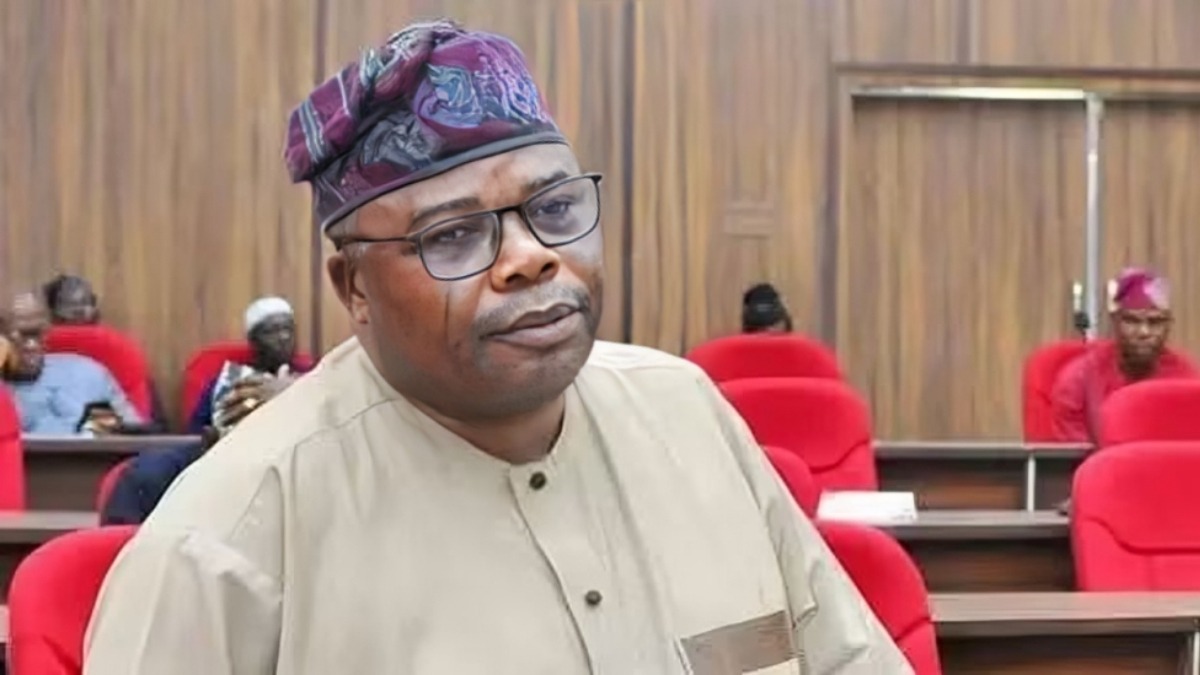
For the Ondo State House of Assembly, members last Thursday held a parliamentary meeting as part of preparations to impeach the Speaker, Olamide Oladiji. However, the lawmakers’ plan failed to sail through as three unknown men believed to be thugs appeared at the Assembly complex that Thursday until the police arrived and chased them away.
The members of the Assembly, 21 out of 26 who reportedly signed a notice for the Speaker’s impeachment, accused him of diverting N44m meant for the reordering of the budget of the Ondo State Oil Producing Areas Development Commission.
But for the intervention of Governor Lucky Aiyedatiwa and the leadership of the All Progressives Congress, APC, the aggrieved lawmakers had given the Speaker a deadline to resign or face impeachment on the floor of the House. Oladiji denied the allegations levelled against him and reportedly said Still, the Chairman of the House Committee on Information, Olatunji Fabiyi, reportedly said the impeachment would be carried out “definitely with the governor’s, Aiyedatiwa’s intervention.”
He said, “We have been hearing news that we have abandoned the process. This is a lie and misinformation. We are still on it; he cannot be our Speaker again.
“Although the governor has been speaking with some of us, that does not stop the impeachment. There is no going back,” Fabiyi reportedly said.
Oladiji also insisted that the impeachment process had been resolved and that there was no longer any impeachment process. Oladiji has also denied the allegations, describing them as politically motivated by lawmakers who failed to secure re-election after the party’s primaries.
“There’s nothing like an impeachment process because the issue has been resolved and there is no impeachment, he said, adding that, “So, there is nothing like an impeachment notice. There is nothing like an impeachment process. We were able to resolve the matter.”

Felix Ifijeh is a journalist with years of professional reporting experience. Known for his keen news sense, compelling storytelling and commitment to accurate, impactful reporting, he has built a reputation for turning leads into clear, engaging, and well-structured reports that resonate with readers. His work reflects deep newsroom experience and a commitment to accurate, impactful journalism.