
-
A civil society organisation and three other Nigerians have asked the Federal High Court in Abuja to nullify the House of Representatives’ July 23, 2026 passage of the constitutional amendment bill seeking to establish State Police.
-
The plaintiffs argue that the House did not establish the constitutionally required two-thirds majority through an identifiable vote by individual members.
-
Some lawmakers had similarly accused the House leadership of failing to comply with constitutional and parliamentary requirements for amending the Constitution.
-
The House has maintained that it complied fully with its Standing Orders and the Constitution, saying the bill received the support of 311 lawmakers, comprising 276 members who participated physically and 35 who participated virtually.
September 28, (THEWILL) – Four plaintiffs have asked the Federal High Court in Abuja to nullify the House of Representatives’ passage of the constitutional amendment bill seeking to establish State Police, alleging that the lawmakers did not comply with the constitutional procedure required for altering the 1999 Constitution.
Filed by the Abuja School of Social and Political Thought, Speak-Out Africa, Ushakase Agwa and Abdullahi A. Sani, the suit specifically challenged the passage of the Constitution (Sixth Alteration) Bill, 2026, relating to the establishment of State Police.
The plaintiffs are asking the court to declare the passage by the House on July 23, 2026, unconstitutional, null and void.

The suit, numbered FHC/ABJ/CS/2191/2026, was filed against the House of Representatives and its Speaker, Tajudeen Abbas, pursuant to Order 3, Rules 2 and 9 of the Federal High Court (Civil Procedure) Rules 2019.
THEWILL reports that the plaintiffs’ case is not against the establishment of State Police itself but against the procedure allegedly adopted by the House in passing the constitutional amendment.
They are asking the court to determine whether the House complied with Sections 9(1), 9(2) and 56(1) of the 1999 Constitution, particularly the requirement for the prescribed majority when altering constitutional provisions.
Under Section 9(2), an alteration of the Constitution requires the support of at least two-thirds of the members of each chamber of the National Assembly, in addition to subsequent approval by the Houses of Assembly of not less than two-thirds of the states.
The plaintiffs contend that the required two-thirds approval must be established through actual voting by lawmakers and cannot simply be inferred from a voice vote.
They are also asking the court to determine whether the constitutional requirement can be satisfied without clause-by-clause consideration of the proposed amendments.
According to the originating summons dated August 21, 2026, filed by their counsel, Dr Sam Amadi of Logosphere Attorneys, Abuja, the bill sought to alter several provisions of the Constitution, including Sections 84, 89, 121, 124, 129, 153, 157, 158, 160, 197, 201, 202, 204, 214, 215 and 216, among others.
The plaintiffs want the court to declare that any constitutional amendment passed without express clause-by-clause consideration and without an established two-thirds majority is invalid.
They are also challenging Order 11, Rule 2 of the Standing Rules of the House of Representatives, to the extent that it allegedly permits the passage of a bill through a voice vote, arguing that such a provision cannot override the requirements of the Constitution.
Plaintiffs: We Are Challenging Procedure, Not State Police
 The plaintiffs said their action was prompted by reports and video recordings of the House proceedings during the consideration and passage of the State Police Bill on July 23.
In a 14-paragraph affidavit deposed to by Ushakase Agwa, identified as the communications officer of the Abuja School of Social and Political Thought, they alleged that the Speaker did not allow the bill to be considered clause by clause before it was purportedly passed through a voice vote.
They said they became concerned after seeking to ascertain how their representatives voted and whether the constitutionally required two-thirds majority was actually obtained.
Their counsel, Amadi, also argued that the video of the proceedings did not demonstrate an actual vote establishing the required majority.
He said the central issue was not whether lawmakers participated physically or electronically, but whether the required two-thirds support could be demonstrated.
The plaintiffs are consequently asking the court to stop further legislative action on the bill pending determination of the suit and to direct the House to follow what they describe as the constitutionally prescribed procedure.
They argue that allowing the process to continue despite the alleged procedural defects could undermine the rule of law and constitutional governance.
READ ALSO:
Minority Caucus Had Raised Similar Concerns
The court action follows a similar protest by members of the House Minority Caucus during the passage of the bill on July 23.
The lawmakers staged a walkout, insisting that their action did not amount to opposition to State Police but was a protest against what they described as breaches of constitutional and parliamentary procedures.
Minority Leader Fredrick Agbedi accused the House leadership of disregarding Section 9(2) of the Constitution in handling the amendment.
The minority lawmakers argued that the bill ought to have undergone clause-by-clause consideration and that the required two-thirds majority should have been established through voting by members.
They alleged that the Speaker merely read the long title of the bill before subjecting it to a voice vote.
But, the House had announced that the State Police Bill secured the support of 311 lawmakers. Speaker Abbas disclosed that 276 members voted physically, while 35 others participated virtually.
Reps: We’re Not Aware Of Suit
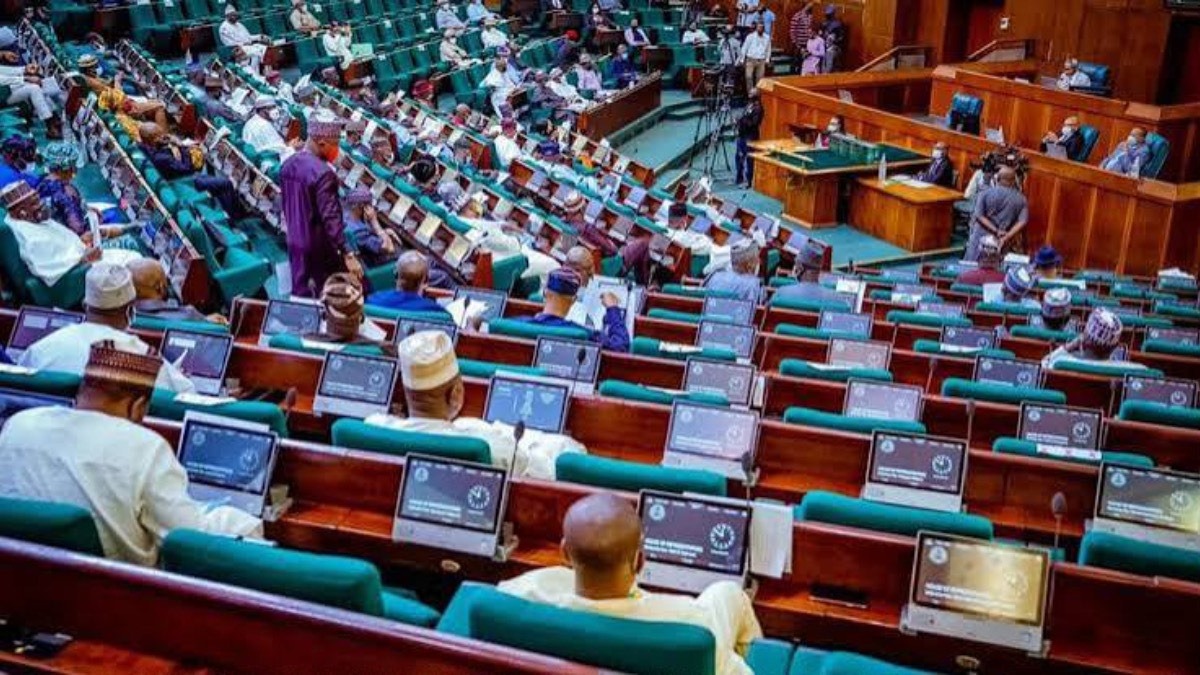
Reacting to the development, the Deputy Spokesperson of the House of Representatives, Philip Agbese, said the House was not aware of the suit and had not been served with any court process.
Agbese said the House was only learning of the legal action through inquiries from journalists. He maintained that the 10th House complied fully with its Standing Orders and the Constitution in considering and passing the State Police Bill.
He also invoked the principle of separation of powers, arguing that the courts should not be used to prevent the National Assembly from carrying out its constitutional responsibilities.
The House spokesman dismissed the allegation that the legislature failed to follow its rules, insisting that the procedure adopted for the bill was valid.
The legislation, titled “A Bill for an Act to Alter the Constitution of the Federal Republic of Nigeria, 1999, to Provide for the Establishment of State Police Services and for Related Matters (HB. 2797),” seeks to create State-controlled police formations as part of wider efforts to decentralise policing and strengthen security across the country.
The bill had earlier been passed by the Senate on June 24, 2026, before the House passed its version on July 23.

Felix Ifijeh is a journalist with years of professional reporting experience. Known for his keen news sense, compelling storytelling and commitment to accurate, impactful reporting, he has built a reputation for turning leads into clear, engaging, and well-structured reports that resonate with readers. His work reflects deep newsroom experience and a commitment to accurate, impactful journalism.