
-
President Isaac Herzog gives opposition leader Gadi Eisenkot the mandate to form a government after neither major bloc secured a parliamentary majority in the October 27 election.
-
Eisenkot secured recommendations from 67 lawmakers, against 46 for incumbent Prime Minister Benjamin Netanyahu.
-
Netanyahu’s right-wing and religious bloc won 53 seats, while Eisenkot’s four-party alliance secured 48 in the 120-member Knesset.
-
Arab-led parties, which secured a record 19 seats, emerge as potential kingmakers despite opposition to their direct inclusion in a governing coalition.
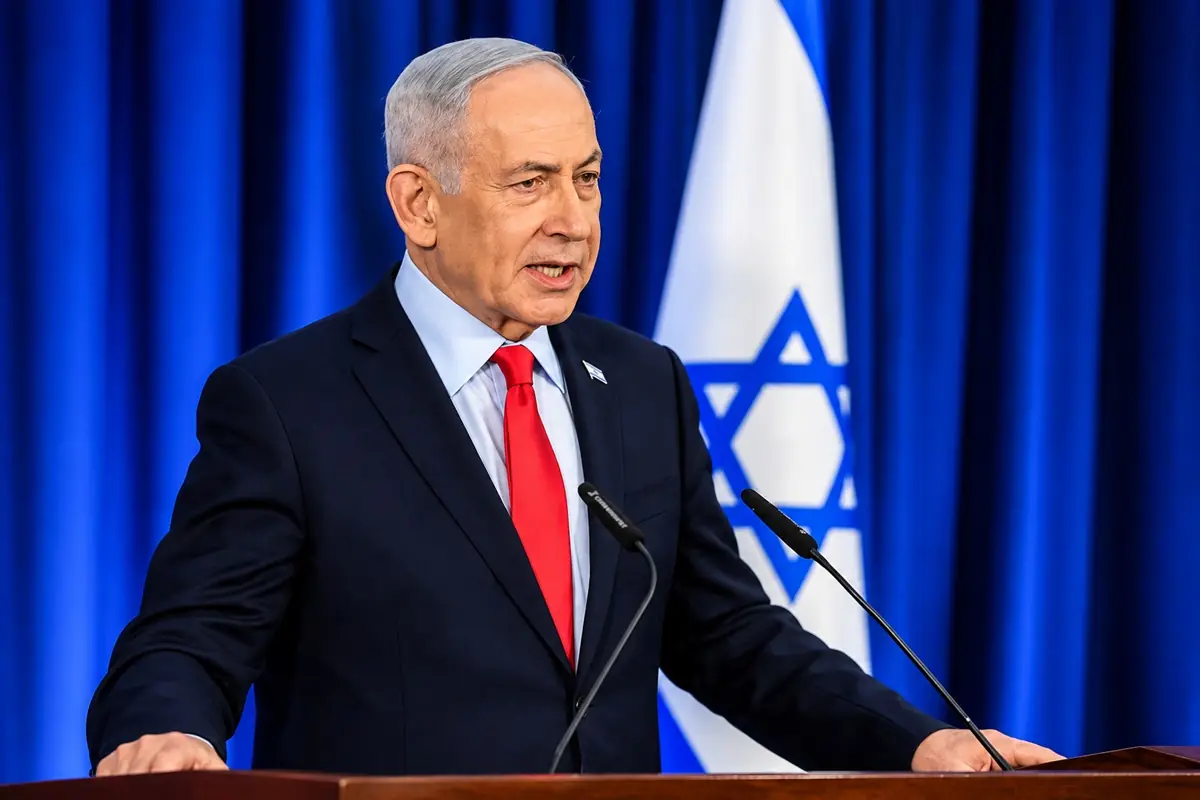
November 8, (THEWILL) – Israeli President, Isaac Herzog, has nominated opposition leader, Gadi Eisenkot, to form the country’s next government, dealing a major political setback to incumbent Prime Minister, Benjamin Netanyahu, after an inconclusive general election left both major political blocs short of a parliamentary majority.
Herzog informed Eisenkot of his decision on Saturday evening, November 7, following consultations with political parties represented in the 120-member Knesset, Israel’s parliament. The president is expected to formally present him with the mandate at a ceremony on Sunday.
The decision gives Eisenkot, a former military chief and leader of the Yashar party, the first opportunity to form a government after the October 27 election failed to produce an outright winner.

According to the outcome of the presidential consultations, 67 lawmakers recommended Eisenkot for the task, compared with 46 who endorsed Netanyahu. Netanyahu’s right-wing and religious bloc secured 53 seats, while Eisenkot’s four-party alliance won 48, leaving both short of the 61 seats required to command a majority in the Knesset.
Herzog’s decision represents a significant challenge to Netanyahu’s continued hold on power, although Eisenkot faces difficult negotiations to turn his parliamentary endorsements into a workable coalition.
Tough Coalition Negotiations Ahead
Under Israeli law, Eisenkot has 28 days to form a government after receiving the presidential mandate, with the possibility of a 14-day extension.
His immediate challenge is securing the support of lawmakers outside his four-party alliance, particularly as the 19 seats won by Arab-led parties have become central to the coalition arithmetic.
The Arab-led parties, which represent Palestinian citizens of Israel, secured a record number of seats in the election and joined the lawmakers who recommended Eisenkot to Herzog.
Their endorsement helped raise his total recommendations to 67, above the 61-seat threshold required for a parliamentary majority.
READ ALSO:
However, Eisenkot has ruled out bringing the Arab-led parties directly into his governing coalition, creating uncertainty over how he intends to secure the support needed to take office.
One possible route is an agreement with the two ultra-Orthodox parties, Shas and United Torah Judaism, which together control 13 seats. Their support would give Eisenkot’s 48-member alliance exactly 61 seats.
But that option remains uncertain because of their political differences and longstanding relationship with Netanyahu.
United Torah Judaism declined to recommend either candidate during Herzog’s consultations, amid disagreements with Netanyahu’s government over legislation concerning exemptions from compulsory military service for ultra-Orthodox Jewish men.
Shas, meanwhile, remains aligned with Netanyahu, making its possible support for Eisenkot difficult to secure.
Eisenkot could also seek external parliamentary support from Arab-led lawmakers without including them in his cabinet. Such an arrangement, however, could face resistance from members of his own political alliance.
Despite losing the advantage in the presidential consultations, Netanyahu remains prime minister until a new government is formed.
If Eisenkot fails to assemble a governing coalition within the stipulated period, he could receive an extension, or the mandate could pass to another candidate in accordance with Israel’s parliamentary procedures.
A prolonged failure to form a government could ultimately trigger another general election.
Felix Ifijeh is a journalist with years of professional reporting experience. Known for his keen news sense, compelling storytelling and commitment to accurate, impactful reporting, he has built a reputation for turning leads into clear, engaging, and well-structured reports that resonate with readers. His work reflects deep newsroom experience and a commitment to accurate, impactful journalism.
