
-
Former Vice President and African Democratic Congress (ADC) presidential candidate, Atiku Abubakar, has challenged President Bola Tinubu’s declaration that Nigeria has moved into an “age of prosperity”.
-
Atiku said the removal of the petrol subsidy without adequate measures to protect households contributed to higher fuel, transport and food costs.
-
The ADC candidate also questioned the Federal Government’s fiscal management, including the extension of the 2025 budget to December 2026, Nigeria’s N166.79 trillion public debt and proposed additional borrowing.
-
Atiku proposed a capped and budgeted production subsidy for petrol refined in Nigeria, including output from modular refineries, with the costs independently audited.
October 01, (THEWILL) – Former Vice President and presidential candidate of the African Democratic Congress (ADC), Atiku Abubakar, has launched a fresh attack on President Bola Tinubu’s economic policies, dismissing the President’s declaration that Nigeria has entered an “age of prosperity” as disconnected from the hardship confronting millions of citizens.
Atiku said Nigerians could not eat government promises or survive on economic statistics while the prices of food, transportation and other essentials remained beyond the reach of many households.
He spoke on Thursday at the ADC headquarters in Abuja in a state-of-the-nation address marking Nigeria’s 66th Independence anniversary.

His address came shortly after Tinubu’s Independence Day broadcast in which the President declared that the country had passed through the most difficult phase of his economic reforms and was now moving into a period of “shared and widespread prosperity”.
Tinubu said the “emergency treatment is over” and that the government’s focus had shifted from correcting structural weaknesses in the economy to lowering the cost of living, creating jobs, expanding production and improving living standards.
But Atiku sharply disputed that assessment. He said while the President could announce a new economic chapter in a speech, he could not simply announce food onto the tables of struggling families or money into the pockets of workers.
“Today, Bola Tinubu told us that the ‘emergency treatment is over’ and the ‘age of prosperity’ has begun. A President may announce a new chapter in a speech. He cannot announce food onto a family’s table or money into a worker’s pocket
“Bola, where is this prosperity? Nigerians Are Hungry Today,” he asked
Atiku said the economic difficulties confronting Nigerians could not be addressed by asking citizens to wait for future improvements.
He argued that Tinubu’s speech was dominated by promises of what the government “will” do, including making farming cheaper, powering factories, creating jobs and bringing down prices.
“You have been President for more than three years. Nigerians are entitled to ask what you have done with the time already given to you,” he said.
Atiku said Nigerians needed relief immediately because they were paying higher transport fares, struggling to buy food, and seeking jobs and security now.
“My dear Bola, you said the people ‘cannot wait for tomorrow.’ On that, I agree with you. Yet almost every answer in your address was about tomorrow. But Nigerians are hungry today. They pay transport fares today. They need jobs and safety today,” he said.
He also challenged the President’s argument that inflation had fallen, saying a slower rate of increase in prices did not reverse the losses households had already suffered.
“Growth must improve lives. It cannot be a certificate of success that government awards itself while citizens struggle to survive,” Atiku said.
Fuel Subsidy Under Fire
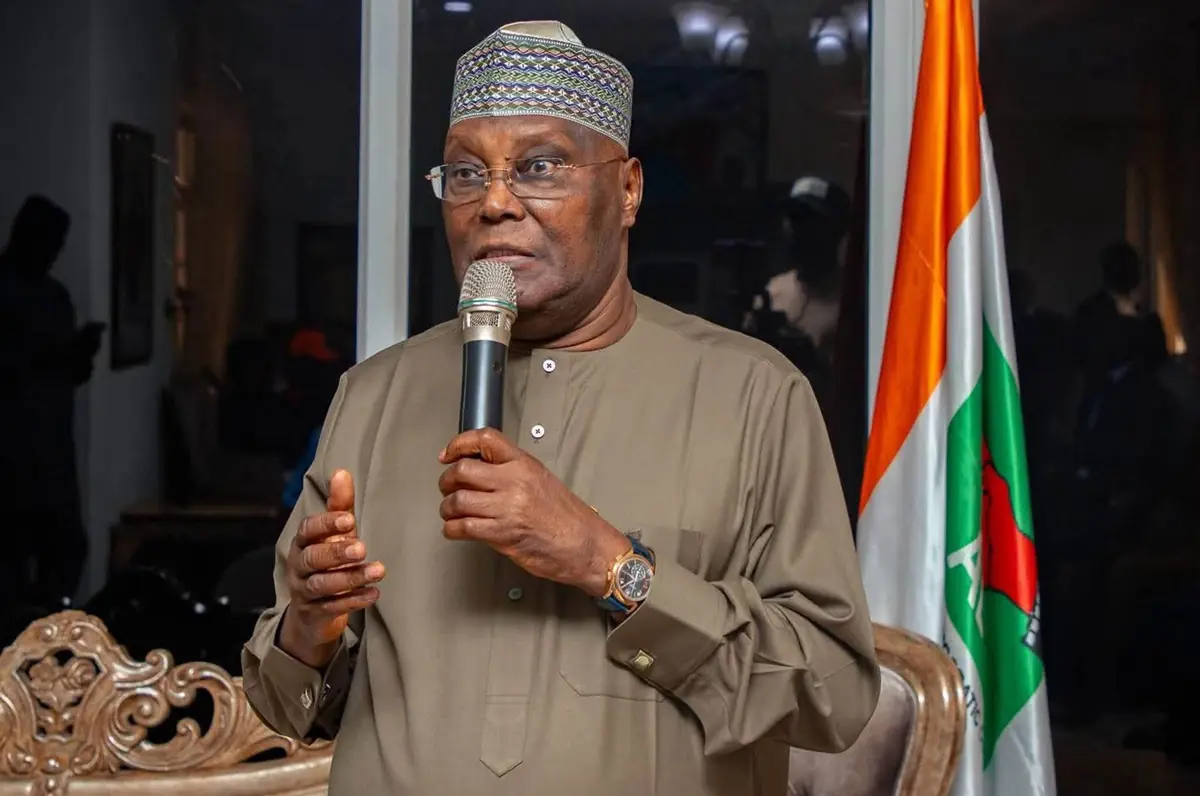 A major focus of Atiku’s criticism was the removal of the petrol subsidy, which Tinubu announced shortly after assuming office in May 2023.
Atiku said the policy was implemented without credible protection for families that would bear the immediate impact of higher fuel prices.
According to him, the increase in petrol prices subsequently affected transportation and the cost of moving food and other goods.
“Tinubu removed the fuel subsidy with one announcement and no credible protection in place for the families who would bear the shock. Petrol, transport and the cost of moving food rose,” he said.
He questioned the benefit Nigerians had derived from the savings associated with the subsidy removal.
“Three years later, the pain has an address in every home. Bola, where is the benefit?” he asked.
Atiku used household price comparisons to illustrate his argument.
He said that in April 2023, the N30,000 minimum wage could purchase about 118 litres of petrol, whereas the current N70,000 minimum wage could purchase only about 50 litres.
He also said the average price of an egg increased from about N88 in April 2023 to N261 in May 2026, while a sliced loaf of bread increased from about N500 to about N2,000 for a smaller loaf.
“These may look like small items in a government report. In a family home, they are breakfast. They are the money left for a child’s lunch,” Atiku said.
Proposes Production Subsidy
Rather than returning to the previous subsidy arrangement, Atiku proposed what he described as a targeted production subsidy for fuel refined locally.
He said an ADC government would introduce a capped and budgeted subsidy tied to verified petrol refined in Nigeria, including fuel produced by modular refineries.
Under the proposal, imported petrol would not qualify, while the cost of the programme would be published and the payments independently audited.
“The principle is simple: produce here, refine here, create jobs here and pay less here,” he said.
Atiku said the objective would be to ensure that the benefit of the intervention reached consumers through lower pump prices while limiting government waste.
Questions Budget Extension
The ADC candidate also questioned the Federal Government’s fiscal management, particularly the decision to extend the implementation of the 2025 budget.
President Tinubu signed the Appropriation (Amendment) (No. 4) Bill 2025 into law on September 30, extending the implementation period of the 2025 budget from September 30 to December 31, 2026.
The Presidency said the extension was designed to give ministries, departments and agencies more time to complete ongoing capital projects and ensure that already appropriated funds were fully utilised.
Atiku, however, questioned how the extension would affect budgetary accountability with the 2026 budget already in existence.
“You have just signed an extension keeping the 2025 budget in operation until the last day of 2026. The 2026 budget exists alongside it.
“Soon, your government will ask Nigerians to examine a 2027 budget. How many budgets must be open at once before you can tell the country what was funded, what was completed and what remains unpaid?” he asked.
Debt, Loans Under Scrutiny
Atiku also raised concerns over Nigeria’s rising debt and the Federal Government’s borrowing plans.
Nigeria’s total public debt stood at N166.79 trillion as of June 30, 2026, according to figures published by the Debt Management Office (DMO). The DMO lists the June 30, 2026 debt report among its latest official public-debt publications.
Atiku said the government should account for what previous borrowings had delivered before taking on additional obligations.
He referred to discussions around a proposed $1.5 billion World Bank loan and demanded details of the projects funded with money already borrowed.
“Before you borrow another dollar in the people’s name, tell them what the money already borrowed has delivered. Name the projects. Show what they cost, who benefited and who was paid,” he said.
Lagos-Calabar Highway Contract
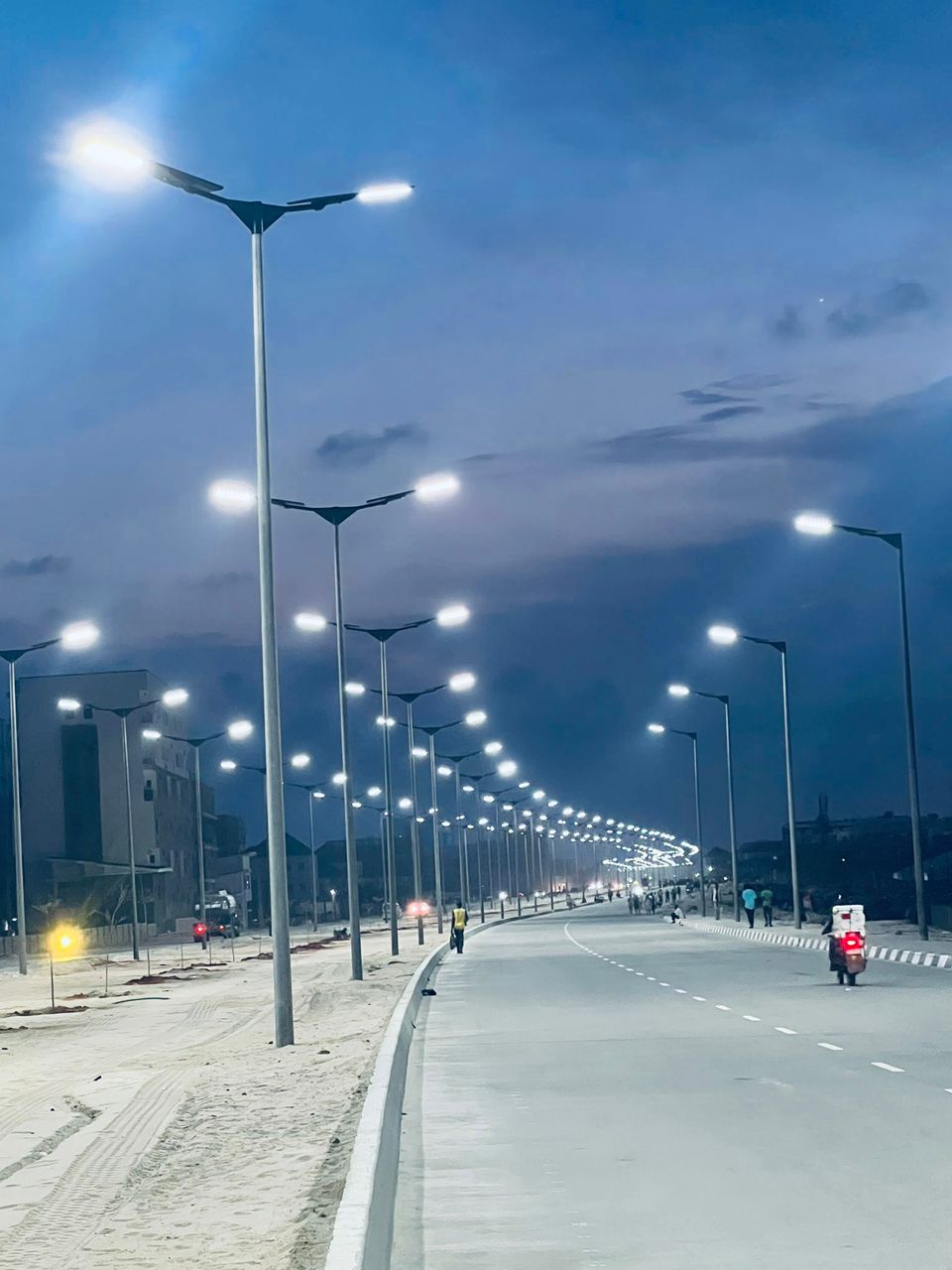
Atiku also questioned the transparency surrounding the award of the Lagos-Calabar Coastal Highway contract to Hitech.
He alleged that the company, which he described as linked to the Chagoury Group, received the contract through restricted bidding rather than an open public tender.
The former Vice President called on the Federal Government to publish the invitations to bid, bids received, evaluation reports, final contract and subsequent variations.
“Let Nigerians see how this enormous award was decided,” he said.
He also urged the government to settle outstanding debts owed to local contractors who had completed government projects, saying some contractors had borrowed from banks to execute the work and were now facing financial difficulties.
Cash Transfers Questioned
The ADC candidate further questioned the Federal Government’s reported cash-transfer programme. He referred to the claim that more than 10 million Nigerians had received N75,000 each, which would amount to at least N750 billion.
Atiku demanded an auditable record showing how beneficiaries were identified, contacted and paid.
“Nigerians are not asking you to expose poor families. They are asking for an auditable account of how the money reached them,” he said.
He also referred to the stampede at the Niger State Government House in which three people died amid reports of a N10,000 distribution.
Atiku said the incident highlighted the level of economic desperation among citizens and called for a full account of how the gathering was organised.
READ ALSO:
- Nigeria @66: ‘We’ve Crossed the Red Sea’ – Tinubu Rules Out Subsidy Return, Says Season of Prosperity Begins
- Cost of Living: CISLAC Tackles Tinubu, Says Corruption, Waste Driving Nigerians Into Hardship
- Nigeria@66: From Reform to Prosperity: Tinubu Promises Cheaper Food, Jobs, Opportunity, Says Poverty Must Go
Transport Fare Promise
Atiku also challenged the government’s promise of lower transport fares from October 1.
He demanded details of the routes covered, the fares before and after the reduction, and the number of people expected to benefit.
“Lower fares on a few routes are welcome, but they do not solve the transport crisis facing the rest of the country. Nigerians cannot board an announcement,” he said.
Security, Political Freedom
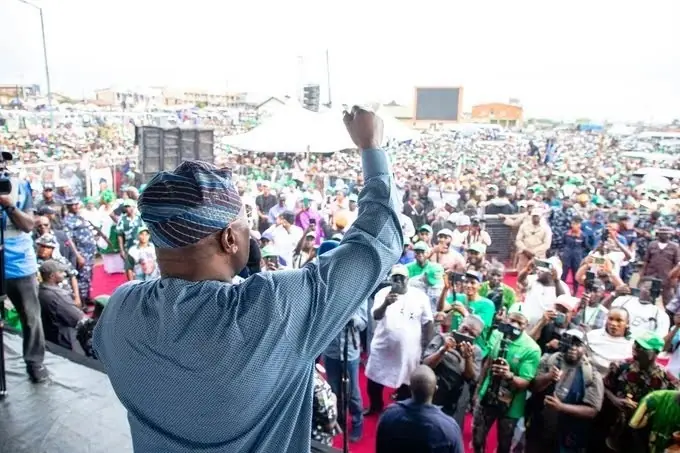
Beyond the economy, Atiku criticised the government over security and political freedom. He said Nigerians must be free to question their leaders, organise peacefully and demand political change.
He called for the rule of law to be applied fairly, citing the detention of Sheikh Sani Khalifa Zaria and Mallam Nasir Ahmad El-Rufai as cases over which he said the authorities should answer questions about due process.
The ADC Presidential candidate also said Mazi Nnamdi Kanu’s right to lawful appeal should be respected following his conviction.
Atiku renewed his call for the release of five young Nigerians arrested in Borno after wearing “Tinubu Must Go” T-shirts, arguing that political slogans should not become grounds for imprisonment.
“The police have made further allegations against them; those allegations must be tested fairly. A political slogan on a shirt must never become a reason to imprison a Nigerian,” he said.
2027 Election
Atiku also used the address to set out his position ahead of the 2027 presidential election.
He promised that, if elected, his administration would respect the independence of the Independent National Electoral Commission (INEC), support prompt publication of polling-unit results and ensure that people caught buying votes or manipulating election results faced prosecution.
He said the election would provide Nigerians with a peaceful means of deciding the country’s political direction.
“Question every candidate, including me. Demand plans that can be examined and promises that can be measured. Protect your vote and refuse intimidation,” he said.
Background
The exchange between Atiku and Tinubu reflects the wider political argument over the impact of the Federal Government’s economic reforms since 2023.
Tinubu inherited an economy facing fiscal and foreign-exchange pressures and moved quickly after taking office to remove the petrol subsidy.
His administration subsequently implemented changes to the foreign-exchange system and introduced other fiscal and monetary measures aimed at stabilising the economy and improving government revenue.
The reforms, however, have been accompanied by substantial increases in the cost of living, particularly in the early period following the removal of the petrol subsidy and exchange-rate reforms.
Tinubu has consistently defended the policies as necessary to address longstanding structural weaknesses in the economy.
In his October 1, 2026 Independence Day address, the President said the difficult phase of the reforms had passed and that Nigeria was entering a new period focused on shared prosperity.
He said the economy had grown by more than four per cent in 2026, while inflation had fallen substantially from its peak, foreign reserves had been rebuilt and the foreign-exchange market had stabilised. He also cited more than $6 billion in non-oil export revenue recorded in 2025.
Tinubu nevertheless acknowledged that millions of Nigerians were still struggling with food, school fees, medical bills and transportation costs, saying the government’s next phase would focus on lowering the cost of living and expanding economic opportunities.
Atiku’s response challenges that narrative, arguing that macroeconomic improvements have not yet translated into sufficient relief for ordinary Nigerians.
‘Prosperity Must Be Felt’
Atiku said an ADC government would measure economic performance not only by growth figures and government revenues but by what Nigerians could actually afford.
“From my first day in office, I will put affordability and the protection of life at the centre of government. We will begin bringing down the costs of food, fuel and power, improving access to healthcare and education, and restoring security to communities living in fear,” he said.
He said government spending would be subjected to greater accountability, while progress would be measured by improvements in household purchasing power and public safety.
Concluding his address, Atiku returned to the central theme of his response to Tinubu’s Independence Day speech.
“A speech about prosperity is not prosperity. Show Nigerians where the savings went. Show them the relief. Or stop calling their pain a cure. The Promised Land is not in sight merely because you can see it from the villa. Nigerians must be able to reach it,” he said.
Felix Ifijeh is a journalist with years of professional reporting experience. Known for his keen news sense, compelling storytelling and commitment to accurate, impactful reporting, he has built a reputation for turning leads into clear, engaging, and well-structured reports that resonate with readers. His work reflects deep newsroom experience and a commitment to accurate, impactful journalism.