
-
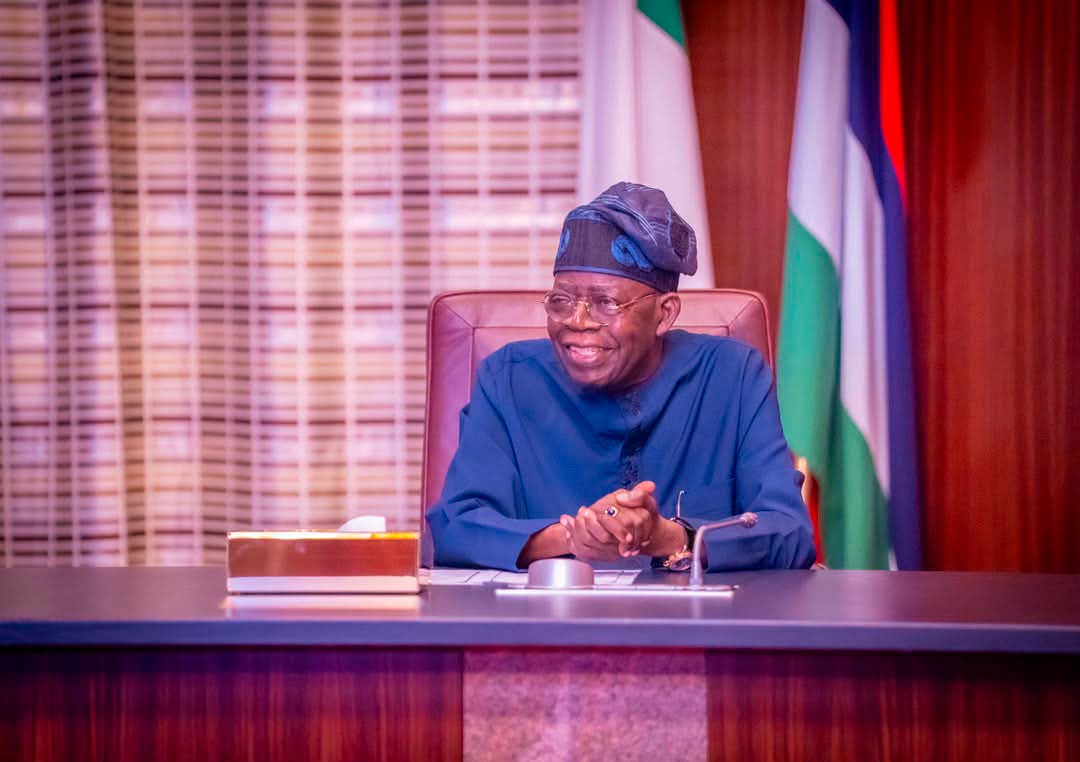
President Bola Tinubu has declared that Nigeria has crossed the most difficult phase of his administration’s economic reforms, insisting that the government will not return to the petrol subsidy regime despite the hardship Nigerians have experienced since its removal in 2023.
-
Marking Nigeria’s 66th Independence Anniversary, Tinubu said the era of economic “emergency treatment” had ended, declaring that the administration’s next priority was to reduce the cost of living through cheaper production
-
The President defended the removal of petrol subsidy and other economic reforms, saying they did not create Nigeria’s longstanding economic weaknesses but confronted them.
-
He warned against what he described as calls to return to “addictive subsidies,” arguing that such a move would reverse the gains achieved.
October 1, (THEWILL) – President Bola Tinubu has declared that Nigeria has crossed its own “Red Sea” after three years of painful economic reforms, ruling out a return to petrol subsidy and announcing what he described as the beginning of an “age of prosperity” for the country.
In his Independence Day address to Nigerians on Thursday, the President acknowledged the severe hardship caused by the reforms introduced since he assumed office in May 2023, but maintained that the measures were necessary to correct structural weaknesses that had accumulated over decades.
Tinubu said the government’s economic priority had now shifted from stabilising the economy to ensuring that the benefits of the reforms translated into lower living costs, more jobs, increased production and improved household welfare.

“The age of reform has done its work. Now begins the age of prosperity. Our priority is to bring down the cost of living,” the President declared.
He said this would be achieved by lowering the cost of producing and transporting goods, expanding agricultural production, improving infrastructure and creating a more competitive environment for businesses.
The President said government would expand mechanised irrigation and dry-season farming, improve access to seeds and fertiliser, increase agricultural mechanisation and invest in storage and transportation infrastructure.
According to him, ongoing investments in roads, railways and ports would also help reduce the cost of moving agricultural produce and manufactured goods across the country.
“Our logic is simple. When a farmer produces more cheaply, when fewer crops are lost between the farm and the market, when a manufacturer spends less on electricity, when a truck reaches its destination faster, and when the business environment fosters fair competition, all those savings will ultimately find their way into the price of goods in the market,” Tinubu said.

No Return to Subsidy
The President was emphatic that his administration would not reverse the petrol subsidy removal, warning against attempts to take Nigeria back to what he described as a wasteful and unsustainable system.
He likened the country’s economic experience to that of a cancer patient who had undergone painful treatment after years of merely managing the symptoms of the disease.
“Nigeria was like a sick patient who receives the terrible news that he has cancer. His doctor explains that the treatment will be difficult and painful, but that it offers a strong prospect of recovery. For too long, Nigeria’s leaders chose morphine while praying for a miracle that never came.
“They focused on symptoms while allowing the disease to take hold deep within the fabric of our society. We spent enormous sums sustaining inefficient arrangements that were never intended to last,” he said..
Tinubu said his administration chose instead to “excise the cancer”, despite the hardship that accompanied the process. The reforms that followed were difficult.
The side effects were real. Yet, we must never confuse the medicine with the disease. Our reforms did not create the weaknesses in our economy. They confronted them,” he said.
The President also addressed calls for a reversal of the reforms, saying influential interests were attempting to persuade Nigerians to abandon the current path.
“As certain influential but regressive voices would have us abandon the treatment and return ourselves to the abuse of addictive subsidies, we must resist their siren song. We must remember why we began this journey and how far we have already come,” he declared.
The Federal Government had removed the longstanding petrol subsidy shortly after Tinubu assumed office in May 2023, while also introducing foreign exchange reforms aimed at eliminating multiple exchange-rate windows.
The government has consistently argued that the measures were necessary to restore fiscal stability and redirect resources towards infrastructure and development.
READ ALSO:
Tinubu Cites Economic Gains
Defending the direction of his administration, Tinubu said economic indicators showed that Nigeria had moved beyond the most difficult stage of the reform process.
“Three and a half years later, the evidence that Nigeria’s economic outlook has improved is undeniable. Our economy has grown by over four per cent this year. Both oil and non-oil sectors have contributed to the renewed period of stable growth.
“Oil theft is down. Inflation has fallen substantially from its peak. Our foreign reserves have been rebuilt, our foreign exchange market has stabilised, and in 2025 this country recorded its highest revenue from non-oil exports in its history, exceeding $6 billion,” he said
The President said the improved indicators represented a turning point for the country.
“The emergency treatment is over. The foundation has been repaired. The central economic task before us has changed. For three years, our overriding purpose was to correct our nation’s course. Now, our purpose is simple: shared and widespread prosperity.”
From Reforms to Jobs, Lower Prices
Tinubu said the next phase of his administration would focus more directly on the welfare of Nigerians, stressing that prosperity should not be measured only through macroeconomic statistics.
He said the real test would be whether Nigerians could afford food and transportation, obtain jobs and credit, access education and healthcare, and plan their futures with greater confidence.
The President promised to make job creation, enterprise development and industrial growth central to the next phase of the administration.
He said Nigeria’s gas resources would be deployed to support industries, while government would work to revive factories in major industrial centres. He also promised greater digital connectivity and investment in skills demanded by employers.
“I want to see more Nigerians making things. I want to see more Nigerian farms feeding our cities and supplying our factories. I want to see Nigerian businesses selling Nigerian goods to the whole world. I want young Nigerians building unicorns and creating opportunities for others here at home,” he said.
Tinubu, however, acknowledged that millions of Nigerians were still struggling with food bills, school fees, medical expenses and transportation costs.
He attributed the hardship to decades of low productivity, inadequate infrastructure and insufficient economic opportunities, saying the accumulated problems could not be eliminated within a single four-year administration.
“We cannot erase in four years what accumulated over generations.
But we can change its course. We can build an economy that steadily lifts people out of poverty while ensuring that those who remain vulnerable are not abandoned along the way,” he said.
He added that government would consequently strengthen direct assistance to poor households and improve the National Social Register to ensure that social interventions reached Nigerians genuinely in need.
Tinubu also cited the Nigerian Education Loan Fund and the Nigerian Consumer Credit Corporation, CREDICORP, among measures designed to cushion hardship and expand access to opportunities.
“These programmes are not substitutes for prosperity. They are a bridge to aid our nation’s citizens on their path towards it. Our objective is not to manage poverty more efficiently. We will defeat it,” he said.
‘No Looking Back’
Reflecting on Nigeria’s 66 years of independence, Tinubu recalled the country’s history of civil war, military rule, economic crises, insecurity and political upheavals, saying the resilience of Nigerians had kept the country together.
He paid tribute to farmers, traders, teachers, entrepreneurs and members of the Armed Forces and other security agencies for their contributions to the nation’s development.
The President said independence should be understood not merely as the raising of the national flag on October 1, 1960, but as a continuing promise that Nigerians would have the freedom and opportunity to determine their future.
He said the country’s economic recovery would require sustained growth, discipline, productivity and the creation of millions of productive jobs.
“We confronted the difficult choices we faced and have laid the foundations for lasting prosperity. Rather than fail the promise of a better future for our children, the time has come for us to build that future.”
In his closing remarks, Tinubu returned to the biblical imagery of the Israelites crossing the Red Sea, using it to underscore his position that Nigeria must not reverse the economic reforms of the past three years.
“Nigeria has corrected its course. We have passed through our own Red Sea. This is not the time to look back. Let us go forward together, with faith in ourselves, faith in our country, and faith that the sacrifices we have made will yield their reward.
“The Promised Land before us is a Nigeria of abundance and opportunity; a nation where prosperity is broadly shared, where every child can dream beyond the circumstances of his birth, and where our country’s immense promise is finally reflected in the lives of our people.
“Our destination is in sight. Our foundations are strong. Our direction is clear. So let us go forward. No looking back,” he urged.
Felix Ifijeh is a journalist with years of professional reporting experience. Known for his keen news sense, compelling storytelling and commitment to accurate, impactful reporting, he has built a reputation for turning leads into clear, engaging, and well-structured reports that resonate with readers. His work reflects deep newsroom experience and a commitment to accurate, impactful journalism.