
-
EFCC Chairman Ola Olukoyede says corruption is not merely a financial or legal offence but a moral crisis that deprives Nigerians of healthcare, education, pensions, infrastructure and other basic services.
-
The anti-graft agency unveils an Inter-Faith Manual designed to help Christian and Muslim leaders incorporate anti-corruption teachings into sermons, religious education and community engagement.
-
Olukoyede cautions religious and ethnic communities against treating investigations involving their prominent members as attacks on their faith or identity, insisting that corruption and financial crimes have no religious or ethnic colouration.
-
The NIREC Executive Secretary, Prof. Cornelius Omonokhua, challenges the EFCC to extend its scrutiny to religious leaders accused of preaching hate or allegedly using churches and mosques as platforms for partisan political fundraising.
September 23, (THEWILL) – The Economic and Financial Crimes Commission (EFCC) has called for stronger collaboration between religious institutions and anti-corruption agencies, declaring that corruption has no religious, ethnic or tribal identity and that its consequences are suffered by Nigerians irrespective of their faith.
EFCC Chairman, Ola Olukoyede, made the declaration on Wednesday in Abuja at a meeting of the Nigeria Inter-Religious Council (NIREC), where the Inter-Faith Manual on anti-corruption was unveiled.
The manual, unveiled by the Secretary to the Government of the Federation (SGF), Senator George Akume, is intended to provide Christian and Muslim religious leaders with material for addressing corruption, fraud, integrity and responsible citizenship in sermons and other forms of religious instruction.

The meeting, themed “Shared Sacred Flourishing in Nigeria,” brought together senior Christian and Muslim leaders, including the President of the Christian Association of Nigeria (CAN), Most Rev. Daniel Okoh; the Sultan of Sokoto, Alhaji Muhammad Sa’ad Abubakar III; NIREC Executive Secretary, Prof. Cornelius Omonokhua, and other religious leaders.
Olukoyede said corruption had become a profound moral challenge to Nigeria’s pursuit of shared prosperity, arguing that the damage caused by financial crimes extends far beyond government accounts and balance sheets.
According to him, corruption directly affects the quality of life of ordinary citizens because resources diverted through graft are resources that should have been used to provide public services.
He illustrated the consequences by pointing to the diversion of funds meant for hospitals.
“When money meant for a hospital is stolen, the offence may be recorded as corruption, but its consequence may be a patient who cannot receive treatment,” he said
He added that the diversion of education funds could translate into “a child without opportunity”, while the theft of pension funds could leave elderly Nigerians without the dignity they deserve after years of service.
Olukoyede said corruption effectively “privatises what should be shared”, allowing individuals to benefit from public resources at the expense of the wider population.
He described the EFCC’s responsibility as one that goes beyond investigating and prosecuting financial crimes to protecting the integrity of Nigeria’s commonwealth.
‘Financial Crime Has No Religion’
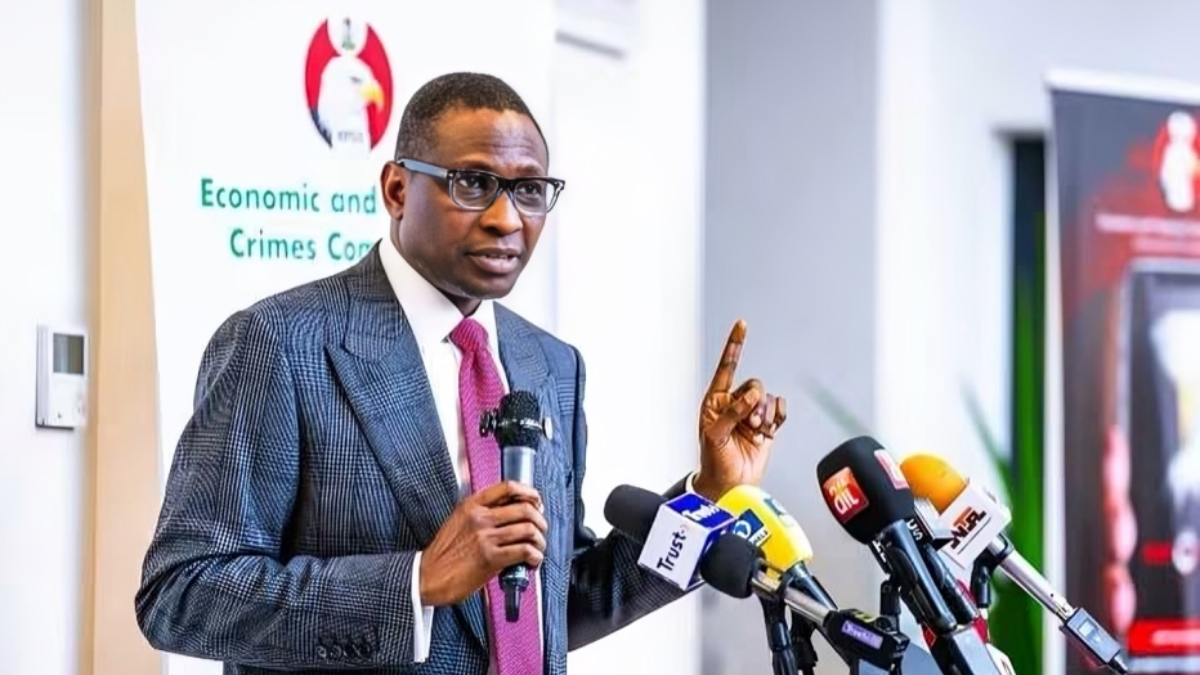
The EFCC chairman said the agency’s engagement with NIREC was informed by the recognition that religious institutions possess significant influence over the values and behaviour of Nigerians.
He noted that Nigeria is a deeply religious society, with millions of citizens attending churches and mosques regularly, but questioned whether the country’s strong religious identity was sufficiently reflected in public conduct and economic life.
“We are a deeply religious people. Our churches and mosques are full. Yet, we must have the courage to ask ourselves: has the depth of our religious profession been sufficiently reflected in the integrity of our public and economic life?” he asked.
Olukoyede said the EFCC might initially appear to be an unusual institution to participate in discussions about “sacred flourishing”, but argued that the consequences of corruption place the agency directly within the broader struggle to create a society where citizens can live with dignity.
“We are a law-enforcement agency. But when we examine the consequences of corruption, fraud and economic crime, we quickly discover that our work touches the very conditions that make human flourishing possible,” he said.
Olukoyede maintained that financial crimes cannot be classified according to the religion or ethnicity of those who commit them.
“The EFCC believes that financial crime has no religion. Corruption has no tribe. Fraud does not become Christian or Muslim because of the identity of the person accused of committing it,” he said.
The anti-graft agency boss further stressed that the consequences of corruption are shared across religious and ethnic boundaries.
“When public money is stolen, both Christians and Muslims suffer. A badly equipped hospital does not first ask a dying patient where he worships. A collapsed road does not distinguish between a Christian traveller and a Muslim traveller,” he said.
Olukoyede said religious institutions had a critical role to play in preventing corruption because faith leaders could influence character in ways that law enforcement could not.
He drew a distinction between the functions of the EFCC and religious institutions, saying the commission could investigate and prosecute criminal conduct, while faith communities could help shape the values that determine how people behave.
“The EFCC can investigate a person’s conduct. Faith communities can influence that person’s character. We can prosecute fraud. Religious teaching can cultivate honesty. We can punish corruption after the event. Faith can help prevent it before it begins,” he said.
Olukoyede urged religious leaders to use their influence to challenge the growing social admiration for unexplained wealth and to encourage their congregations to place greater value on integrity and legitimate earnings.
He questioned the message being sent to younger Nigerians when individuals with questionable sources of wealth are celebrated without scrutiny.
“What message do we send when unexplained wealth commands more respect than integrity? What do young Nigerians learn when society celebrates the wealthy person but rarely asks how the wealth was acquired?” he asked.
The EFCC chairman said religious leaders must make it clear to young Nigerians that honest work should not be regarded as failure and that material wealth acquired without accountability should not be treated as the ultimate measure of success.
He said the new Inter-Faith Manual was produced with contributions from experienced Christian and Muslim religious leaders and contains anti-corruption themes that can be adapted for sermons and religious teachings.
Olukoyede urged religious leaders to use the material to strengthen the culture of integrity among their members.
READ ALSO:
No Religious or Ethnic Shield for Corruption
The EFCC chairman also warned against attempts to give corruption a religious or ethnic dimension, saying no faith community should provide moral protection for individuals facing credible allegations of financial crimes.
He similarly cautioned against situations where members of an ethnic group interpret the investigation of one of their prominent figures as an attack on the entire community.
According to him, such attitudes can undermine the fight against corruption by shifting attention from the conduct under investigation to the identity of the individual involved.
Olukoyede said prevention was increasingly becoming a central component of the EFCC’s strategy, arguing that the effectiveness of an anti-corruption system should not be measured simply by the number of arrests it makes.
“The most successful anti-corruption system is not the one that makes the greatest number of arrests. It is one that progressively reduces the opportunity and incentive for corruption to occur,” he said.
SGF Urges Religious, Traditional Leaders To Resist Division
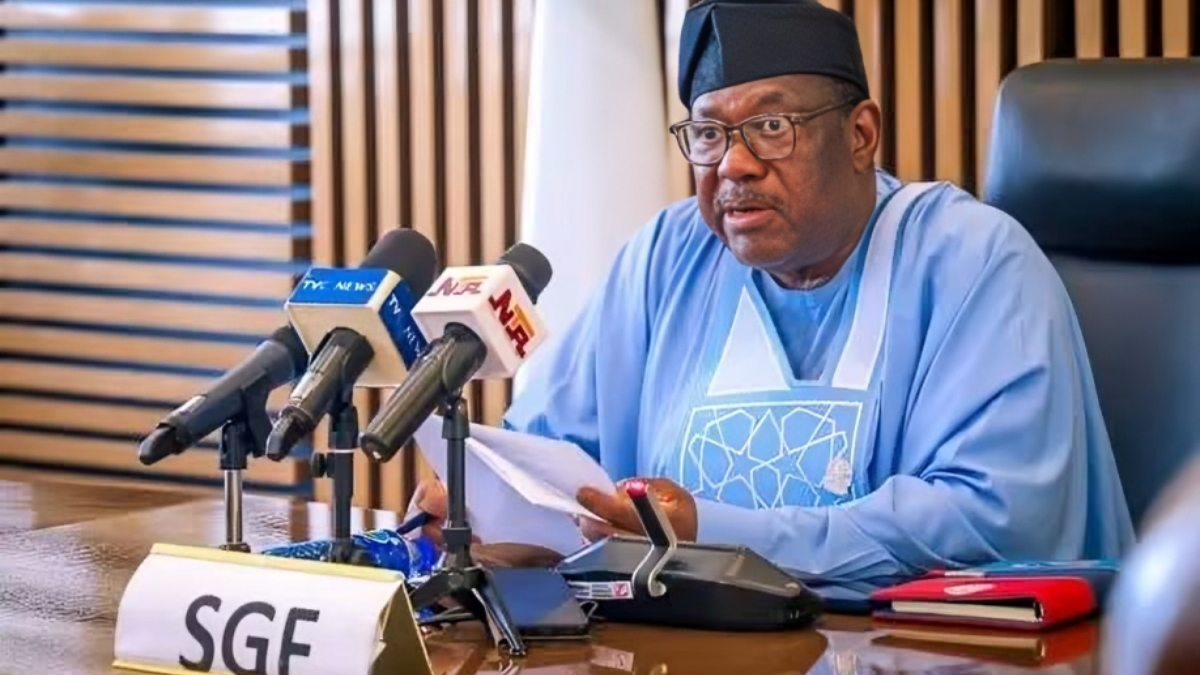
The SGF, George Akume, while unveiling the manual, urged religious and traditional leaders to intensify efforts to promote tolerance, peaceful coexistence and responsible citizenship.
He warned against allowing individuals or groups to exploit religious and ethnic differences to provoke violence.
“We must refuse to allow these agents of darkness to use their cruelty to stoke religious or ethnic divisions by reminding our congregations that violence is a crime against faith itself,” Akume said.
He urged religious leaders to encourage their followers to respect places of worship belonging to other faiths and to promote constructive dialogue on social and economic challenges.
Akume also appealed to community leaders to intervene early in disputes before they escalate into violent conflicts.
“When politicians seek to fan the flames of disunity, intervene with firmness and clarity,” the SGF said.
NIREC Wants EFCC To Probe Religious Leaders
The NIREC Executive Secretary, Prof. Cornelius Omonokhua, however, challenged the EFCC to broaden its anti-corruption efforts to include the activities of religious leaders and institutions.
Omonokhua called on the commission to investigate religious figures who allegedly use their platforms to promote hate speech or partisan political activities and those accused of facilitating financial transactions for politicians through religious institutions.
He urged the EFCC to go beyond the newly launched manual and take concrete action where religious platforms are allegedly abused.
“EFCC should go beyond the anti-corruption manual to arrest pastors and imams who publicly preach hate or carry out political campaigns in churches and mosques to export money for partisan politicians,” he said.

Felix Ifijeh is a journalist with years of professional reporting experience. Known for his keen news sense, compelling storytelling and commitment to accurate, impactful reporting, he has built a reputation for turning leads into clear, engaging, and well-structured reports that resonate with readers. His work reflects deep newsroom experience and a commitment to accurate, impactful journalism.
