
-
Senator Adams Oshiomhole says ₦2,000 can still buy food from a local Nigerian restaurant, popularly known as *mama put*, while $1 cannot purchase anything substantial in the United States.
-
The former Edo governor makes the comparison while defending President Bola Tinubu’s economic reforms, triggering criticism from Nigerians who accuse him of being disconnected from the hardship facing ordinary citizens.
-
Financial analyst Kalu Aja challenges the comparison, pointing to the existence of $1.25 stores in America, while other commentators question the purchasing power of Nigerian workers earning ₦70,000 monthly.
-
Critics fault the senator for overlooking inflation, low wages and rising food prices, with some questioning what even ₦1 can purchase in Nigeria.
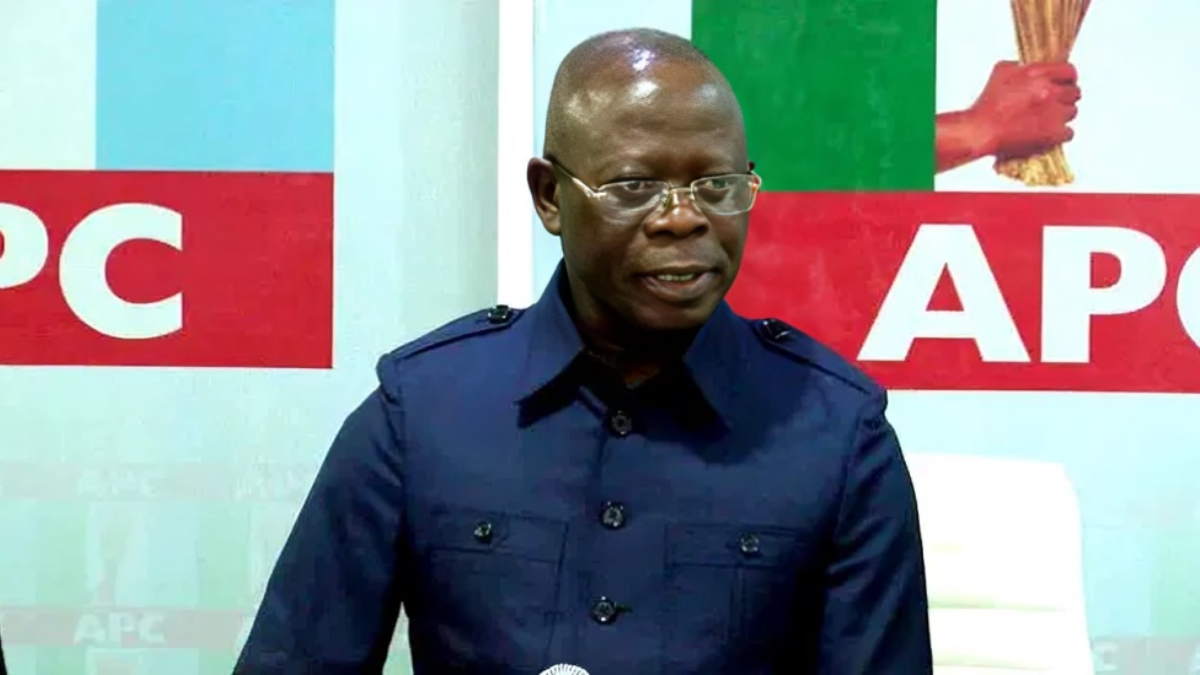
November 06, (THEWILL) – Senator Adams Oshiomhole (APC, Edo North) has sparked widespread criticism following his defence of President Bola Tinubu’s economic reforms, using a comparison of what ₦2,000 can purchase in Nigeria and what $1 can buy in the United States.
Oshiomhole, a former governor of Edo State and former president of the Nigeria Labour Congress (NLC), argued that while ₦2,000 could still buy food from a local restaurant, popularly known as ‘mama put’, one dollar could not purchase anything substantial in the United States.
“In Nigeria, ₦2,000 can get you something from mama put, but $1-something cannot buy you anything in the US”, he said.

The statement, circulated on Wednesday, November 5, by Channels Television journalist Seun Okinbaloye, has generated considerable debate on social media, with several Nigerians challenging the senator’s comparison against the backdrop of rising food prices, declining household purchasing power and the increasing difficulty of meeting basic needs.
The remarks come amid continuing public debate over the consequences of Tinubu’s economic policies, particularly the removal of petrol subsidy and the unification of the foreign exchange market, which have contributed to significant adjustments in the prices of goods and services.
While the Federal Government has consistently defended the reforms as necessary to address structural weaknesses in the economy, improve government revenue and attract investment, many Nigerians continue to complain about the pressure of rising living costs.
Nigerians Challenge Oshiomhole’s Comparison
Financial analyst Kalu Aja challenged the senator’s assertion, pointing to the existence of low-cost retail outlets in the United States where goods are sold for around $1.25.
“There are literally $1.25 stores in America,” Aja wrote in reaction to the statement.
His response questioned the suggestion that one dollar had no purchasing power in the United States.
Another commentator, Akuabatala, questioned the basis of comparing the two currencies without considering their relative values.
“When your ₦1 suppose to be $1 equivalent, why don’t you use ₦1.00 instead of your highest denomination?” the commentator asked.
Myke expressed disbelief at Oshiomhole’s remarks, writing: “Never believe Oshiomhole would degenerate to this level of lunacy.”
Similarly, another user, SG1, questioned the senator’s position, asking: “What happened to this man?”
The commentator added that Oshiomhole’s political evolution appeared to be moving backwards.
Kenary also questioned the former labour leader’s political transformation, accusing him of abandoning the interests of ordinary Nigerians after entering government.
“His manners after he got money from the government show everything; he never cared,” the commentator wrote, also drawing comparisons with the political journeys of other prominent figures.
Another user, Segunowo, challenged the senator’s argument, asking: “Oshi-omole, what will 1 naira buy us in Nigeria?”
OccupyNigeria also dismissed the comparison, asking: “Which kin foolishness be this?”
Minimum Wage, Purchasing Power Under Scrutiny
Several reactions focused on the disparity between workers’ earnings and the cost of basic necessities in Nigeria and the United States.
One commentator argued that workers in parts of the United States earning about $10 per hour could earn approximately ₦15,000 in an hour, depending on the exchange rate, while Nigerian workers earning the national minimum wage of ₦70,000 had to depend on the monthly amount to meet their basic needs.
The commentator questioned the logic of comparing the price of a meal in Nigeria with the purchasing power of a dollar in America without considering how much workers earn and the time required to afford basic necessities.
“If person work for one month to get 2k, if he go chop once a day for 30 days, then na 60k gone. So only 10k go dey available for transport, rent, medicine, how that one make sense?” the user wrote.
Another commentator, Steve, accused the senator of overlooking fundamental differences in governance and public infrastructure between Nigeria and the United States.
“See gaslighting! America has good governance, basic infrastructure, relatively steady electricity and institutions that hold public officials accountable,” Steve wrote.
The commentator further accused the government of assuming that Nigerians would accept such comparisons without questioning the economic realities confronting them.
The reactions reflect wider concerns over the relationship between nominal prices, workers’ earnings and actual living standards, particularly as households struggle to cope with the rising costs of food, transportation, accommodation and healthcare.
READ ALSO:
Tinubu’s Reforms And Cost-Of-Living Crisis
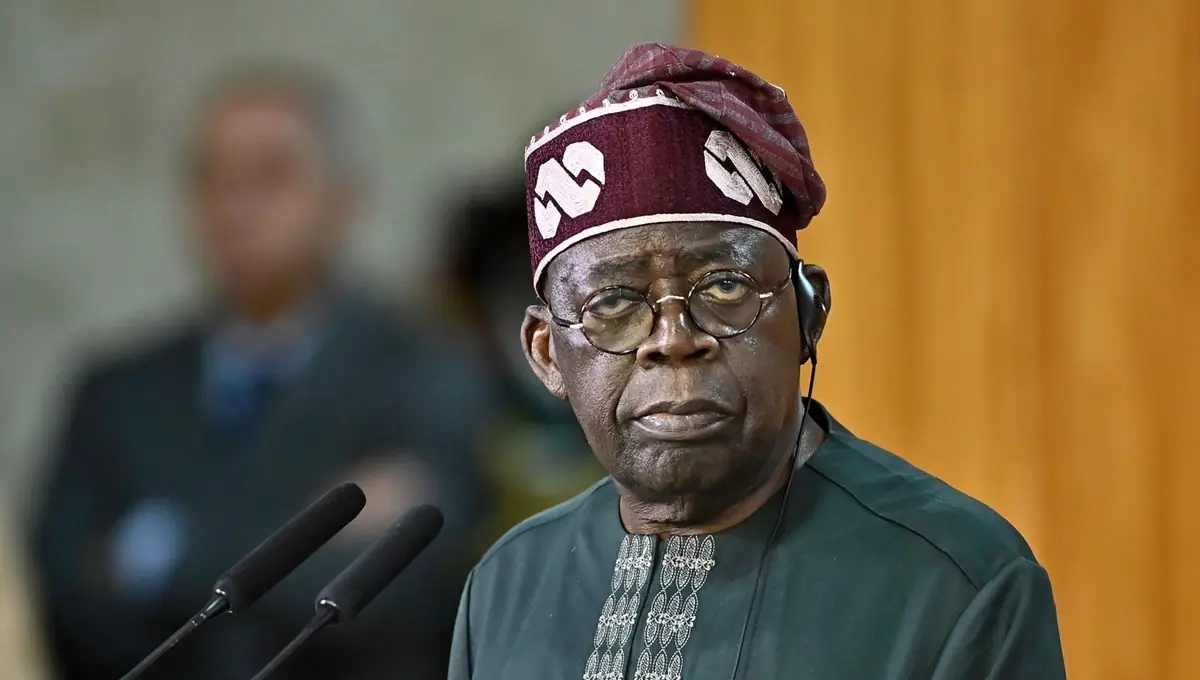
Oshiomhole’s remarks come against the backdrop of continuing controversy over Tinubu’s economic reforms, introduced shortly after he assumed office in May 2023.
In his inaugural address on May 29, 2023, Tinubu announced that petrol subsidy was gone, triggering an immediate increase in petrol prices and subsequent rises in transportation and production costs.
The administration also moved to unify the country’s multiple foreign exchange rates, resulting in significant depreciation of the naira and increasing the domestic cost of imported goods and raw materials.
The Federal Government has maintained that the measures were necessary to eliminate market distortions, improve public revenue, attract investment and establish a more sustainable economic framework.
However, organised labour, opposition parties and sections of the public have continued to question the timing and social consequences of the policies, particularly their impact on wages, food affordability and household incomes.
Following negotiations with organised labour over workers’ welfare, Tinubu signed the National Minimum Wage Act 2024 into law, increasing the statutory minimum wage from ₦30,000 to ₦70,000 monthly.
Despite the increase, concerns have persisted over the erosion of workers’ earnings by inflation and the difficulties faced by low-income households in meeting basic obligations.
Oshiomhole’s Labour Background
Oshiomhole’s comments have also attracted attention because of his background as a prominent labour leader before his entry into partisan politics.
He served as president of the NLC, where he became prominent for leading campaigns for improved workers’ welfare, better wages, and opposition to government policies considered detrimental to Nigerian workers.
He later served as governor of Edo State from 2008 to 2016 and subsequently became national chairman of the All Progressives Congress (APC).
His transition from organised labour to partisan politics has frequently placed his public statements under scrutiny, particularly when addressing workers’ welfare and economic policies.

Felix Ifijeh is a journalist with years of professional reporting experience. Known for his keen news sense, compelling storytelling and commitment to accurate, impactful reporting, he has built a reputation for turning leads into clear, engaging, and well-structured reports that resonate with readers. His work reflects deep newsroom experience and a commitment to accurate, impactful journalism.
