
-
The CBN cut the Monetary Policy Rate by 350 basis points to 23 percent from 26.5 percent at its September MPC meeting.
-
The Standing Facilities Corridor was recalibrated to +50/-300 basis points, placing the Standing Lending Facility at 23.5 percent and the Standing Deposit Facility at 20 percent.
-
The MPC retained the Cash Reserve Requirement at 45 percent for Deposit Money Banks, 16 percent for Merchant Banks and 75 percent for non-TSA public sector deposits.
September 22, (THEWILL) – The Central Bank of Nigeria (CBN) has cut its Monetary Policy Rate (MPR) by 350 basis points to 23 percent from 26.5 percent, delivering a major reduction in its benchmark interest rate as inflation continues to moderate.
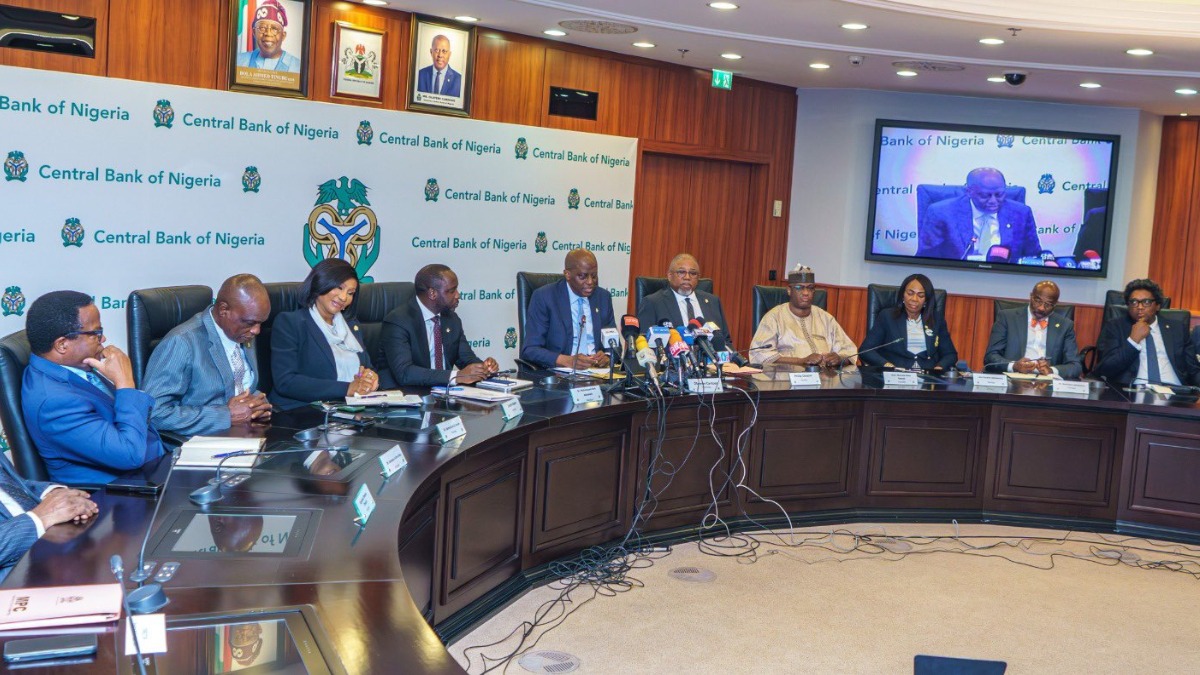
The decision was taken at the 307th meeting of the Monetary Policy Committee (MPC) in Abuja, with 11 members in attendance.
The cut reverses the position maintained at the MPC’s July meeting, when the committee retained the MPR at 26.5 percent, alongside the existing reserve requirements and Standing Facilities Corridor.

The September decision also recalibrated the Standing Facilities Corridor to a +50/-300 basis points around the new MPR.
This puts the Standing Lending Facility at 23.5 percent and the Standing Deposit Facility at 20 percent.
The CBN said the corridor adjustment is an operational realignment aimed at strengthening monetary-policy transmission and reinforcing the primacy of the MPR as the key policy signal.
It said the recalibration does not constitute a separate change in the monetary-policy stance.
READ ALSO:
CBN retains CRR
Deposit Money Banks will continue to maintain a CRR of 45 percent, while Merchant Banks will retain a 16 percent requirement. The CRR on non-Treasury Single Account public-sector deposits remains at 75 percent.
The unchanged reserve requirements mean the 350-basis-point reduction in the MPR was not accompanied by a broad release of liquidity through lower CRR requirements.
The latest decision comes against a backdrop of moderating inflation.
Headline inflation eased to 15.39 percent in August from 15.43 percent in July, according to the National Bureau of Statistics.
The new MPR of 23 percent is therefore 7.61 percentage points above the August headline inflation rate, leaving a positive nominal policy-rate margin.
The rate cut also comes as financial-market yields have been declining.
The 364-day Treasury bill stop rate fell to 16.62 percent at the September 9 auction, from 16.84 percent previously, extending a series of reductions in short-term government borrowing costs.
The CBN’s decision is expected to have implications for money-market rates, bank funding costs, lending rates and fixed-income yields.
However, the speed and extent of transmission to borrowers will depend on how banks adjust their lending and deposit pricing.
The September decision marks a significant change in Nigeria’s monetary-policy settings after the MPR was held at 26.5 percent at the July meeting.
With the benchmark now at 23 percent and the policy corridor narrowed on the lower side, the CBN is placing greater emphasis on the MPR as the central signal for monetary conditions while retaining relatively high reserve requirements for banks.

Ogochukwu Onwaeze is a writer specializing in business and economic journalism. At THEWILL News Media, she translates market trends, financial developments, and policy shifts into clear and engaging stories.